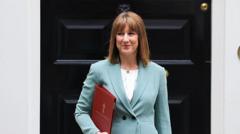
Rachel Reeves is about to walk into the House of Commons for a speech she doesn’t want you to remember. After the tax-heavy drama of her previous budgets, the Chancellor is pivoting to a "quiet affair" for the 2026 Spring Statement. If you’re expecting a flurry of tax cuts or a sudden splurge in public spending, you’re looking in the wrong place. This event is less about shifting the dial and more about holding the line.
The goal here is simple. Reeves wants to end the era of "fiscal pyrotechnics" where every six months the British public is subjected to a new round of economic anxiety. By sticking to a twenty-minute update focused on numbers rather than new laws, she's trying to prove that the Treasury is back under adult supervision. But even a quiet speech has plenty to say between the lines. For a different look, check out: this related article.
The windfall that changes nothing
The big news heading into this statement isn't a policy change, but a massive £22 billion gift from the taxman. Thanks to stronger-than-expected receipts from self-assessed income tax and VAT, the government’s coffers look surprisingly healthy. In a different political era, a £22 billion surplus would be the cue for a pre-election bribe or a flashy infrastructure project.
Don't hold your breath. Reeves has spent the last year hammering home the importance of "iron-clad" fiscal rules. To her, this windfall isn't "spending money"—it's a buffer. It’s a shield against the rising cost of debt interest and the volatile price of oil, which has been creeping up due to tensions in the Middle East. Further reporting on the subject has been shared by Reuters Business.
If she spends that money now, she risks fueling inflation just as it finally begins to settle. The Bank of England is watching. They’ve signaled that interest rate cuts are on the table for March, but only if the Treasury doesn't go rogue with the checkbook. Reeves knows that a small tax cut today could mean higher mortgage rates tomorrow. She won’t take that trade.
What the OBR is actually telling us
The Office for Budget Responsibility (OBR) is the real star of the show this week. For the first time, they won't be giving a formal "pass/fail" grade on the government's fiscal rules—a change Reeves introduced to lower the temperature of these spring updates. However, we can still see the cracks in the floorboards.
- Growth is a slog: The economy is expected to grow by about 1.4% in 2026. It’s better than the stagnation of recent years, but it’s hardly the "rocket boosters" the government promised.
- The migration math: A significant drop in net migration is creating a headache for the OBR. Fewer people arriving means fewer workers, which eventually means less tax revenue. This is a quiet crisis that the Chancellor will have to address in the autumn, even if she ignores it now.
- The productivity puzzle: Business investment is still weak, projected to grow by less than 1%. Companies are sitting on cash, waiting to see if this stability Reeves keeps talking about is actually going to last.
Stealth taxes and the frozen threshold trap
Even though Reeves is avoiding "new" taxes, you’re probably still paying more. The decision to keep income tax thresholds frozen remains the government’s most effective—and most invisible—money-maker. As wages rise to keep up with inflation, more of your paycheck gets dragged into higher tax brackets.
It’s a classic move. By doing nothing, the Treasury collects billions. This "fiscal drag" is the reason Reeves can afford to be so calm at the dispatch box. She doesn't need to announce a tax hike because the one she already put in place is doing the heavy lifting for her.
For the average worker, this means that even with a modest pay rise, the "feel-good factor" is missing. You're earning more, but your take-home pay hasn't caught up with the price of a weekly shop or a tank of petrol.
Why the quiet approach is a gamble
There’s a risk to being this boring. The UK is currently dealing with the highest level of youth unemployment since 2014, with over 16% of 16-to-24-year-olds out of work. Public services are still stretched thin, and the "cost of living crisis" hasn't vanished just because the inflation rate hit a lower number.
By choosing a "non-event" Spring Statement, Reeves is betting that the public prefers stability over excitement. She's betting that if she can just keep the ship steady for another six months, the Bank of England will reward her with lower interest rates, which will do more for the economy than any Treasury handout could.
It's a high-stakes strategy. If the economy dips or oil prices spike further, this "quiet affair" will look like a missed opportunity to help struggling households. But for now, the Chancellor is doubling down on the idea that the best thing the government can do for your money is to stop messing with it.
If you're looking to protect your own finances against this backdrop, your best move isn't waiting for a government handout. Focus on your own "fiscal headroom." With interest rates likely to move soon, it's a good time to review any variable-rate debt or look at whether your savings are actually sitting in a high-interest account or just gathering dust in a standard current account. The Treasury is playing the long game; you should too.