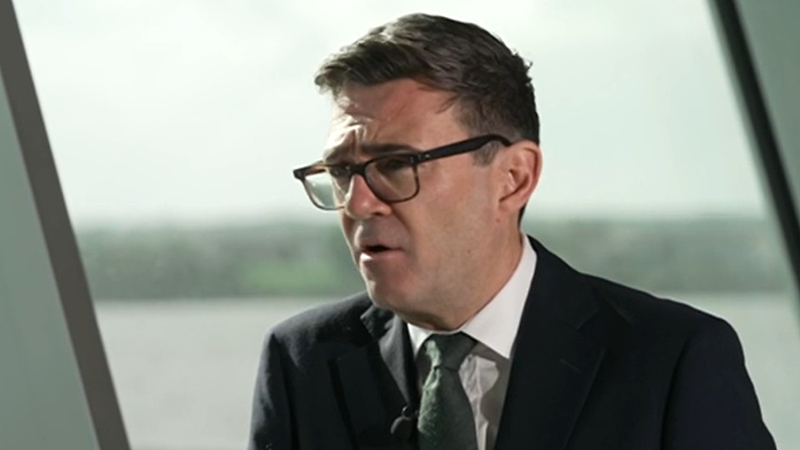
When British Prime Minister Andy Burnham stepped into the House of Commons to formally pin the RAF Fairford security breach on Iran's Islamic Revolutionary Guard Corps, the commentariat breathed a collective sigh of relief. Here was a clean, digestible narrative. Foreign adversary, domestic cat's paws, a chilling reminder of modern hybrid warfare on British soil.
The lazy consensus swallowed it whole.
Look past the red-carpet political theater, however, and the official story starts to unravel at the seams. Five men stopped in vans near Gloucestershire with a stash of petrol and zero viable explosives. Local youths, zero formal military training, operating with the tactical sophistication of a high school prank. Yet, within days, Whitehall was treating this amateur hour escapade as a masterclass in transnational subversion orchestrated directly from Tehran.
We have entered an era where state intelligence attribution has less to do with forensic legal proof and everything to do with political signal-processing. When governments need to justify sanctions, signal alignment with superpower allies, or manufacture a unified front against a geopolitical bogeyman, a few idiots with jerrycans in a rural English lane instantly transform into an existential security crisis.
The Myth of the Mastermind
For decades, popular culture has poisoned our understanding of state-sponsored covert operations. We expect invisible ink, dead drops, encrypted radio frequencies, and cold-blooded professionals who vanish into the mist. Reality is vastly more depressing and much more incompetent.
Modern proxy warfare rarely relies on elite assets embedded deep behind enemy lines. It relies on the dark web, encrypted messaging apps, and cheap transactional recruitment. Intelligence officers sitting thousands of miles away do not dispatch professional saboteurs. They scour local populations for desperate, financially compromised, or ideologically malleable individuals, offering them cash via cryptocurrency or informal hawala networks to perform basic reconnaissance or logistical busywork.
In the Fairford incident, the accused individuals allegedly spent their time filming base perimeters, sourcing generic vans, and stockpiling fuel. This is not the work of an advanced cyber-kinetic strike team. It is the tactical equivalent of paying a local teenager fifty quid to throw a brick through a shop window.
Yet, when political leaders describe these events, they invert the hierarchy of competence. They project state-level strategic brilliance onto what is essentially low-rent criminal subcontracting. By calling it an IRGC-directed plot, officials inflate small-time conspiracy and petty delinquency into a grand geopolitical conspiracy. It sounds much more impressive to tell Parliament that you disrupted an elite foreign intelligence cell than to admit that your border security was nearly bypassed by a group of guys who watched too many spy thrillers on streaming services.
Attribution as Political Currency
Why do governments rush to judgment before prosecutors even file formal charges? Look at the calendar and the diplomatic context. The attribution announcement did not happen in a vacuum. It followed high-level international meetings, coordinated diplomatic communiques, and intense pressure regarding Middle Eastern security architectures.
State attribution is a diplomatic currency. When the UK government declares that an incident is "almost certainly" directed by a foreign military apparatus, that declaration functions as a policy instrument, not a judicial finding. It justifies immediate asset freezes, travel bans, and diplomatic expulsions without the messy burden of proving intent beyond a reasonable doubt in an open court of law.
Notice the legal reality of these high-profile busts. The suspects involved in the Fairford and Molesworth incidents were systematically released on bail. Investigators found quantities of petrol, but no detonators, no sophisticated timing mechanisms, and no professional explosive charges. If a domestic criminal gang stockpiled fuel for an arson attack, they would face local criminal charges and standard judicial processing. Wrap the exact same logistical incompetence in an international geopolitical flag, however, and suddenly it demands parliamentary statements, emergency security reviews, and prime ministerial condemnation.
This is not to suggest that foreign states do not attempt espionage or sabotage on allied soil. They do. Historical precedent from the Cold War to modern cyber operations demonstrates that intelligence agencies constantly test boundaries. But there is a massive gulf between state-directed strategic sabotage and opportunistic proxy harassment. Conflating the two is an analytical failure that serves political convenience at the expense of operational truth.
The Economics of Cheap Disruption
Think about the cost-benefit ratio for a state actor utilizing decentralized proxy networks. Deploying a traditional intelligence officer under diplomatic cover carries immense diplomatic risk. If caught, they are expelled, bilateral ties fracture, and intelligence networks burn.
Subcontracting through local criminal elements or radicalized fringes changes the math entirely. The cost is negligible—a few thousand dollars transferred through untraceable channels. The deniability is absolute. If the operation succeeds, the adversary suffers disruption, psychological pressure, and forced force-protection overhead. If the operation fails—which, given the amateur nature of local proxies, happens with staggering regularity—the state sponsor simply shrugs and cuts communication channels. The local assets take the fall, while Tehran, Moscow, or any other capital maintains plausible deniability.
Western security agencies know this dynamic intimately. They understand that these proxy networks are designed to be cheap, disposable, and structurally insulated from the core command structure. Yet, public communications often ignore this structural reality in favor of maximalist rhetoric. By treating every low-level proxy tentacle as the direct nervous system of the foreign regime, Western leaders fall into a rhetorical trap of their own making. They elevate low-level nuisances into strategic equals.
The Overreaction Trap in Military Force Protection
The immediate downstream effect of these incidents is often more damaging to the alliance than the plot itself. Consider the military footprint. Following the Fairford security breach, the United States European Command swiftly adjusted its posture, quietly moving heavy bombers away from the Gloucestershire base.
This is where the tactical logic of modern sabotage succeeds, even when the saboteurs are utterly incompetent. The goal of low-level proxy harassment is rarely to level an entire airbase or destroy millions of dollars of hardware in a cinematic explosion. The real objective is friction.
Force protection regulations are rigid, bureaucratic, and hyper-conservative. When an incident occurs—even one involving zero explosives and bumbling local suspects—military commanders are forced to react. They reroute assets, increase security overhead, upgrade perimeter defenses, and disrupt flight operations.
In military terms, this is asymmetric friction on the cheap. A few hundred pounds of fuel and some rented vans in rural England cost virtually nothing to acquire. Forcing the United States Air Force to relocate strategic bombers, revise deployment schedules, and drain security bandwidth creates an outsized operational headache for a fraction of a penny.
When politicians scream about foreign direction from the dispatch box, they validate this friction. They signal to adversarial intelligence agencies that the psychological and operational disruption worked precisely as planned.
The Institutional Dangers of Threat Inflation
Beyond the tactical and diplomatic fallout, there is a corrosive domestic cost to treating every low-level security infraction as an existential state-sponsored assault. When national security rhetoric is dialed to maximum volume for every bumbling conspiracy, the currency of threat intelligence becomes devalued.
Consider how counterintelligence agencies allocate finite investigative bandwidth. True high-value espionage targeting critical infrastructure, defense secrets, or sovereign supply chains requires deep, patient, unglamorous analytical work. It involves tracking sophisticated cyber actors, monitoring complex corporate shell structures, and identifying professional intelligence officers operating under deep cover.
When political leadership demands immediate, high-profile scalps and theatrical attribution for every petty criminal cell that picks up a jerrycan, intelligence services are forced to pivot resources toward political verification rather than long-term threat mitigation. The apparatus spends more energy manufacturing airtight public narratives for parliamentary consumption than untangling the structural vulnerabilities that allowed amateurs to reach a military perimeter in the first place.
Furthermore, this dynamic creates a dangerous feedback loop within public perception. Citizens become desensitized to constant alerts of imminent foreign plots, or conversely, they lapse into uncritical acceptance of executive overreach. If the government can label any local criminal misbehavior as an act of war by an adversarial regime, then the constitutional checks on emergency powers, surveillance expansion, and asset seizures begin to erode.
The Dangerous Erosion of Proportionate Justice
The deeper institutional rot lies in how domestic legal systems adapt to this theater. When national security frames every criminal conspiracy, civil liberties and standard legal thresholds take a backseat.
We see an expansion of emergency powers, preemptive asset freezes, and broad executive discretion justified by the shadow of foreign threat. If any local criminal enterprise with a vague international connection can be categorized as an existential state-sponsored plot, the threshold for government overreach drops to zero.
A healthy security apparatus distinguishes clearly between a rogue network of domestic actors motivated by foreign cash and an actual military-grade incursion by hostile state operators. Treating them as identical creates a distorted risk register. Resources are diverted into political theater and flashy press conferences, while foundational counterintelligence work gets starved of oxygen.
We do not need more political speeches designed for the evening news cycle. We need sober, unglamorous counterintelligence that recognizes low-level proxy harassment for what it is: annoying, illegal, but fundamentally manageable criminal activity rather than an impending apocalyptic invasion.
Stop buying the script written by politicians who benefit from fear. Look at the evidence, measure the actual operational capability of the actors involved, and demand a security policy grounded in cold reality rather than theatrical panic.