The sky over Phoenix didn’t look like a threat. It looked like a relief. In the desert, rain is a guest you’ve been waiting for all summer, arriving with a scent of wet creosote and a sudden, cooling weight in the air. But for a fleet of white SUVs guided by a trillion lines of code, that rain wasn't a blessing. It was a blind spot.
Waymo just issued a recall for 3,800 of its autonomous vehicles. On paper, it sounds like a logistical footnote—a routine software patch for a technical glitch. In reality, it is a story about the stubborn gap between human intuition and silicon logic. It is about what happens when the most advanced sensors on Earth encounter a puddle and see a mirror instead of a hazard. If you found value in this piece, you should check out: this related article.
Consider a hypothetical driver named Elena. She’s lived in Arizona for twenty years. When she sees a dip in the road filled with shimmering, opaque water after a monsoon downpour, her brain performs a thousand calculations in a heartbeat. She recalls the news segments about "Turn Around, Don't Drown." She measures the depth against the height of her tires. She feels the slight hydroplane of her steering wheel from a storm three years ago. She brakes. She waits.
The software powering a robotaxi doesn’t have memories. It has data. For another perspective on this event, see the recent coverage from Gizmodo.
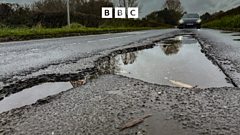
During a recent software update, a bug was introduced into the Waymo Driver’s perception system. This wasn't a catastrophic engine failure or a steering wheel snapping off. It was a failure of imagination. The system began to struggle with "standing water events." Specifically, the sensors—the LIDAR that bounces lasers off objects and the cameras that scan for motion—encountered a conflict. To a laser, a pool of water can be a confusing surface. It reflects. It refracts. It mimics the sky or the car in front of it.
Because of this glitch, some vehicles didn't see the depth. They didn't see the danger. They simply drove into the water.
The Invisible Stakes of a Patch
This recall covers every vehicle in the Waymo fleet that was running the compromised software version. While no injuries were reported, the "why" behind the recall is more important than the "how many." We are currently living through a massive, real-world experiment where we are teaching machines to understand the physical world, one edge case at a time.
An "edge case" is the industry term for the weird stuff. It’s the mattress that falls off a truck on the I-10. It’s the kid in a dinosaur costume darting across the street on Halloween. It’s the flash flood that turns a suburban intersection into a river. Humans are masters of the edge case because we possess a messy, beautiful thing called "context." We know that a plastic bag blowing in the wind is harmless, while a rock the same size is a disaster.
The Waymo glitch proved that for all its billions of miles of testing, the machine still lacks that fundamental "feel" for the world. When the software failed to correctly identify standing water, it wasn't being "stupid." It was being too literal. It saw a path where a human saw a trap.
Waymo’s response was swift. They deployed a "software remedy" to the entire fleet. Unlike a traditional car recall, where you spend a miserable Saturday drinking stale coffee in a dealership waiting room while a mechanic replaces a physical bolt, this was invisible. The cars were fixed over the air. They "learned" how to see water better while they were parked in their depots.
But the speed of the fix shouldn't mask the gravity of the error. Every time one of these vehicles makes a mistake, it chips away at a fragile, invisible currency: public trust.
The Ghost in the Rain
We expect perfection from machines because we know how flawed we are. We know that humans get tired. We know they text while driving. We know they have one too many drinks at happy hour. We are willing to hand over the keys to a robot specifically because we want to eliminate the "human error" that kills 40,000 people a year on American roads.
Yet, when a robot drives into a puddle it should have avoided, it feels different than when a person does it. It feels like a betrayal of the promise. If the machine can’t see a puddle, can it see a cyclist in a yellow jacket against a yellow sunset? Can it see the subtle lean of a pedestrian about to step off the curb?
The recall highlights a specific vulnerability in the way we build AI. Most autonomous systems are trained on massive datasets. They are shown millions of pictures of stop signs until they can identify one even if it's covered in graffiti or partially hidden by a tree branch. But standing water is a shapeshifter. It changes based on the light, the angle of the sun, and the color of the asphalt beneath it.
To fix the glitch, Waymo’s engineers had to go back into the code and refine how the vehicle interprets "noise" from its sensors during rain. They had to teach the ghost in the machine that when the ground starts to look like a mirror, it’s time to stop.
The Quiet Conflict
There is a tension at the heart of the autonomous vehicle industry that most people ignore. It’s the conflict between "move fast and break things" and "lives are on the line."
Waymo is widely considered the leader in this space. Their cars are already operating as a fully driverless commercial service in cities like Phoenix, San Francisco, and Los Angeles. You can pull out your phone, tap an app, and a car with an empty driver's seat will pull up to your curb. It is a miracle of modern engineering. It feels like the future has finally arrived.
Then, the rain starts.
The recall of 3,800 vehicles is a reminder that the future is still under construction. We are in the "awkward teenage years" of autonomous technology. The cars are smart enough to navigate complex 4-way stops and narrow construction zones, but they are still vulnerable to the basic elements of nature.
This incident isn't just about Waymo. It's about the standard we set for the technology that will eventually transport our children and our elderly. Do we demand 100% perfection? Or do we accept that these machines, like us, will have to learn through experience—even if that experience involves a few soggy sensors and a public mea culpa?
The Road Ahead
The software patch has been uploaded. The "Drive into Standing Water" bug has been squashed. The fleet is back on the streets, scanning the horizon with their spinning LIDAR crowns, searching for the next edge case that hasn't been programmed yet.
Behind the scenes, the engineers are likely looking at the data from the vehicles that failed. They are recreatng those rainy Phoenix streets in high-fidelity simulations, running the scenario tens of thousands of times until the AI knows every ripple and reflection of a puddle by heart.
We often talk about AI as if it is a finished product, a static brain that either works or it doesn't. But these recalls show us the truth. The Waymo Driver is a living document. It is a collective consciousness that is being edited and refined every single day. Every mistake it makes is a lesson that is immediately shared with every other vehicle in the fleet. When one car learns to avoid a flood, they all learn.
There is a certain cold comfort in that. When a human driver makes a mistake and drives into deep water, that lesson dies with them or stays trapped in their individual memory. When a Waymo makes that mistake, the entire species of vehicle evolves.
The next time the clouds gather over the desert and the smell of rain hits the pavement, 3,800 cars will be watching the ground with a new kind of suspicion. They will see the reflection of the streetlamps in the growing pools of water, and they will understand what it means. They will have a memory of a mistake they never personally made.
We are teaching the machines how to be careful. We are teaching them that the world isn't just made of data points and obstacles, but of hazards that can be as thin as a sheet of glass and as deep as a river.
The water is still there. But the machine is finally learning how to see it.