The rain in London does not fall with theatrical fury. It drifts. It hangs in the heavy air of Whitehall, clinging to the wool of winter coats, blurring the red brick of government facades into soft, watercolor smears. On a Saturday afternoon, this gray damp usually drives people toward the comforting hiss of pub radiators or the quiet sanctuary of the National Gallery.
Not today.
Listen.
Do you hear it? That low, rhythmic pulse rising from the asphalt. It is not the sound of traffic. Traffic has been banished, its mechanical roar choked off by steel barriers and the sudden, physical assertion of thousands of human bodies. It is a collective heartbeat, amplified by megaphones, carried on the breath of thousands who have left their warm kitchens to stand in the cold.
They are carrying cardboard signs that are already beginning to warp and sag
The Concrete Echoes of the Thames
news
category
Rain in London does not fall so much as it suspends itself, heavy and grey, over the limestone cornices and the black iron gates of Whitehall. On a Saturday afternoon, the mist gathers on the shoulders of wool coats and wool scarves. It clings to eyelashes. It tastes of coal and damp earth, a familiar London weight.
Except today, the air carries something else. A low, vibrating hum that starts somewhere near Parliament Square and rolls outward like an incoming tide.
It is the sound of thousands of pairs of boots hitting wet asphalt in unison.
Consider the anatomy of a crowd this large. From the top of a double-decker bus stranded on a diverted route, the street looks less like a gathering and more like a river that has broken its banks. There are university students with ink-stained fingers, grandmothers wrapped in plaid blankets pushed in wheelchairs by third-generation descendants, trade unionists in high-visibility orange vests, and doctors whose scrub-lined bags sit forgotten at home. They are holding signs made of cardboard boxes and marker pens, their edges warping in the drizzle.
Gaza.
The name cuts through the damp air, repeated in a rhythm that defies the cold.
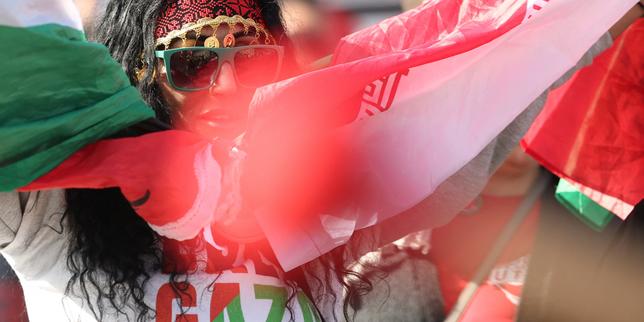
If you stand long enough at the corner of Downing Street, the abstract statistics of geopolitical conflict dissolve into human detail. You watch a young woman, perhaps twenty-two, adjust a red and white keffiyeh around her neck. Her fingers are red from the frost, trembling slightly as she holds a placard bearing the names of children whose lives were cut short thousands of miles away. She has never set foot in the Middle East. She has never smelled the dust of the Mediterranean coast or heard the specific call to prayer echoing off concrete walls in Deir al-Balah. Yet here she is, shouting until her throat is raw, bound by an invisible thread of empathy that stretches across continents.
This is what official dispatches and diplomatic wires fail to capture. They speak of tens of thousands of participants as if they were data points on a spreadsheet. They record the police estimates, the traffic disruptions, the parliamentary questions asked in hushed tones behind mahogany doors. But they miss the raw, pulsing heartbeat of the pavement.
The core demand echoing between the stone facades of government ministries is stark, stripped of diplomatic cushioning: sanctions.
For months, the city has watched the news flicker across flat-screen televisions in pubs and living rooms. People have eaten their dinners while watching footage of collapsed apartment blocks and dust-covered rescue workers. There is a specific kind of helplessness that comes with watching a catastrophe unfold in high definition from the safety of a leather sofa. You turn down the volume. You wash the dishes. You try to sleep.
Eventually, the helplessness curdles into something else.
Action.
That is why the thousands converged on the British capital. They came because the distance between Westminster and Gaza began to feel uncomfortably small, bridged by a shared recognition of human fragility. When international law feels like a theoretical construct recited by men in suits, ordinary citizens take to the streets to demand that words be backed by consequence. They want arms exports halted. They want diplomatic pressure applied with the weight of a hammer rather than the softness of a feather. They want a reckoning.
A middle-aged man wearing a worn tweed jacket steps out of the current to catch his breath against a brick wall. He introduces himself simply as Arthur, a retired history teacher from Manchester who caught the early train down.
"My father fought in the Second World War," he says, his breath pluming white in the chill. "He taught me that silence is a form of complicity. When you see disproportionate suffering, you don't get to look away just because it's inconvenient or complicated. If our government is selling the steel that builds the cage, then our hands are in the mortar, too."
He doesn't sound angry. He sounds tired. It is the exhaustion of a spectator who has watched history repeat its darkest loops with agonizing predictability.
Around us, the chants shift, rising and falling like the wind through an alleyway. The police officers standing along the metal barricades watch with practiced neutrality, their yellow-jacketed shoulders squared against the press of the crowd. They have seen this before. London is a city built on protest, its cobblestones worn down by centuries of grievances, petitions, and marching feet. The Suffragettes walked these same routes. The anti-apartheid movements filled these exact plazas. The ghosts of past dissent hang heavy in the London fog, whispering that change rarely arrives from the top down; it has to be dragged upward by the ankles.
As the afternoon fades into an early, bruised twilight, the streetlights flicker on, casting long, amber reflections in the puddles. The density of the crowd does not thin. If anything, it presses closer together, seeking warmth in numbers against the deepening cold.
The banners begin to lower as arms grow tired, but the voices remain. They bounce off the glass of government offices that are locked and empty for the weekend, echoing into empty corridors where power ostensibly resides.
The demonstration will eventually disperse. The litter sweepers will clear the cardboard signs and plastic cups into green bags. The traffic will resume its mechanical flow down Whitehall. But the underlying friction—the moral dissonance of a connected world standing by while the periphery burns—will not wash down the storm drains.
In the quiet dark beneath the streetlights, long after the last chant has faded into the hum of evening traffic, the damp pavement retains the warmth of ten thousand footsteps, cooling slowly in the night.