The air in Gorton and Denton usually smells of damp pavement and the lingering grease of a thousand takeaway fryers. It is an honest, heavy smell. For decades, it has been a Labour smell. If you grew up here, you didn't just vote for the red rosette; you inherited it, like a family nose or a stubborn predisposition for supporting a struggling football team.
But something shifted on Thursday night.
The rain was relentless, the kind of Manchester drizzle that doesn't just wet your skin but settles into your bones, making everything feel permanent and unchangeable. Inside the counting hall, however, the permanence was evaporating. When the numbers were finally read out, the silence that followed was louder than any cheer.
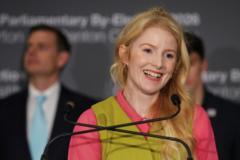
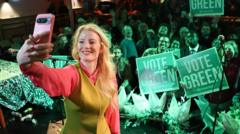
The Green Party hadn't just won a by-election. They had performed a surgical extraction of a heartland.
The Kitchen Table Crisis
Consider a hypothetical resident named Martha. She is sixty-four, lives in a terraced house with a drafty front door, and has voted Labour since the days when Harold Wilson was a household name. To Martha, politics isn't about "geopolitics" or "macroeconomic trends." It is about the price of a pint of milk and the fact that her granddaughter’s asthma gets worse every time the traffic stalls on the A57.
For years, Martha felt like a background character in someone else’s movie. The big parties talked over her head about "growth targets" and "fiscal responsibility."
Then came the Green canvassers.
They didn't talk about global carbon markets. They talked about the mould in the corner of her ceiling. They talked about why the local park was being sold to a developer for luxury flats that no one in Gorton could actually afford. They linked the global to the local in a way that felt like a conversation, not a lecture.
When the Green Party pushed Labour into an unthinkable third place, it wasn't because the residents had suddenly all become radical environmentalists. It was because they felt, for the first time in a generation, that someone was looking at their specific patch of earth with something other than indifference.
The Arithmetic of Discontent
The numbers are startling. In a seat that should have been a safe harbor for the government, the Green candidate didn't just edge a victory; they commanded it. The Conservatives, meanwhile, hovered in the margins, almost like ghosts at their own feast.
But the real story is the collapse of the red wall within the wall.
Labour’s slide to third place is a systemic shock. It suggests that the "default" setting for the working-class voter is being recalibrated. If you spend years telling a community that you are their only hope, and then their lives don't actually improve, the "only" part of that sentence starts to look like a threat rather than a promise.
We often think of political shifts as tectonic—slow, grinding movements that take centuries. This felt more like a sinkhole. One day the ground is there, and the next, there is a gaping void where a century of loyalty used to sit.
The Invisible Stakes
Why does a local by-election in a corner of Greater Manchester matter to someone living in Bristol, London, or Glasgow? Because Gorton and Denton are a petri dish for the national mood.
There is a growing realization that the old binary of "Left vs. Right" is failing to capture the nuance of modern anxiety. People are tired. They are tired of the performative outrage on social media and the recycled talking points on the evening news. They are looking for something that feels granular.
The Green Party’s surge represents a shift toward "hyper-localism." It’s the idea that if the big machines of state can’t fix the world, maybe we can at least fix the air quality on our own street. It’s a defensive crouch against a globalized world that feels increasingly out of control.
The Ghost of Loyalties Past
Walking through Denton the morning after, you could see the debris of the campaign. Soggy leaflets plastered to the bottom of shoes. A few abandoned posters peeling off lampposts.
The traditional Labour voter is often described as "loyal," but loyalty is a two-way street. When a party begins to take a demographic for granted, it stops listening. It starts assuming. It assumes that because Martha’s father was a trade unionist, Martha will always mark the box with a red pen.
But Martha has eyes. She sees the boarded-up shops. She sees the rising cost of her heating bill. She sees a political class that seems more interested in winning arguments than winning better lives for people.
The Green victory was a divorce. A messy, public, and definitive end to a long-term relationship that had grown cold.
The New Green
For a long time, the Green Party was viewed as the home of the middle-class eccentric—people who worried about the plight of the lesser-spotted newt while the rest of the country worried about the mortgage.
That image died in Gorton and Denton.
The new Green voter is pragmatic. They are looking at a world of extreme weather, failing infrastructure, and stagnant wages, and they are making a logical choice. If the "sensible" parties have led us to this point of crisis, perhaps the "radical" option is actually the most conservative one—the one that seeks to conserve the very basics of a livable life.
The campaign didn't focus on abstract ice caps. It focused on "Green Jobs" that actually mean something in a post-industrial landscape. It focused on public transport that actually runs on time. It focused on the dignity of having a local representative who lives three streets away rather than in a different postal code entirely.
A Cold Morning in the North
The sun struggled to break through the clouds on Friday. In the local cafes, the talk wasn't about the "historic shift" or the "seismic political realignment." It was about whether the new councilor would actually do something about the fly-tipping behind the supermarket.
There is a heavy weight on the shoulders of those who won. Winning a protest vote is easy. Holding a community together when the honeymoon phase ends is the real work. The residents of Gorton and Denton didn't vote for a utopia; they voted for a chance to be heard.
Labour now faces a reckoning. They cannot simply wait for the pendulum to swing back. The pendulum has snapped off the clock. They have to find a way to speak to the Marthas of the world again, not as a voting bloc, but as human beings with fears that are as real as the rain.
The map of England is changing. It isn't just turning blue or red anymore. In the gaps between the certainties, a new color is taking root, fed by the damp Manchester air and a profound, quiet hunger for change.
The tally was more than a count of ballots. It was a ledger of broken promises and new, fragile hopes. As the city hums back to life, the red rosettes are being tucked into drawers, and the green ones are being pinned to lapels with a sense of cautious, trembling defiance.
The rain hasn't stopped, but the air feels different.
Would you like me to analyze the specific demographic data from the Gorton and Denton results to see how this trend might impact the upcoming general election?