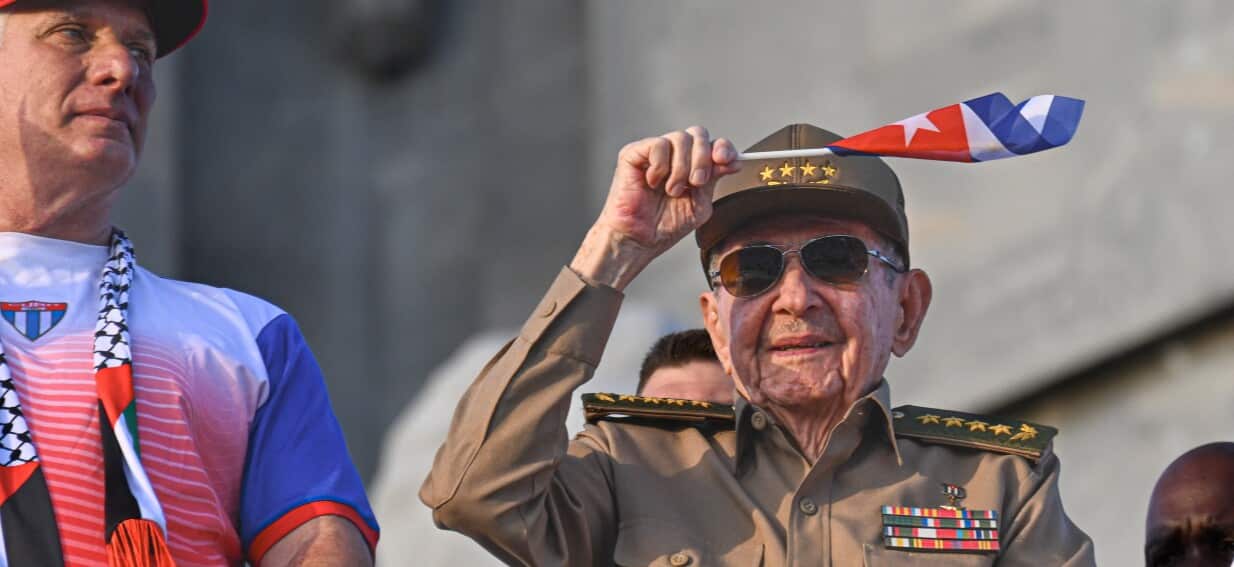
The United States government just dropped a legal bomb on Havana. In a packed auditorium at Miami’s symbolic Freedom Tower, federal prosecutors unsealed a blockbuster superseding indictment charging 94-year-old former Cuban President Raul Castro with murder and conspiracy.
If you think this is just a symbolic gesture about a decades-old Cold War grudge, think again. This move signals a massive, aggressive escalation in Washington's foreign policy. President Donald Trump is actively squeezing the Cuban regime, and he’s using the federal courts as a primary weapon.
The Blood on the Straits of Florida
To understand why this is happening now, you have to look back to February 24, 1996. Three unarmed Cessna aircraft took off from South Florida. They belonged to Brothers to the Rescue, a Miami-based exile group that flew humanitarian missions to spot Cuban migrants stranded at sea.
They also had a habit of dropping pro-democracy leaflets over Havana. The Cuban government hated it.
According to the unsealed indictment from the U.S. District Court for the Southern District of Florida, Raul Castro—who was Cuba’s defense minister at the time—personally oversaw the planning. Cuban intelligence agents infiltrated the exile group, sending flight details back to Havana. Raul Castro ordered military pilots to train using Russian-made MiG fighter jets specifically to track and intercept these small planes.
When those Cessnas flew over international waters just north of Havana, the Cuban MiGs closed in. Without warning, they fired air-to-air missiles, obliterating two of the civilian planes.
Four men died instantly: Carlos Costa, Armando Alejandre Jr., Mario de la Peña, and Pablo Morales. Three were U.S. citizens, and one was a legal permanent resident. A third plane barely escaped.
For 30 years, the families of those men have pushed for justice. Bill Clinton’s administration blinked back in the nineties, buried the idea of indicting Raul Castro due to diplomatic blowback, and chose a softer path. Trump's Justice Department isn't blinking.
Trump's Playbook for Regime Change
Acting Attorney General Todd Blanche made it clear that this isn't ancient history. It's an active hunt. The indictment charges Raul Castro and five Cuban military co-defendants, including the fighter pilots, with conspiracy to kill U.S. nationals, destruction of aircraft, and four counts of murder. These charges carry life in prison or the death penalty.
But how do you arrest a 94-year-old dictator who hasn't left his island fortress in years?
Blanche dropped a massive hint when asked if the U.S. military would go in to grab Castro. He told the roaring Miami crowd that an arrest warrant has been issued and that the U.S. expects Castro to show up "by his own will or by another way."
That "another way" phrase is sending shockwaves through the Caribbean. It’s a direct nod to what happened in January 2026, when U.S. military forces launched a surprise raid in Caracas, captured Venezuelan President Nicolás Maduro, and flew him straight to a federal prison in New York to face drug-trafficking charges.
Trump has openly warned that Cuba is "next." He recently described the island as a rogue state harboring hostile foreign intelligence and military operations just 90 miles from Florida. The administration is demanding that Cuba completely open its economy to American investment and kick out foreign adversaries like Russia and China.
An Island on the Verge of Collapse
This legal pressure isn't happening in a vacuum. The U.S. has effectively clamped a vice grip around Cuba’s economy. A tight American oil embargo and fuel blockade have choked off the island’s energy supply.
The reality on the ground in Cuba is brutal right now. Rolling blackouts last for days. Food shortages are rampant. The tourism industry is practically dead, and the economy has entirely collapsed. Spontaneous anti-government protests have been bubbling up in Havana as people run out of basic necessities.
The Cuban government is visibly panicking. Current Cuban President Miguel Díaz-Canel scrambled to X to call the indictment a political stunt with zero legal basis. He claimed the 1996 shootdown was "legitimate self-defense" against "notorious terrorists" who repeatedly violated Cuban airspace.
But Washington is betting that the combination of economic misery and high-level criminal indictments will break the regime's spine.
What Actually Happens Next
Let's be realistic about the immediate future. Raul Castro is incredibly old. He stepped down as president in 2018 and left his post as head of the Communist Party in 2021. He's a political figurehead now, but he still wields immense behind-the-scenes power.
Will U.S. Navy SEALs launch a nighttime raid into Havana to grab a 94-year-old man like they did with Maduro? It's highly unlikely. The military risks of invading a heavily fortified island are vastly different than a targeted grab in Venezuela. Trump himself noted after the indictment that he doesn't think an escalation to open military conflict is necessary because the Cuban government has already "lost control" and the place is falling apart from the inside.
Instead, look for the U.S. to use this criminal indictment as a brutal tactical lever.
Washington now has a massive bargaining chip. Federal indictments don't just expire. They put a permanent freeze on any future diplomatic thawing. If the Cuban government wants any relief from the crushing fuel embargo or wants to avoid further direct American intervention, they are going to have to make major concessions.
Expect the U.S. to demand the immediate release of political prisoners on the island and the total eviction of Russian military and intelligence assets. The Castro family's decades-long immunity is officially over, and the administration has just written the opening lines of the regime's final chapter.