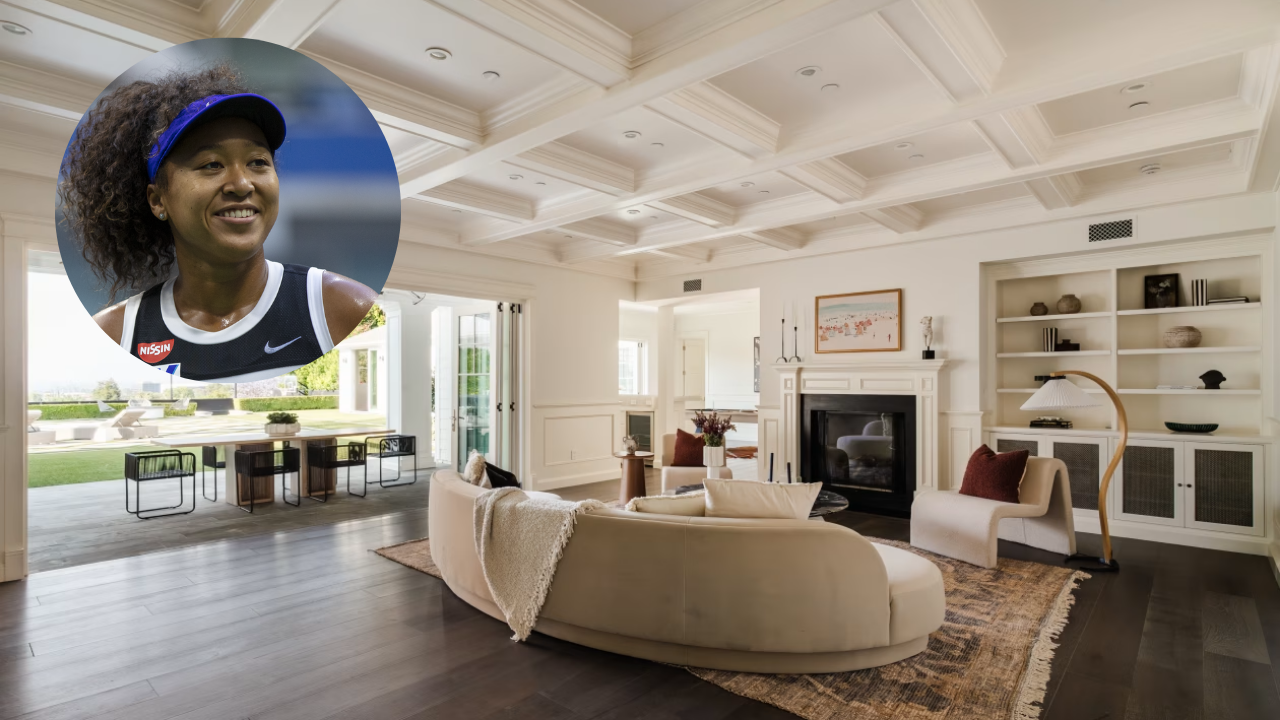
When tennis star Naomi Osaka acquired a Cape Cod-style estate in the Tarzana neighborhood of Los Angeles from entertainers Nick and Vanessa Lachey for $6.3 million, the transaction looked like standard high-net-worth portfolio diversification. Three years later, the asset completed a rare circular route. The Lacheys bought the property back for $7.95 million, injecting millions more into a home they had originally acquired for roughly $5.1 million before exiting for professional relocation.
This multi-million-dollar boomerang exposes the mechanics of elite property maneuvering, where liquid capital, specialized athletic customization, and lifestyle pivots override traditional housing market metrics.
The Anatomy of the Tarzana Turnaround
To understand why a residence changes hands twice between the exact same parties at a staggering price inflation, one must examine what happened during the intervening years. Elite athletes do not live like standard suburban homeowners. When Osaka took possession of the half-acre Tarzana compound, the baseline Cape Cod architecture—complete with a pool, spa, and sports court—served merely as a structural shell.
Professional tennis demands continuous physical maintenance. Osaka injected substantial capital into the estate, most notably constructing an independent 800-square-foot recovery suite and training gym. This structure was not a cosmetic upgrade. It incorporated specialized athletic infrastructure, including a sauna, cold plunge, and custom wellness facilities tailored to the daily demands of a Grand Slam champion.
When the Lacheys faced changing career trajectories—specifically a return to California following television production shifts in Hawaii—the market had fundamentally transformed. They did not just buy back a house they once owned; they reacquired a hyper-customized performance compound. The $1.65 million nominal gap between Osaka's purchase price and her subsequent sale back to the original owners reflects a blend of broader Los Angeles appreciation and the premium attached to turnkey athletic assets.
The Illusion of Net Profit in High-End Holdings
Outsiders often look at headline figures—such as the jump from $6.3 million to $7.95 million—and calculate instant windfalls. That math ignores the heavy friction of luxury property ownership.
Consider the carrying costs associated with a multi-million-dollar portfolio in Los Angeles County. Property taxes alone consume hundreds of thousands of dollars annually. Factor in high-end maintenance, security integration, private brokerage commissions, and the heavy capital expenditure required to engineer a commercial-grade recovery wing into a residential backyard, and the net margin narrows significantly.
Real estate transactions at this tier operate on a different ledger. For elite earners, luxury housing functions simultaneously as a privacy fortress, a training hub, and a store of value. Liquidity is rarely the primary constraint; operational utility is. Osaka needed a secure, tailored environment to manage her career during her time in Southern California, and the Tarzana estate fulfilled that tactical requirement before her portfolio shifted toward other high-profile acquisitions, including her earlier dealings with properties previously owned by public figures like Nick Jonas.
Why Celebrity Real Estate Bounces Back
The recirculation of homes within closed celebrity circles is more common than public reporting suggests. Zip codes like Tarzana, Encino, and Beverly Hills form an insulated ecosystem where inventory matching specific privacy and security needs remains limited. When a celebrity sells a home, they are often selling to a buyer pool constrained by stringent gate-community protocols, paparazzi mitigation features, and custom architectural layouts.
For the Lacheys, repurchasing their former residence was an exercise in familiarity coupled with a premium penalty. They traded convenience for capital inflation, opting to pay an elevated price to step back into a floor plan they already understood, enhanced by someone else's million-dollar fitness upgrades. Shortly after reacquiring the asset, the couple tested the broader open market once more through high-profile brokerages, listing the property near the $8.2 million threshold.
This cycle strips away the romance of celebrity real estate. It reveals a transactional chess match where houses are temporary staging grounds for demanding lifestyles, capital is deployed to bend properties to elite physical standards, and the market ultimately absorbs the cost of every custom modification.


