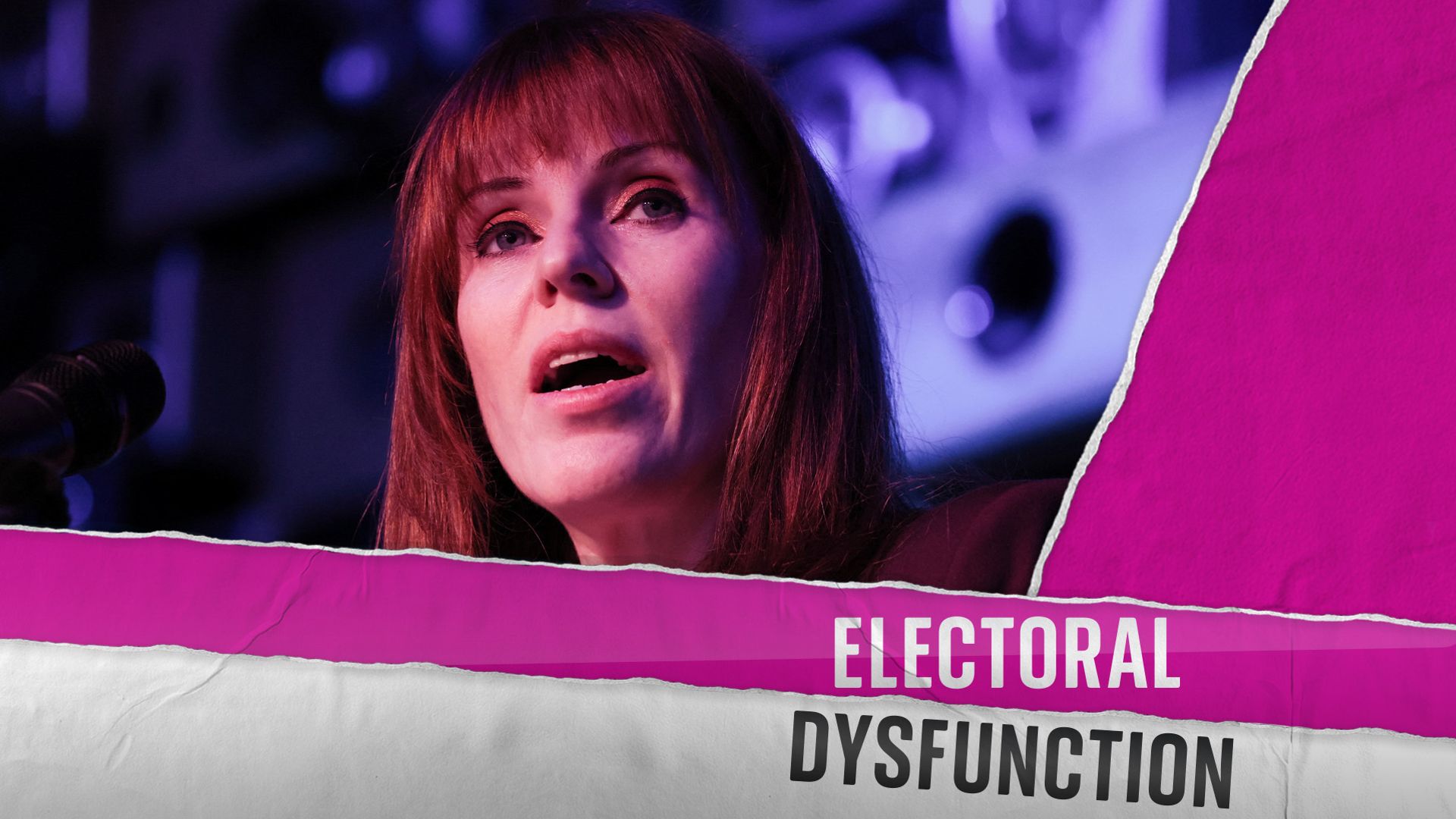
The political ceiling for Angela Rayner has always been reinforced with the same industrial-grade glass she used to install back in Stockport. But this week, the former Deputy Prime Minister did more than just crack the surface; she swung a sledgehammer at the very foundation of Keir Starmer’s governing strategy. In a blistering intervention at the Mainstream campaign group reception, Rayner didn't just criticize policy—she accused the Labour government of becoming "the establishment" and "running out of time" to deliver the visceral change voters were promised in 2024.
Her specific target was a planned immigration overhaul by Home Secretary Shabana Mahmood, which would double the time required for legal migrants to qualify for Indefinite Leave to Remain (ILR) from five to ten years. Rayner called the move "un-British" and a "breach of trust." While the headlines focused on the "slamming" and the "backlash," the real story is much grittier. This isn't just a cabinet spat; it is the opening salvo of a leadership challenge born from the wreckage of a tax investigation that has left the party's most potent bridge to the working class cooling her heels on the backbenches. For an alternative look, read: this related article.
The Strategy of Impatience
Rayner’s rhetoric was calculated. By framing the government’s pace as "going through the motions in the face of decline," she is positioning herself as the guardian of the original 2024 manifesto. This is a classic insurgent maneuver. When a government stalls in the mid-term—and with energy costs spiking due to the ongoing conflict in Iran—ministers often retreat into "managerialism." They focus on tweaks and consultations. Rayner is betting that the public, and a significant portion of the 100-plus Labour parliamentarians who signed a letter against the ILR changes, are hungry for a more combative style of politics.
The "why" behind her intervention is simple: Rayner knows that if she waits for the HMRC investigation into her stamp duty affairs to naturally conclude, she may be too late to catch the wave of internal discontent. Her allies are already briefing that the tax issue—involving a complex nesting arrangement and a trust for her son—will be resolved before the May local elections. By moving now, she ensures that when that resolution arrives, she isn't just a cleared backbencher, but the de facto leader of the "Real Labour" movement. Further analysis on this trend has been shared by TIME.
The Immigration Goalpost Shift
To understand the weight of Rayner's "un-British" comment, one must look at the mechanics of the proposed ILR change. Currently, the five-year path to settlement is a cornerstone of the UK’s post-Brexit points-based system. It provides a predictable horizon for skilled workers in the NHS, social care, and tech sectors.
Under Mahmood’s proposal, the qualifying period doubles to a decade. For a nurse who arrived in 2021 on the promise of 2026 settlement, the goalposts aren't just moving; they are being taken off the pitch entirely. This isn't a hypothetical grievance. It affects hundreds of thousands of tax-paying residents who have built lives based on a specific legal contract with the state. Rayner's critique is that the state is effectively defaulting on its word.
The Impact on the Labour Market
| Policy Feature | Current System (ILR) | Proposed Change | Rayner's Position |
|---|---|---|---|
| Qualifying Period | 5 Years | 10 Years | "Breach of trust" |
| Retroactive Reach | N/A | Applies to current holders | "Pulls the rug" |
| English Req. | Standard B1 | Higher Standard | Barriers to integration |
| Settlement Status | Right to stay | "Privilege to be earned" | Un-British |
The business community is quietly terrified. While the Home Office argues that long-term settlement is a "privilege," industry analysts point out that doubling the wait time makes the UK a significantly less attractive destination for global talent compared to the EU or Canada. If the goal is economic growth, adding five years of visa anxiety to the most productive members of the workforce is a curious way to achieve it.
The Housing Shadow
Before her resignation last September, Rayner was the architect of the "social rent revolution." Her absence from the Department for Levelling Up, Housing and Communities (DLUHC) has left a vacuum that her successor has struggled to fill. This week, while Starmer was defending his leadership, Rayner was on the ground in Croydon, standing with tenants facing mass evictions from billionaire-owned property portfolios.
This is where Rayner’s "Experience" E-E-A-T score outshines the rest of the cabinet. She doesn't just talk about "housing stock"; she talks about "disgusting and disgraceful" behavior from landlords who treat families like "spreadsheets." This language resonates in a way that white papers on "planning reform" never will. By linking the housing crisis to the immigration debate—noting that the state should be there for people who have made an investment in the country—she creates a unified narrative of fairness.
The reality of the housing market in 2026 is brutal. With nearly 160,000 children in temporary accommodation, the government's target of 1.5 million homes looks increasingly like a fantasy without the "seismic reforms" Rayner was pushing. Her supporters argue that since she left, the "Planning and Infrastructure Bill" has been watered down to appease local councils, losing the "teeth" it needed to actually get shovels in the ground.
Navigating the Tax Scandal
We must address the elephant in the room: the HMRC investigation. Rayner’s critics, including Health Secretary Wes Streeting, have stayed noticeably quiet or offered only lukewarm defenses. The investigation centers on an £800,000 apartment in Hove and whether the "deeming provisions" of the Finance Act 2003 were correctly applied to a trust arrangement.
It is a dry, technical dispute that would normally be settled with a quiet check to the Treasury. But in the current political climate, it was used to decapitate the government’s most effective communicator. Rayner’s decision to speak out now suggests she has received legal assurances that the "insurmountable obstacle" is about to vanish. If she pays the outstanding tax and perhaps a penalty, she returns to the fold not as a penitent, but as a martyr for the cause of "working people."
The Risk of the Negative Intervention
Is Rayner's intervention truly "negative," as her detractors claim? If "negative" means destabilizing a Prime Minister whose poll ratings are already floundering, then yes. By attacking the government from the left on immigration and from a populist angle on housing, she is narrowing Starmer’s path to a second term.
However, there is a counter-argument. The "Mainstream" group and the 100-plus MPs who signed the dissent letter represent the soul of the party. If Starmer ignores them, he risks a full-scale backbench rebellion that could paralyze the legislative agenda. In this light, Rayner isn't "slamming" the party; she is providing a pressure valve. She is saying what the party's core voters are thinking before they defect to Reform or stay home entirely.
The government’s response has been telling. Downing Street refused to commit to the Home Secretary’s plan just 24 hours after Rayner’s speech. This "U-turn wobble" proves that even from the backbenches, Rayner holds more power than many of the ministers currently sitting at the cabinet table.
The Road to May
The local elections this May will be the definitive test. If Labour suffers significant losses, the "impatience for change" that Nick Thomas-Symonds claimed the Prime Minister shares will turn into a mandate for a leadership challenge. Rayner has already positioned herself as the alternative. She has the union backing—despite Unite cutting its affiliation fees by 40% in protest of the current trajectory—and she has the "street cred" that the current leadership desperately lacks.
The "Real Reason" Rayner is being slammed isn't because her intervention was negative. It's because she was right. She identified the exact point where the government’s desire for "control" (via the immigration bill) collided with the British sense of "fair play." By framing the debate in terms of values rather than just statistics, she has regained the initiative.
To fix the current crisis, the government doesn't need to "slam" Rayner; it needs to listen to her. If Starmer wants to survive the summer, he must bridge the gap between his managerial "Establishment Labour" and Rayner’s "Working Class Labour." If he doesn't, the person currently sitting in the basement of a Westminster pub giving speeches to campaign groups will soon be the one sitting in the back of a silver Jaguar on her way to the Palace.
Would you like me to analyze the specific legal impact of the proposed 10-year ILR rule on the UK's social care workforce?