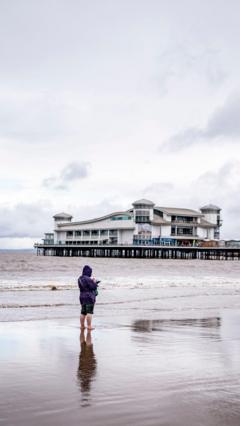
A decade ago, the faded Somerset resort town of Weston-super-Mare voted emphatically to cut ties with the European Union. Over 58% of local voters chose to leave, driven by promises of restored sovereignty, revitalized coastal economies, and a reversal of decades of industrial decline. Today, the economic reality of this seaside town reveals that the grand promises of 2016 were built on a fundamental misunderstanding of structural regional neglect. The critical problem facing the British coast was never Brussels. It was a deep-seated domestic failure to invest in infrastructure, skills, and local industries—a reality that leaving the EU has only magnified.
Walk down the Grand Pier or through the standard high streets just a few blocks inland, and the structural stagnation is immediately apparent. While national political debates focus on the technicalities of regulatory alignment or minor adjustments to trade deals, towns like Weston-super-Mare are dealing with the harsh consequences of an economy that is structurally smaller than it otherwise would have been. Independent economic data from 2026 shows that the UK economy is between 6% and 8% smaller than it would have been without Brexit. For a thriving metropolis, a loss of that size means fewer luxury developments. For a vulnerable coastal town, it translates directly into shuttered shopfronts, underfunded public services, and a severe shortage of seasonal labor.
The Seasonal Labor Trap and the Collapse of Hospitality
The primary driver of the seaside economy has always been hospitality. For decades, hotels, cafes, and amusement parks along the Somerset coast relied on a fluid mixture of young British workers and European seasonal labor to survive the intense summer peaks.
When the free movement of people ended, that pipeline dried up completely.
[EU Labor Pool] --(Ended 2021)--> [Strict Visa Controls] --> [Severe Seasonal Shortages]
                                                                     │
                                                                     ▼
                                                         [Reduced Operating Hours]
                                                         [Surging Staffing Costs]
The standard political counter-argument was that stopping European labor would force businesses to raise wages and hire local workers. That argument turned out to be wrong. In practice, small, low-margin hospitality businesses cannot simply raise wages without pricing out their already cash-strapped domestic tourists.
Instead of a local hiring boom, the town has seen a contraction in service quality and operating hours. Restaurants that once opened seven days a week now close on Mondays and Tuesdays because they cannot find staff. The local labor pool is heavily skewed toward an aging population, and younger residents frequently leave for larger economic hubs like Bristol or Bath.
The Shared Prosperity Fund Illusion
A major selling point of the Leave campaign was the promise that lost EU structural funds would be replaced by direct funding from London, untangled from European red tape. The reality of the UK Shared Prosperity Fund tells a very different story.
Under the old European Regional Development Fund, funding was allocated based on long-term regional need, allowing local councils to plan multi-year regeneration projects. The replacement system forced local authorities into an inefficient bidding war against each other for smaller pools of centralized cash.
- Funding instability: Allocations are often short-term, making it difficult to fund major structural changes like transport upgrades or deep-sea port redevelopments.
- Centralized control: Civil servants in Whitehall, rather than local leaders who understand the area, ultimately decide which local projects get funded.
- Reduced totals: Total regional development spending has dropped significantly in real terms compared to pre-Brexit levels, leaving coastal councils to fill the gaps from already depleted budgets.
Consider a hypothetical example of a seaside town trying to rebuild a collapsing sea wall and build a new tech hub. Under the previous system, it could secure a five-year grant to cover both. Today, it must submit separate, complex bids to London, wait months for approval, and often find that it has only been granted a fraction of the necessary funds, with a strict deadline to spend the money within twelve months.
A Decoupled Property Market
The most striking paradox of the post-Brexit decade in coastal Somerset is the property market. While the local commercial economy has stalled, house prices initially spiked during the early 2020s, driven by remote workers moving away from London and the South East.
This trend did not revitalize the local economy. Instead, it decoupled the housing market from local wages.
| Economic Indicator | Local Reality in Weston-super-Mare |
|---|---|
| Average Wages | Significantly below the national average, dominated by seasonal and retail roles. |
| Housing Costs | Driven up by buyers from wealthier cities, pricing out young locals. |
| Business Investment | Down approximately 18% nationally compared to pre-referendum trends, felt acutely in regional towns. |
| Public Services | Under severe pressure due to an older demographic and declining local tax revenues. |
This housing shift created a distinct tier of residents: affluent professionals who spend their money online or commute back to major cities, living alongside a struggling local population that relies on a declining traditional economy. The wealth does not trickle down to the local high street because the structural incentives for businesses to invest in these areas have vanished.
The Broken Promise of the Maritime Economy
For coastal communities involved in fishing and maritime trade, the promise to "take back control" of British waters was a powerful motivator. A decade later, the fishing industry across the UK is struggling under a mountain of complex paperwork, health certificates, and customs checks that make exporting fresh catch to Europe incredibly slow and expensive.
While Weston-super-Mare was never a major industrial fishing port like those in the North East or Cornwall, it relied heavily on the broader health of the regional maritime and tourism ecosystem. The increased costs of importing goods and equipment have hit the local marine retail and boat maintenance sectors hard. Shipping friction has disrupted supply chains for everything from specialized boat parts to the imported seafood served in local fish-and-chip shops.
The fundamental mistake of the Brexit campaign was treating these complex, interdependent global supply chains as simple, isolated transactions that could be altered without economic consequences.
The Real Crisis is Domestic Neglect
The enduring lesson of the past ten years is that the decline of the British seaside resort was never caused by European regulations. The real culprits are deeply rooted domestic issues: an economy centered heavily around London, an unequal tax system that penalizes physical high streets while favoring online giants, and a complete failure to build modern transport links to regional hubs.
By focusing public anger on Brussels, politicians successfully avoided accountability for decades of underinvestment. Now that the European distraction is gone, the structural weaknesses of the coastal economy are fully exposed, leaving residents to face the reality of an economy left behind by its own government.