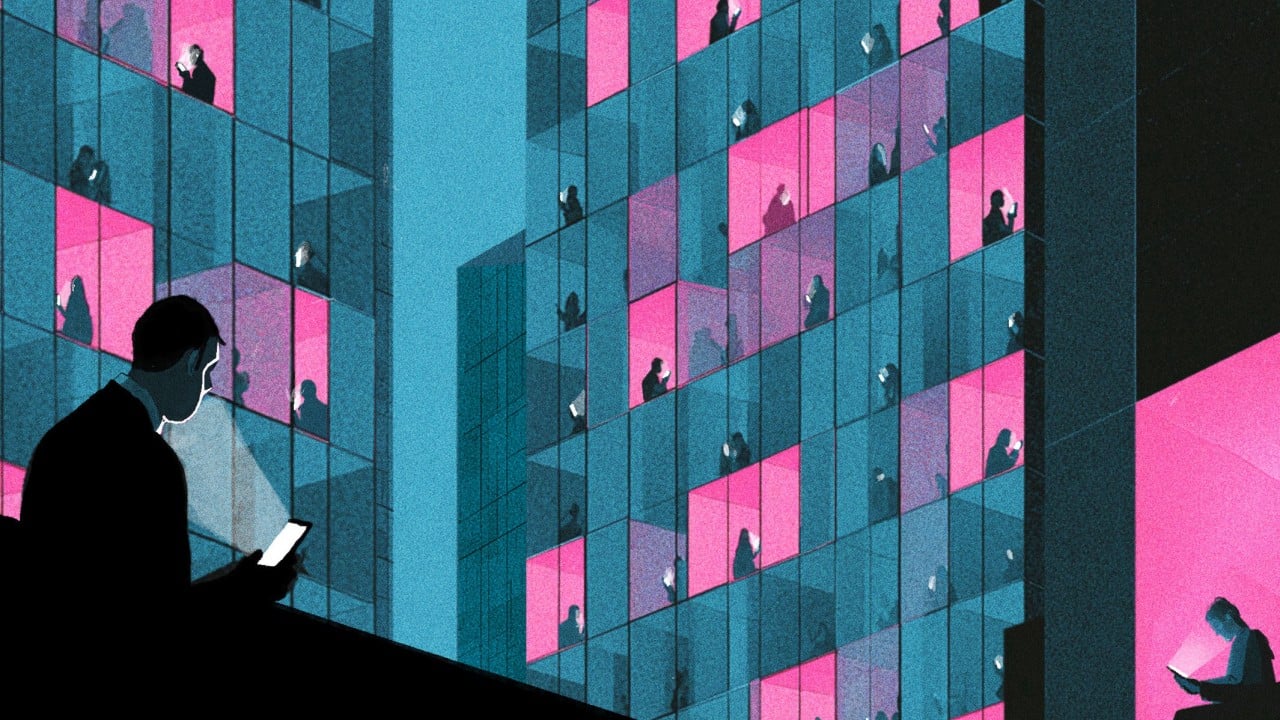
Gigacities are failing human connection because massive scale prioritizes transit efficiency over spontaneous friction. When millions of people are packed into vertical towers and sprawling metropolitan grids, loneliness scales right alongside the population density. Urban planners spent decades treating cities like circuit boards where humans act as electrons moving from point A to point B without friction. That mistake created environments where neighbours live ten feet apart through concrete walls yet remain total strangers for years.
Urban isolation inside modern megacities stems from three distinct structural failures. Infrastructure discourages random encounters. Housing models isolate nuclear units. Digital routing removes the need to ask strangers for directions or local advice. Fixing this requires a complete overhaul of how urban spaces handle shared friction, accidental foot traffic, and community ownership.
The Architecture of Isolation
Walk down any block in a newly developed mega-district and the design philosophy becomes immediately obvious. Smooth glass facades replace stoops. Underground parking garages connect directly to elevator lobbies, allowing residents to bypass the street entirely. You can travel from your apartment to your office cubicle without once making eye contact with another human being.
This is intentional. Developers sell privacy and security as premium luxuries. Every barrier added to a building design reduces perceived friction and increases property values. Yet that same friction reduction strips away the accidental social glue that keeps human communities intact.
Jane Jacobs diagnosed this problem decades ago when she wrote about eyes on the street. When buildings have narrow frontages, frequent doors, and mixed uses, the street becomes a living room. Modern megacity design does the opposite. It turns streets into highways flanked by defensive architecture. Residents retreat indoors because the outdoor environment offers nothing to hold their attention except moving vehicles.
Designing Out the Stranger
Human psychology relies on weak ties. Sociologists define weak ties as acquaintances, local shopkeepers, or the person you nod to while waiting for the morning train. These casual interactions anchor mental health and build community resilience.
Megacities systematically destroy weak ties through functional zoning. By separating residential towers from commercial spaces, schools, and entertainment venues, cities force residents into long transit commutes. When you spend two hours a day trapped inside a metal tube moving beneath the earth, your social battery runs empty by the time you reach home.
Consider a hypothetical resident named Marcus living in a 60-storey residential block in a major metropolitan hub. Marcus leaves his unit at 7:30 AM, takes a private elevator to the basement, boards an express metro, exits directly into the basement of a commercial skyscraper, and takes another elevator to the 40th floor. He does not step outside onto an actual sidewalk once during his morning routine. His entire morning involves moving through sterile tunnels designed for maximum throughput.
Scale multiplies this isolation. The more people crammed into a single square mile, the more anonymous each individual feels. Anonymity feels liberating at first. Soon, it curdles into profound alienation.
The Economic Engine of Separation
Real estate markets drive this architectural segregation. Land values in megacities force developers to maximize floor space ratios. Every square foot dedicated to a public courtyard or a community garden represents lost revenue.
Consequently, public spaces in modern gigacities are often privatized pseudo-public squares. Malls disguised as plazas. Corporate-owned parks patrolled by private security guards who eject anyone who sits on a bench too long without buying a coffee. These spaces discourage lingering. They are built for movement, consumption, and surveillance, not community gathering.
When a city treats public space as an asset to be monetized rather than a commons to be shared, citizens stop acting like citizens and start acting like consumers. Consumers do not talk to strangers in the aisle of a grocery store. They look at their phones, complete their transaction, and exit.
The Counter-Offensive
Some urban centers are waking up to this crisis and rewriting their zoning laws to mandate human friction.
Municipalities are introducing micro-density zoning. This approach forces developers to include shared ground-floor workshops, community kitchens, and pedestrian-only thoroughfares that cannot be bypassed by underground parking structures. If you want to get home, you must walk past your neighbors.
The 15-Minute City Experiment
The most radical pushback against megacity isolation is the fifteen-minute neighborhood model. Pioneered in various forms across global hubs, this framework reorganizes urban geography so that every resident can access work, groceries, healthcare, and recreation within a fifteen-minute walk or bike ride.
By eliminating the long daily commute, residents regain hours of free time. That time flows directly back into the neighborhood streetscape. People walk their children to local schools, chat with local merchants, and linger in neighborhood parks.
Critics argue this model is economically unfeasible in ultra-dense megacities where land prices demand towering vertical structures. Yet several Asian and European developments prove otherwise. By stacking mixed-use zones vertically rather than separating them horizontally, architects are building vertical villages.
The Cost of Inaction
Ignoring the social architecture of gigacities carries a heavy toll. Urban loneliness now rivals obesity and smoking as a public health hazard. Healthcare systems absorb massive costs treating the mental and physical ailments tied to chronic social isolation.
When people feel disconnected from their surroundings, civic participation plummets. Neighborhood watch programs dissolve. Mutual aid networks vanish. A city populated by isolated strangers becomes fragile during crises because nobody knows or trusts the person living down the hall.
Technology companies attempt to bridge this gap with hyper-local social apps, neighborhood forums, and digital community boards. These tools rarely work. Digital connection cannot replace physical proximity. You cannot borrow a cup of sugar from a push notification, and a chat app does not notice when an elderly neighbor stops turning on their porch light.
Rebuilding the Human Scale
Solving the gigacity crisis requires a fundamental shift in how we value urban space. Planners must stop designing for cars and throughput, and start designing for serendipity.
This means tearing down defensive architecture. It means mandating shared courtyards in every multi-family residential block. It means subsidizing small local businesses instead of letting corporate chains dominate every ground-floor retail space.
Architecture shapes behavior. If we build cages of glass and steel designed for isolated economic units, we will get a society of isolated strangers. If we design for human friction, shared vulnerability, and community ownership, gigacities can become places where millions of people live close together without being entirely alone