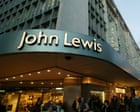
John Lewis is putting 200 jobs at risk by closing its in-store foreign exchange bureaus and specialist gift-wrapping desks across dozens of locations. This move marks a fundamental retreat from the service-led identity that built the brand. While management frames the decision as a modernization effort to align with digital shopping habits, the reality points to an aggressive cost-cutting drive dictated by supermarket-style management tactics. The retailer is sacrificing its last remaining physical touchpoints of premium hospitality to wring out short-term operational margins.
The decision targets bureau de change services across 30 stores and dedicated gift-wrapping stations in 25 stores. Consultations for redundancies have already commenced. Customers will be redirected to an online portal to order currency for home delivery or click-and-collect pickup.
This is an ominous shift for an institution that historically defined itself by customer care. High-end retail relies on friction-free, pleasurable physical experiences to justify premium pricing. Stripping away ancillary services degrades the physical department store into little more than a collection point for online orders.
A Quiet Erosion of the Shop Floor
The decision to eliminate these desks ignores the invisible labor performed by the workers who staff them. These service hubs frequently serve as unofficial help desks for customers bewildered by automated systems or struggling with online orders. Frontline staff report handling complex account queries and customer service issues on a daily basis because central call centers are choked with long wait times and unable to provide immediate assistance.
An internal breakdown is already visible. Regular shop floor assistants will now absorb the remaining face-to-face customer inquiries and ad-hoc wrapping requests at standard tills. These workers are already stretched thin by previous rounds of downsizing.
A retail environment where staff are too rushed to engage with shoppers ceases to feel premium. When a customer stands in a long queue at a standard till just to ask a question, the premium department store experience evaporates.
Management points to high scores on the latest UK Customer Satisfaction Index to defend the cuts. The business recently climbed to second place in national rankings. Relying on lagging indicators to justify current staff reductions is a dangerous corporate habit. Customer loyalty takes decades to build but can vanish in a single season of understaffed, messy shop floors.
The Grocery Metric Invading the Department Store
To understand the restructuring of John Lewis, one must look closely at its leadership. Chairman Jason Tarry took the reins after a long, successful career as the head of Tesco UK. He is a grocery executive by trade and training. In the grocery business, margins are razor-thin, volume is everything, and success is measured by how efficiently you can move people through a store without friction.
Applying high-volume grocery logic to a premium department store is a category error. Department store shoppers do not visit a branch merely to execute a transaction. They visit for the theater of retail, the advice of expert staff, and the reassurance of human interaction.
When you treat a department store like a giant supermarket, you eliminate the very reasons people bypass online giants like Amazon to visit you in person. Nobody goes to a department store because it is more efficient than a smartphone app. They go because it offers something an algorithm cannot replicate.
The strategy under current leadership involves pivoting resources into electronic shelf labels, automated inventory systems, and digital self-service. These tools cut immediate overhead but scrub away the human element that justified the brand's premium positioning for over a century.
Financial Hardball vs Partner Morale
The corporate entity has squeezed its workforce heavily over the last three years. The total headcount across the partnership fell from 76,400 down to 65,700. In the last year alone, the company shed 3,300 jobs through a mix of redundancies and leaving vacant roles unfilled.
At the same time, executive compensation has drawn sharp internal criticism. The chairman received a significant pay increase, taking his base salary to 1.2 million pounds, supplemented by bonuses that brought his total package to 1.26 million pounds.
This pay inflation at the top occurred while the company halved its historic redundancy terms from two weeks of pay per year of service to just one week. Management argued that the high cost of redundancy packages prevented the business from transforming quickly enough.
The partnership model was founded on the radical principle that workers are co-owners who share in both the sacrifices and the rewards of the business. When workers see their redundancy terms slashed and their colleagues laid off while executive pay scales mimic those of traditional public limited companies, the unique cultural contract of the business breaks down completely.
The company paid a modest two percent bonus to its staff recently, the first payout in four years. This was heralded as a sign of financial recovery. A deeper look at the balance sheet shows this profitability was purchased through deep personnel cuts rather than sustainable revenue growth.
The Invisible Cost of Digital Migration
Moving foreign exchange and gift wrapping online makes sense on a spreadsheet. Digital transactions require no physical floor space, no dedicated cash drawers, and no specialized staff training.
This view overlooks the cross-pollination of footfall. A customer walking into a physical branch to exchange currency for a summer holiday or to get a luxury item gift-wrapped for a wedding is a qualified buyer with cash in hand.
While waiting for their currency or their package, that customer walks past fashion displays, beauty counters, and homeware sections. They buy a coffee in the in-store cafe or pick up an unplanned gift.
Removing these specialized desks removes the initial hook that brought the customer through the doors. Once a consumer shifts to ordering their travel money online for home delivery, they have no reason to visit the high street store at all.
Physical retail cannot compete with online commerce on price or speed. It can only compete on experience. By systematically dismantling the service desks that made its physical shops unique, management is pushing its customer base toward the digital channels where it faces intense competition from global e-commerce operations with far lower overheads.
The Long Retail Horizon
This operational pivot exposes a broader truth about the current state of British retail. The middle ground of the high street is dying. Retailers must either become hyper-efficient discount operations or distinct, experience-driven destinations.
John Lewis is attempting an impossible balancing act. It wants to maintain the premium reputation that allows it to charge higher prices while adopting the lean, automated, low-staffing model of a discount merchant.
The worker-owned structure was designed to protect the business from this exact brand of short-term financial engineering. By treating staff as expense lines to be optimized rather than assets that drive value, the leadership team risks turning a national treasure into an ordinary, uninspired chain store. The high street does not need another automated fulfillment center; it needs a reason for people to leave their homes.