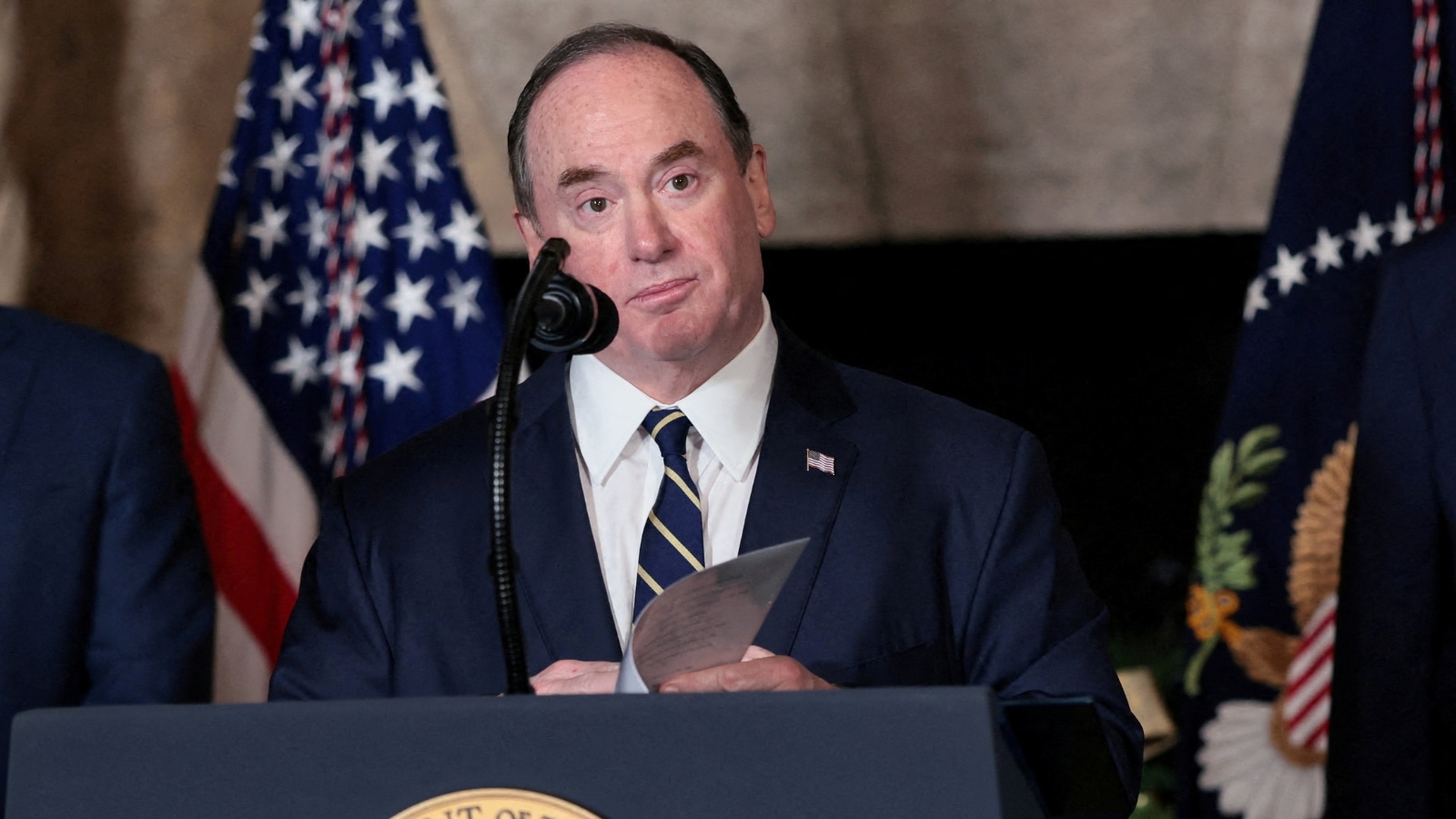
The firing of Navy Secretary John Phelan on Wednesday was not a routine administrative shuffle. It was the climax of a toxic, months-long power struggle at the summit of the Pentagon. While the official statement from Defense Department spokesman Sean Parnell thanked Phelan for his service, the reality is far more brutal. Phelan was terminated because he attempted to run the Navy as a personal fiefdom, reporting directly to President Donald Trump while treating Defense Secretary Pete Hegseth as an administrative hurdle rather than a boss.
This ouster follows the abrupt removal of Army Chief of Staff Gen. Randy George just weeks ago. The pattern is now undeniable. The Pentagon is currently undergoing a systemic purge designed to enforce absolute loyalty to the Secretary of Defense and, by extension, the White House. For Phelan, a billionaire donor and Mar-a-Lago regular, his proximity to the President was his greatest asset—until it became his professional death warrant.
The Architecture of a Purge
To understand why Phelan is out, you have to look at the "how." In early April, the dismissal of Gen. Randy George signaled that no one, regardless of rank or tenure, was safe from Hegseth’s mandate to reshape the military. Phelan’s departure is the civilian equivalent of that strike.
The friction between Phelan and Hegseth was not a secret within the E-Ring. It was a slow-motion train wreck fueled by two competing visions of how to manage a wartime Navy. The United States is currently maintaining a high-stakes naval blockade of Iranian ports. In the middle of this operational crisis, the civilian head of the Navy and the Secretary of Defense were essentially not on speaking terms.
- The Shipbuilding Rift: Phelan pushed for an aggressive, unorthodox shipbuilding plan that included the "Trump Class" battleship—a concept he pitched directly to the President at Mar-a-Lago.
- The Submarine End-Run: In response to Phelan’s independent streak, Hegseth and Deputy Defense Secretary Steve Feinberg created a new "submarine acquisition czar" who bypassed the Navy Secretary entirely, reporting directly to the Deputy Secretary.
- The Chain of Command: Sources within the Pentagon indicate that Phelan frequently ignored established protocols, sending late-night messages to the President regarding budget requests and fleet deployments without Hegseth’s knowledge.
The Fall of the Mar-a-Lago Secretary
Phelan’s background was always an awkward fit for the rigid hierarchy of the Department of Defense. A private equity magnate with zero prior military service, he was brought in as an "outsider" to disrupt a stagnant bureaucracy. He did exactly that, but he failed to realize that the bureaucracy—when led by a Secretary of Defense with the President’s backing—has ways of hitting back.
The breaking point appears to have been a series of disagreements over the "Golden Fleet" initiative and the speed of naval reforms. Hegseth wanted faster results and total compliance. Phelan, accustomed to the autonomy of the private sector, treated the Pentagon's hierarchy as a suggestion.
When Phelan arrived at the Pentagon, he believed his personal relationship with Donald Trump made him untouchable. He was wrong. In the second Trump administration, loyalty to the President is filtered through the Secretary of Defense. By attempting to "leverage" his personal access to bypass Hegseth, Phelan inadvertently framed himself as a threat to the very stability the administration is trying to project during the Iran conflict.
The Rise of Hung Cao
The appointment of Undersecretary Hung Cao as Acting Navy Secretary is a calculated move. Unlike Phelan, Cao is a 25-year Navy veteran. He understands the culture, the hardware, and the chain of command. He is also a political firebrand who has demonstrated absolute alignment with the administration’s "anti-woke" military agenda.
Cao’s elevation suggests that the "outsider" experiment in Navy leadership is over. The Pentagon is shifting toward a model of "loyalist experts"—men and women who have the professional credentials to run a service branch but the political discipline to never cross the Secretary of Defense. Cao’s history of vocal opposition to "Communist ideology" and his alignment with Hegseth on purging DEI programs make him the ideal replacement for a Secretary who was seen as too independent.
The Shipbuilding Crisis and the $66 Billion Question
The leadership vacuum at the top of the Navy comes at a catastrophic time for American shipyards. The latest budget proposal earmarked $65.8 billion for shipbuilding, yet the industry is plagued by delays and labor shortages.
Phelan’s strategy was to "disrupt" this process with private-sector efficiency. However, his methods created more friction than progress. By bypassing the career professionals and the Secretary of Defense, he alienated the very people required to sign off on multi-billion dollar contracts. The "Trump Class" battleship rendering, once a symbol of Phelan’s bold vision, is now a monument to his overreach.
The Impact on Global Operations
The United States cannot afford a distracted Navy. With 15 warships currently operating in the Middle East to maintain the Iranian blockade, the sudden removal of the service’s top civilian official sends a message of instability to both allies and adversaries.
- Command Confusion: While the Chief of Naval Operations handles the "fighting," the Secretary handles the "fueling" (the money and the ships). A change at the top mid-conflict creates a massive administrative bottleneck.
- Morale Issues: The "purge" of senior officers and civilian leaders has left many at the Pentagon looking over their shoulders rather than focusing on the mission.
- Industrial Delay: Shipbuilders like Huntington Ingalls and General Dynamics now have to recalibrate their relationships with an acting secretary who may have entirely different priorities than his predecessor.
The Institutional Cost of Absolute Loyalty
The firing of John Phelan is a warning shot to every other service secretary and high-ranking official in the Pentagon. The message is clear: your expertise is secondary to your obedience.
This isn't just about Phelan's personality or his late-night texts to the President. It is about a fundamental shift in how the American military is governed. The traditional "three-way" power dynamic between the President, the Secretary of Defense, and the Service Secretaries has been flattened.
Hegseth’s systematic removal of anyone who demonstrates a "boss" mentality effectively turns the Service Secretaries into mid-level managers. While this might ensure a more unified front in the short term, it removes the internal checks and balances that have historically prevented disastrous strategic errors. Phelan was flawed, certainly, and his disregard for the chain of command was a professional liability. But his removal, coming so soon after the ouster of Gen. Randy George, suggests that the Pentagon is no longer a place for dissenting opinions, even from those who helped fund the administration’s rise.
The Navy is now in the hands of Hung Cao, a man who has promised to "take our country back" from within the ranks. Whether he can fix the shipbuilding crisis or successfully navigate the blockade of Iran is a secondary concern for the current leadership. The primary goal has been achieved: the Navy Secretary now knows exactly who the boss is.
The era of the "independent disruptor" at the Pentagon has ended. It has been replaced by a regime of total alignment, where the cost of a private conversation with the President is an immediate, public dismissal via social media.