The World Health Organization just declared the expanding Ebola outbreak across the Democratic Republic of the Congo and Uganda a Public Health Emergency of International Concern. With at least 88 reported deaths and over 300 suspected cases across the DRC’s Ituri province and the capitals of both nations, the global health apparatus is scrambling. But the real panic inside the ministries of health in Kinshasa and Kampala is not just about the rapidly rising body count.
The terrifying truth is that the international community is fighting this specific crisis completely naked.
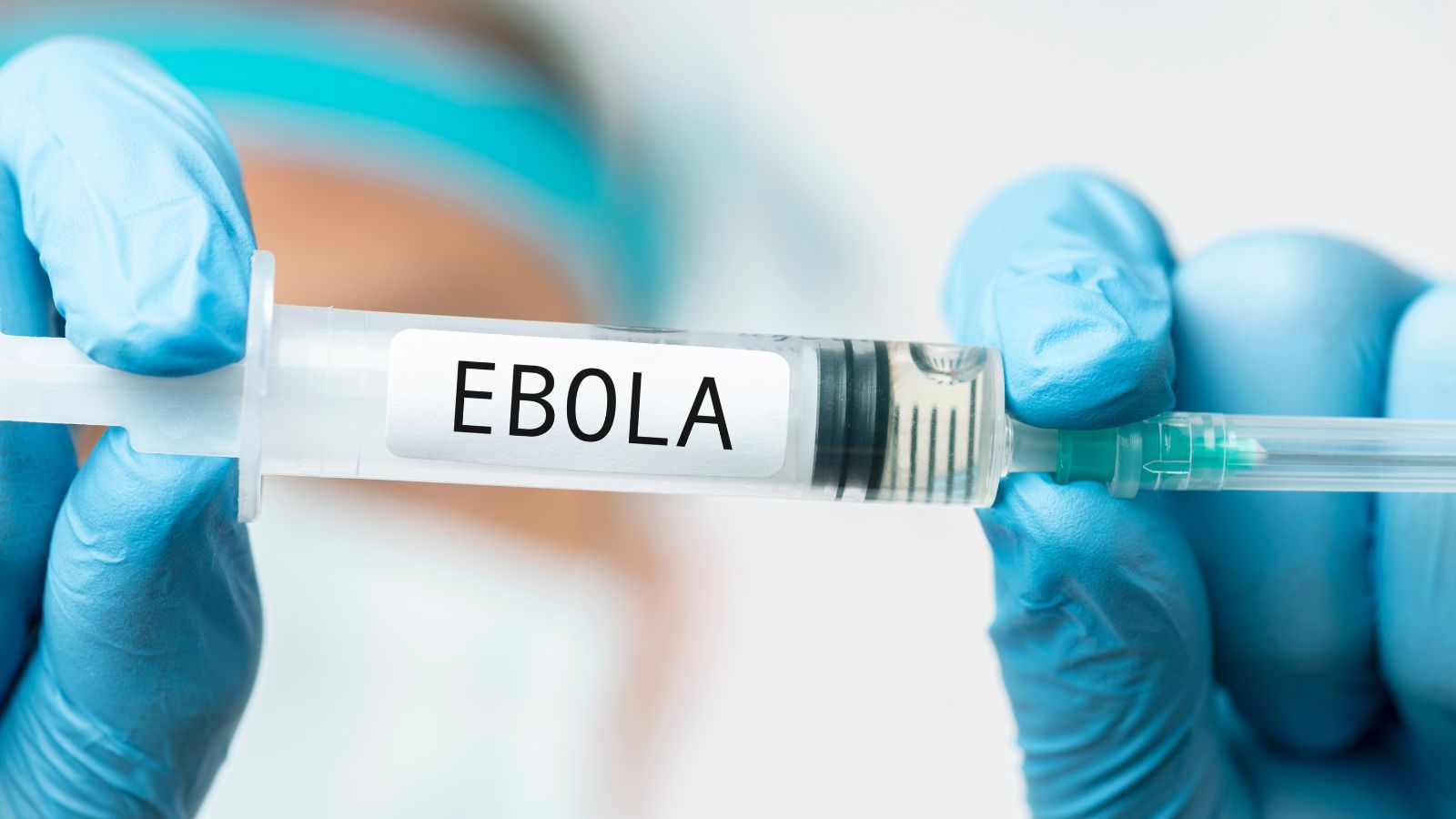
Unlike the high-profile epidemics of the past decade, this outbreak is driven by the Bundibugyo ebolavirus, a rare strain for which there are absolutely no approved vaccines, no licensed therapeutics, and no standardized rapid diagnostic tests. The medical toolkit that successfully crushed recent outbreaks in West Africa and North Kivu is useless here. Ervebo, the highly effective vaccine used to protect frontline health workers against the dominant Zaire strain, offers zero cross-protection against Bundibugyo.
Global health agencies are projecting an air of organized response, but behind closed doors, officials admit they are flying blind. The outbreak has already breached remote mining camps and successfully migrated to Kampala and Kinshasa, dense urban centers where contact tracing becomes an exponential nightmare.
The Phantom Epidemic in the Gold Fields
For weeks before the official declaration, an invisible catastrophe was unfolding in the gold-mining hub of Mongbwalu. Eastern Congo is a patchwork of informal, unregulated mines where thousands of transient laborers live in cramped, temporary settlements. It is an environment tailor-made for an undocumented viral surge.
Surveillance networks failed early. The initial red flags came not from institutional testing, but from an alarming spike in unexplained community deaths and the sudden, brutal deaths of at least four healthcare workers in Ituri province. When the Congolese National Institute for Biomedical Research finally analyzed thirteen initial samples from the region, eight came back positive. That is a staggering 61% positivity rate, a statistical indicator that the virus had been circulating silently in the community for a month or more before the first official alert.
The geometry of the spread tells a grim story. Miners infected in the bush travel down informal trade routes to regional commercial hubs like Bunia and Rwampara. From there, it takes only one infected traveler on a motorcycle taxi or a crowded minibus to move the virus across the porous border into Uganda. Within 24 hours of each other, two unrelated travelers from the DRC presented with severe symptoms in Kampala. One is already dead.
Why the Zero Medical Arsenal Changes Everything
For the last five years, international health policy treated Ebola as a manageable threat. We convinced ourselves that human ingenuity had defeated the virus through advanced pharmaceuticals. That confidence was a dangerous illusion built entirely on the Zaire strain.
Consider the reality of the clinical frontlines right now. When a patient arrives at an isolation unit in Ituri with a high fever and hemorrhaging, doctors cannot administer the monoclonal antibody treatments that saved thousands of lives during the 2018–2020 North Kivu epidemic. Instead, clinical care is reduced to basic supportive therapy: intravenous fluids, electrolyte replacement, and pure hope.
+-------------------+-------------------------+-------------------------+
| Feature           | Zaire Strain            | Bundibugyo Strain       |
+-------------------+-------------------------+-------------------------+
| Approved Vaccines | Yes (Ervebo, Sabin)     | None Available          |
| Target Therapies  | Yes (Monoclonal Abs)    | None Approved           |
| Historical Fatality| Up to 90%              | 25% to 50%              |
+-------------------+-------------------------+-------------------------+
While the Bundibugyo variant historically carries a lower maximum mortality rate than Zaire, the DRC health ministry estimates the fatality rate in this current wave is hovering near 50%. Without a vaccine to form a defensive ring around infected clusters, every single doctor, nurse, and family member providing care is a potential vector for amplification.
There are whispers of deploying experimental options. Monoclonal antibodies engineered for other filoviruses and the antiviral drug remdesivir are being discussed for emergency clinical trials. But setting up rigorous clinical trials in an active conflict zone, while simultaneously trying to manage an accelerating panic, is logistically impossible to execute overnight. By the time these drugs are deployed at scale, the epidemiological window to contain the initial surge will have slammed shut.
The Collapse of Border Surveillance
Public health officials are publicly pleading with neighboring states to keep their borders open. The reasoning is sound on paper: closing official border posts simply drives desperate people into the forest, using unmonitored pathways where health screenings are non-existent.
Yet, keeping borders open requires a degree of surveillance infrastructure that simply no longer exists in eastern Africa. Years of shifting donor priorities, combined with recent funding cuts to international disease-surveillance programs by major Western governments, have left border health posts severely understaffed.
A single thermometer gun at a chaotic border crossing between the DRC and Uganda cannot stop a virus with an incubation period of up to 21 days. A trader can pass through a checkpoint perfectly asymptomatic, only to develop a fever, severe muscle pain, and vomiting days after settling into a crowded neighborhood in Kampala or Goma.
Urban Centers and the Threat of Exponential Spread
The true nightmare scenario for any hemorrhagic fever is sustained urban transmission. The confirmation of cases in Kampala and Kinshasa changes the math of this outbreak entirely.
Kinshasa is a sprawling megacity of roughly 20 million people. Its public transit systems are packed, and sanitation in many informal settlements is severely strained. If the Bundibugyo strain establishes a foothold in a city of this scale, conventional contact tracing becomes a mathematical impossibility. Tracking twenty contacts per infected individual is doable in a rural village; tracking hundreds of fleeting interactions on urban minibuses is fantasy.
Furthermore, eastern Congo remains heavily destabilized by active rebel insurgencies. Armed groups control major roads and routinely attack civilian infrastructure. Medical charity Doctors Without Borders has noted that humanitarian access is severely restricted in the exact zones where the virus is hitting hardest. Health workers trying to trace contacts are facing the literal crossfire of a civil conflict.
When fear of a lethal, untreatable virus mixes with deep-seated distrust of government authorities and foreign medical teams, communities stop cooperating. They hide their sick. They bury their dead in secret, bypassing safe burial protocols and directly exposing mourners to highly infectious bodily fluids.
The international community is responding with the standard bureaucratic playbook: releasing emergency funds, dispatching technical advisors, and holding high-level briefings. But money cannot buy a vaccine that does not exist, and advice cannot protect a health worker without adequate personal protective equipment in a remote mining camp. The coming weeks will reveal whether this outbreak can be contained by basic public health measures alone, or if the lack of a medical shield has guaranteed a regional catastrophe.