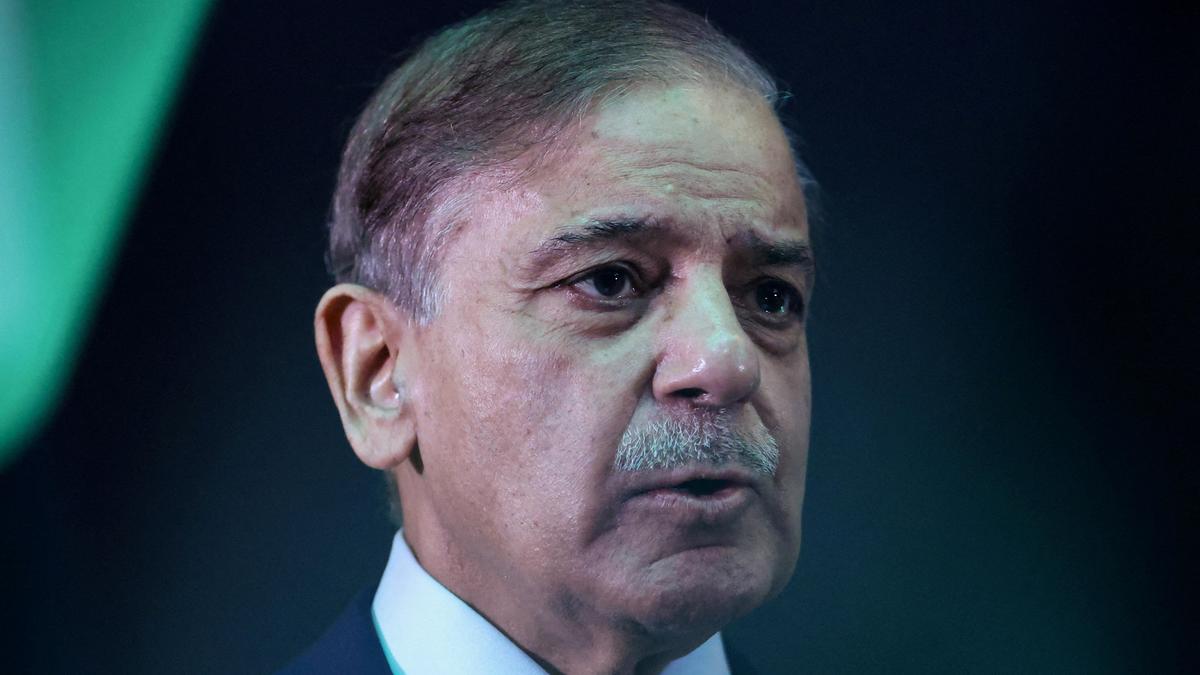
Pakistani Prime Minister Shehbaz Sharif will arrive in Beijing on May 23 for a four-day official visit ostensibly framed around the 75th anniversary of bilateral diplomatic ties. While state media on both sides will spend the week broadcasting carefully choreographed images of handshakes and ceremonial dinners, the true agenda behind this high-stakes diplomatic mission is far more urgent. Pakistan is currently serving as the critical, fragile bridge holding together a shaky ceasefire between the United States and Iran, following the outbreak of devastating hostilities earlier this year. Sharif is not traveling to China to celebrate history; he is traveling to manage a regional geopolitical firestorm.
The official itinerary, announced by Chinese Foreign Ministry spokesperson Guo Jiakun, includes high-level meetings with President Xi Jinping and Premier Li Qiang, alongside a side trip to Zhejiang province. Yet, the timing tells the real story. Sharif’s departure immediately follows an unannounced, high-profile trip to Tehran by the Pakistani Army chief, Field Marshal Asim Munir. This coordinated diplomatic blitz occurs in the shadow of a warning from Washington that the window for diplomacy in the Middle East is rapidly shutting.
For Beijing, maintaining the current, tenuous April 8 ceasefire is a matter of profound economic survival. For Islamabad, it is a test of its relevance as a frontline state capable of balancing major power rivalries.
The Tehran Beijing Conduit
Pakistan has quietly transformed itself into the primary backchannel between Washington and Tehran. This role became necessary after the February 28 strikes by the US and Israel inside Iran threw the region into open warfare. The conflict displaced thousands and killed over 3,300 people in Iran, threatening a global energy crisis. Islamabad successfully brokered the April 8 pause in hostilities. However, maintaining that peace requires a heavier diplomatic anchor than Pakistan can provide alone.
Sharif’s visit acts as the second leg of a tag-team diplomatic maneuver. While Field Marshal Munir secures assurances from the Iranian leadership, Sharif must align those positions with Xi Jinping. China has deliberately kept a low profile during the initial stages of the West Asia conflict. Beijing preferred to shepherd quiet phone calls and organize closed-door meetings with Gulf state officials rather than issue bold public pronouncements.
Observable reality dictates that China cannot remain passive forever. The war directly threatens its energy security. The Strait of Hormuz has been largely blocked since the war erupted, strangling the supply lines that feed China’s massive industrial machinery. During talks in Beijing, US President Donald Trump explicitly requested Xi’s assistance in reopening the strategic oil route. This request effectively handed Beijing a powerful lever in global maritime diplomacy. Sharif is arriving to help determine exactly how that lever will be pulled.
The CPEC 2.0 Mirage vs Sovereign Debt
Away from the immediate threat of a wider regional war, the bilateral economic relationship between Islamabad and Beijing faces severe operational friction. State visits usually bring announcements of a renewed commitment to the China-Pakistan Economic Corridor, now referred to as CPEC 2.0. This new phase promises a structural shift from heavy physical infrastructure toward artificial intelligence, green energy, and agricultural modernization.
The strategy sounds promising on paper. The implementation, however, tells a different story.
Pakistan remains trapped in a brutal cycle of sovereign debt management. The country regularly requires financial lifelines to avoid defaulting on its international obligations. While Beijing has historically rolled over multi-billion-dollar commercial loans to keep Islamabad afloat, the Chinese leadership is growing increasingly weary of writing blank checks. Chinese planners are quietly demanding deep domestic reforms, institutional capacity improvements, and strict policy coherence before committing significant fresh capital to CPEC 2.0.
A severe lack of security for Chinese personnel inside Pakistan further complicates the economic relationship. Despite repeated assurances from successive Pakistani governments, insurgent attacks targeting Chinese engineers and infrastructure projects continue to strain bilateral trust. Beijing now treats security not as a domestic Pakistani issue, but as a shared priority that requires direct oversight. Sharif will have to present a concrete, foolproof security blueprint to the Chinese leadership to unlock any meaningful economic agreements during his stay in Zhejiang and Beijing.
Balancing in a Multipolar World
The most delicate act of Sharif’s prime ministership is navigating the intense rivalry between Washington and Beijing without alienating either side. Pakistan cannot afford to choose between the two superpowers. The US remains its largest export market and a critical voice within the International Monetary Fund, while China acts as its primary military hardware supplier and infrastructure investor.
Islamabad’s strategy relies on demonstrating utility to both sides. By acting as a balanced mediator in the Iran conflict, Pakistan positions itself as an indispensable stabilizing force in South and West Asia.
China understands and respects this delicate balancing act. Chinese state scholars have noted that Islamabad’s commitment to staying clear of rigid major-power rivalries shows strategic maturity. Beijing prefers a Pakistan that maintains open channels with the West, as it provides China with a reliable proxy to pass messages and defuse crises when direct communication breaks down.
Sharif's four days in China will test whether diplomacy can triumph over structural economic weakness and regional instability. The meetings will yield public statements full of traditional rhetoric about a friendship higher than the mountains. The real measure of success, however, will not be found in the joint communiqués. It will be seen in whether the Strait of Hormuz stays open, whether the April 8 ceasefire holds through the summer, and whether Chinese capital continues to flow into a cash-strapped Pakistani treasury.