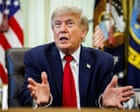
Donald Trump announced a historic, first-of-its-kind Republican midterm convention to be held in Dallas this September. The move aims to solve a critical structural vulnerability facing the Republican Party, specifically the historical drop in voter turnout during midterm cycles when a sitting president occupies the White House. By nationalizing dozens of localized House and Senate races, Trump intends to transform the November 2026 elections into a direct referendum on his administration. This unprecedented gathering is less a celebration and more a defensive shield designed to prevent Democrats from seizing Congress and launching paralyzing investigations.
Political parties traditionally preserve the spectacle of national conventions for the four-year presidential cycle. Bringing delegates, donors, and media networks together in an off-year breaks a century of established American political tradition. The formal mechanics to allow this were quietly put in place during the Republican National Committee winter meeting in January, when party officials altered bylaws originally designed strictly for presidential nominations.
The decision exposes deep anxieties within the Republican leadership regarding voter mobilization. When Trump is not actively on the ballot, down-ticket Republican turnout frequently falters. By anchoring an arena-sized rally in Texas, the administration hopes to manufacture the missing electoral urgency.
Trump Manufactured Event to Fight Historical Midterm Slump
The governing party almost always loses congressional ground during midterm cycles. Voters who feel discontented are highly motivated to show up, while voters who are generally satisfied stay home. Trump faces an additional headwind as recent polling aggregates show his job approval rating sitting nearly seventeen points underwater.
A central room of national strategists cannot rely on standard localized congressional campaigns to save a razor-thin majority. They need a shock to the system. The planned event on September 9 and 10 at the American Airlines Center in Dallas is designed to operate as a media megaphone. It bypasses regional campaign structures entirely.
Nationalizing these races carries immense tactical danger. Moderates running in competitive suburban districts often survive by distancing themselves from national party friction. Forcing those candidates to stand under a unified banner in Dallas strips away their local identity. It ties their political futures directly to national policy positions that may not play well in swing territory. House Speaker Mike Johnson recently underscored the grim view from leadership, warning donors that a loss would instantly transform congressional committees into investigative weapons targeting the administration's Cabinet, families, and primary financial backers.
The Texas Ground Zero and the Ken Paxton Problem
Choosing Dallas as the host city is no coincidence. Texas has become the ultimate testing ground for the party's internal evolution and its external vulnerabilities. The state features one of the most volatile and expensive Senate matchups of the cycle, pitting Democratic challenger James Talarico against the Republican incumbent, State Attorney General Ken Paxton.
Paxton secured the nomination after an aggressive primary campaign where, heavily backed by Trump, he unseated longtime Senator John Cornyn. This primary battle fractured the traditional state party apparatus. Paxton carries substantial political baggage, including a highly publicized state impeachment trial, past securities fraud allegations that avoided conviction, and long-running personal scandals.
National Republican strategists privately view the Texas Senate seat with deep worry. What should be a safe Republican stronghold in a midterm year has turned into a massive resource drain. If independent voters in suburban Houston, Dallas, and Austin reject Paxton, the national map breaks apart. By placing the national convention directly in Paxton’s backyard, Trump is attempting to force reluctant establishment donors and traditional country-club Republicans to fall in line behind a controversial candidate.
Cash Monopolies and the Secret Weapon of Uncapped Spending
The financial architecture of the 2026 midterms changed entirely following a major Supreme Court decision. The high court ruled six to three to eliminate caps on how much funding national political parties can spend in direct coordination with individual congressional candidates. This development fundamentally alters the flow of campaign cash.
The Republican National Committee holds a significant financial advantage over its counterpart. The committee entered the summer months with roughly 125 million dollars in cash on hand. Trump commands an independent war chest approaching 350 million dollars.
National Democrats raised over 178 million dollars this year but remain burdened by lingering debts left behind by previous national campaign entities. The newly granted legal freedom to coordinate spending means the Republican convention will serve as an auction floor. National party leaders can allocate massive financial packages directly to chosen candidates on the spot. This gives the national party unprecedented leverage over individual campaigns. Candidates who want access to this coordinated capital must mirror the administration's messaging.
Why Nationalizing the Vote Could Backfire on Swing District Republicans
The Democratic National Committee initially toyed with organizing a competing midterm gathering before abandoning the idea in early spring to preserve capital. Democratic strategists view the upcoming Dallas event as a major tactical error by their opponents. They intend to use the convention as a repository for opposition research.
Every aggressive speech, immigration line, and policy demand broadcast from the Dallas stage will be packaged into local television advertisements targeting swing districts in New York, California, and Virginia. The administration has prioritized loyalty over local messaging. Trump recently delayed signing the bipartisan 21st Century ROAD to Housing Act, a bill intended to address rising housing costs, insisting that Congress must first pass the highly partisan SAVE America Act.
This refusal to take an easy legislative win on affordability highlights the broader strategy. The White House prefers high-contrast cultural battles over incremental policy achievements. For a vulnerable freshman Republican representing a district that voted for a Democrat in the previous presidential cycle, this platform makes survival exceptionally difficult.
The Dallas convention will force a stark choice upon every Republican running for office this November. Candidates can attend, pledge allegiance to the national platform, and unlock millions in newly deregulated coordinated party cash. Or they can stay home to protect their local brand, risking the wrath of a president who views absence as a betrayal. The upcoming gathering represents a massive gamble that nationalizing a midterm election can override historical precedents and structural unpopularity. If the strategy fails, the resulting loss will leave the administration completely exposed to a hostile Congress for the remainder of its term.