The architecture of British foreign policy is undergoing a quiet, brutal recalibration. Under Prime Minister Keir Starmer's government, official development assistance (ODA) has faced severe contraction, dropping to 0.3 percent of gross national income. While the headline figures sparked intense Westminster wrangling, the granular data released by the Foreign, Commonwealth and Development Office tells a much darker story about global prioritization. The world's least-developed nations are absorbing the heaviest blows, while higher-income countries see their relative share of British assistance increase.
This is not an accidental administrative error. It is the direct mathematical consequence of shifting national budgets toward domestic priorities and European security frameworks, leaving vulnerable populations across sub-Saharan Africa and fragile states to bear the fiscal brunt.
The Mechanics of the Contraction
To understand how the UK arrived at this juncture, one must look closely at the mechanics of the foreign aid budget. The reduction from historical targets to a baseline of 0.3 percent of GNI forced Whitehall to make triage-level choices. Yet, the triage has operated on a perverse logic.
Data compiled from recent departmental disclosures reveals a 6.7 percent decrease in funding directed toward the lowest-income countries, translating to immediate funding deficits of over one hundred million pounds in core development zones. Traditional bilateral programs—those funding local clinics, rural education initiatives, and agricultural stabilization—have faced reductions reaching up to ninety percent in specific African partner states.
At the same time, money is being rerouted. A significant portion of the remaining ODA budget continues to absorb domestic refugee-hosting costs, a practice inherited and expanded from previous administrations. When domestic expenditure counts as international aid, the funds never actually leave Britain. The ledger balances on paper, but the clinic in Sierra Leone or the nutritional program in Yemen receives nothing.
The Geopolitical Trade-Off
The Starmer administration defends these choices through the lens of a hardening international security climate. Faced with mounting threats in Europe and a necessary expansion of the domestic defense budget, ministers argue that hard power must take precedence.
The friction lies in the contradiction between rhetoric and outcome. Downing Street frequently asserts that Britain remains an indispensable global actor committed to international stability. Yet, seasoned foreign analysts recognize a fundamental truth. You cannot build long-term stability by starving the very regions prone to state failure, famine, and radicalization.
When basic health infrastructure collapses due to sudden funding withdrawal, the downstream effects do not stay local. Infectious diseases spread, local economies fracture, and migratory pressures intensify. The short-term savings achieved by slashing overseas development assistance are almost invariably dwarfed by the long-term costs of managing international crises that active aid programs were originally designed to prevent.
The Human Cost Behind the Ledger
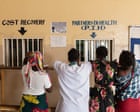
In policy discussions, figures like "0.3 percent of GNI" become abstract counters moved by treasury officials. On the ground, the reality is starkly physical. Independent aid watchdogs have noted that tens of millions of vulnerable people have lost access to essential humanitarian services over the past year.
Take the hypothetical case of a regional maternal health clinic in a low-income East African district. Under previous funding rounds, the facility relied on UK-backed multilateral channels to maintain cold chains for vaccines and retain trained midwives. With bilateral support slashed, the clinic relies entirely on overstretched local municipal budgets—budgets already crippled by national debt crises and global inflation. The vaccines spoil. Infant mortality rates climb.
Charities and parliamentary committees have repeatedly warned that these cuts will cost lives. Ministers counter that every pound must work harder. But efficiency metrics cannot manufacture resources out of thin air. When funding is halved, programs do not simply become more streamlined; they disappear.
The Erosion of Soft Power
Britain's historical influence on the global stage was never solely a product of military might. It rested on a triad of diplomatic reach, security commitments, and development leadership. By retreating from its long-standing financial commitments to the global poor, Westminster is signaling a retreat from moral authority.
Countries that once looked to London for partnership in agricultural resilience or educational reform are now turning elsewhere, finding alternative partners with fewer conditionalities and deeper pockets. The void left by British withdrawal is rapidly filled by actors who do not share a commitment to transparent governance or human rights.
The political calculus inside government assumes that domestic voters are indifferent to foreign aid, particularly during a prolonged cost-of-living squeeze at home. That assumption may hold true in daily polling, but it misjudges the broader strategic position of the United Kingdom. A nation that turns inward while global interconnectedness deepens is not protecting itself; it is isolating itself from the realities of an unstable world.
The figures are on the table, and the trajectory is set. Unless future spending reviews fundamentally restructure how Britain defines its international obligations, the legacy of this administration will be measured not by the money saved in Whitehall, but by the preventable crises left unattended across the globe.