When a New York hedge fund manager pours millions of dollars into an independent expenditure committee for a municipal election in Los Angeles, seasoned observers know the transaction is rarely about simple civic benevolence. Aaron Sosnick, managing entity of A.R.T. Advisors, dropped a staggering four million dollars backing Nithya Raman's mayoral campaign. The headline-grabbing takeaway focused on a single, highly visible urban amenity: protected bike lanes. Yet reducing this financial alignment to a localized argument over asphalt striping misses the profound structural shift occurring in municipal political economies.
Modern municipal campaigns are no longer fueled solely by local merchant associations or traditional real estate syndicates. Wall Street capital has discovered that urban form—density, transit orientation, and public right-of-way management—directly impacts asset valuation, labor retention, and long-term regional productivity. Understanding why high-net-worth financiers are aggressively funding urbanist municipal candidates requires examining the intersection of modern portfolio theory and physical infrastructure.
The Mechanics of Urban Capital Infusions
Campaign finance contribution limits in Los Angeles cap direct individual donations to municipal candidates at modest levels. However, independent expenditure committees operate under entirely different legal parameters. These committees can absorb unlimited corporate or private wealth, transforming local elections into high-stakes proxies for broader ideological and economic battles.
When a financier from outside the immediate geographic ecosystem injects millions into a localized race centered on street infrastructure, they are executing a strategic deployment of capital. Traditional donors usually look for predictable returns on zoning approvals or municipal contracts. Urbanist-aligned hedge fund donors operate on a macro-level thesis. They operate under the belief that automobile-dependent sprawl creates systemic drag, stifles economic velocity, and drives up housing costs through artificial scarcity.
For an investor managing risk across global portfolios, car-centric urbanization represents an inefficient allocation of space. Parking mandates, congested transit corridors, and sprawling commercial zones degrade municipal fiscal health. By funding candidates who prioritize alternative transit infrastructure, these donors are attempting to engineer a supply-side correction in urban mobility.
The Transit Paradox in Automobile Hegemony
Los Angeles remains the spiritual capital of the American automobile. For decades, municipal policy was written by and for the internal combustion engine. Multi-lane boulevards were widened at the expense of commercial vitality and pedestrian safety, creating an urban fabric where moving steel took precedence over human presence.
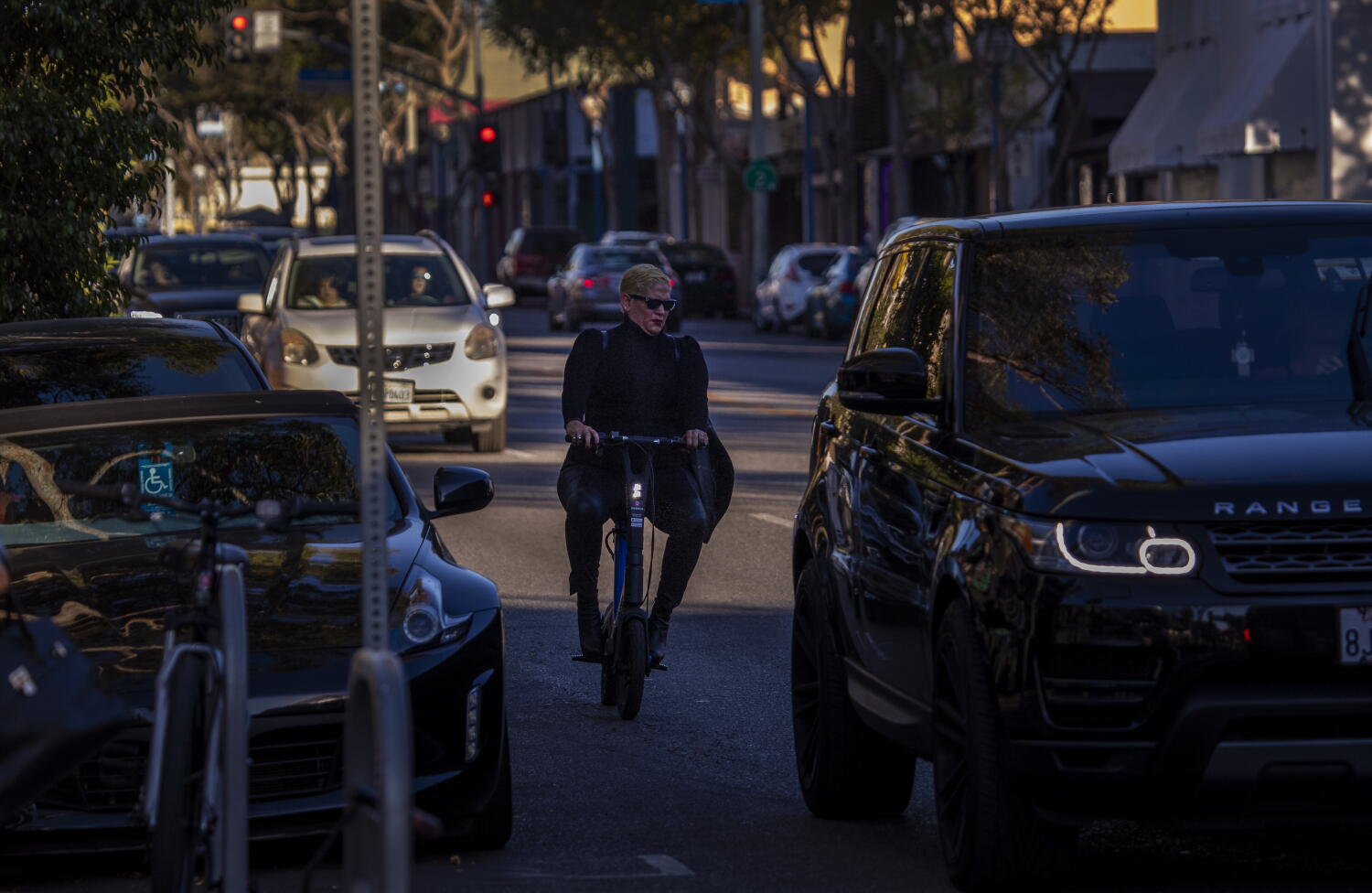
This model, however, has reached its physical and economic limits. Gridlock costs the regional economy billions in lost productivity annually, while traffic fatalities among pedestrians and cyclists have climbed to unacceptable levels. When a major financial donor states that they simply want to ride a bicycle in Los Angeles without facing mortal peril, the statement carries dual weight. It reflects a genuine personal safety concern, but it also highlights the profound failure of legacy infrastructure to support a modern, knowledge-based workforce.
Tech workers, creative professionals, and financial analysts increasingly demand walkable, transit-rich urban environments. Cities that fail to provide safe non-car infrastructure struggle to retain the human capital necessary to compete in the contemporary economy. Wall Street's interest in bike lanes is, at its core, an interest in talent retention and urban modernization.
The Political Backlash and Geographic Friction
Of course, restructuring the public right-of-way is rarely a frictionless exercise. Every mile of protected bike lane installed or proposed in Los Angeles triggers fierce resistance from motorists, traditional business owners who fear the loss of curbside parking, and anti-density neighborhood groups.
This friction creates a volatile political landscape. When external financial titans inject millions into local council and mayoral races to tilt the balance in favor of rapid street redesigns, it energizes a populist counter-narrative. Critics quickly point out the irony of elite hedge fund wealth dictating the daily commuting realities of working-class neighborhoods where automobiles remain an absolute necessity due to deficient public transit networks.
This tension exposes the deep fault lines in contemporary progressive politics. Coalition-building between traditional labor unions—which often prioritize construction jobs and driving-heavy municipal departments—and tech-adjacent urbanists is fraught with contradictions. When massive capital enters the fray to accelerate the timeline of street transformations, it forces a confrontation over who truly owns the future direction of the city.
Beyond the Pavement
The influx of high-level financial backing into municipal transit advocacy signals a permanent evolution in urban politics. Money follows power, but in the twenty-first century, power increasingly follows the control of spatial efficiency. The debate over bike lanes in Southern California is not merely about recreation or environmental symbolism; it is a proxy war over the economic model of the modern American metropolis.
As municipal elections continue to attract unprecedented sums from non-traditional donor pools, the pressure on elected officials to deliver tangible physical changes will intensify. Whether these top-down financial interventions succeed in reshaping the physical reality of Los Angeles—or merely harden the resistance against urban transformation—will define the trajectory of urban governance for the next generation.
Fubu Toy review
This video provides a direct visual and analytical breakdown of the campaign finance dynamics surrounding the Los Angeles mayoral race and the unprecedented funding directed toward urban transit priorities.