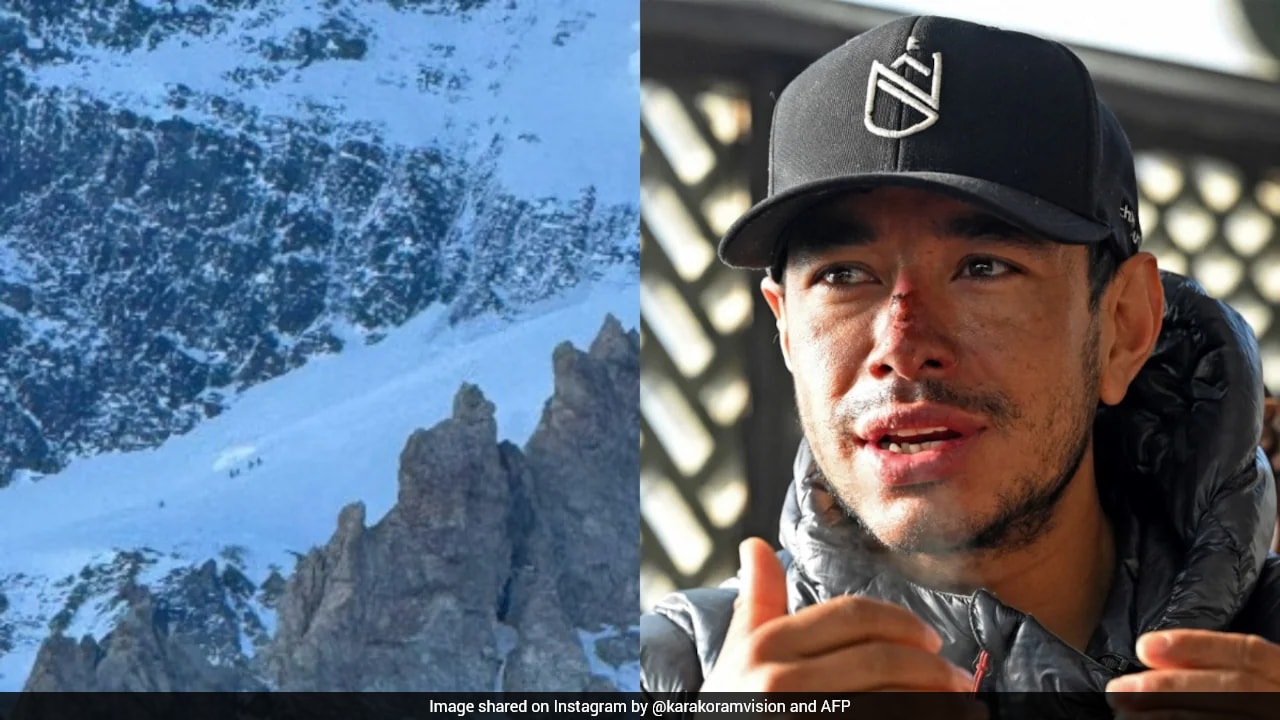
Mountaineering lost one of its most dominant figures when an avalanche swept across Broad Peak. Nirmal Purja, universally known as Nims Dai, didn't just climb mountains; he completely rewrote what people thought was physically possible at high altitudes. When tragedy struck the 8,051-meter peak in the Karakoram range, the global climbing community held its breath. Communication vanished. Speculation filled social media feeds before official word finally confirmed the worst.
Let's look past the sensationalized headlines and examine the actual timeline, the physical realities of Broad Peak, and what the loss of Nims Dai means for modern high-altitude alpinism.
The Final Ascent on Broad Peak
The expedition was pushing toward the summit when the wall of snow broke loose. Ten climbers, including Purja and his guide Nima Sherpa, were caught in the disaster. Broad Peak sits right next to K2, sharing the same brutal weather systems, treacherous wind slabs, and objective hazards that make the upper reaches of the Karakoram lethal.
The avalanche hit on a Thursday afternoon, instantly cutting off radio contact with the base camp. For days, conflicting reports circulated online. Initial updates from regional authorities urged patience, noting that formal confirmations required body recovery and positive identification. However, Elite Exped—the adventure company Purja co-owned—issued a heartbreaking confirmation statement after ground teams and drones located victims in the treacherous debris field. Rescuers eventually reached Purja's body at roughly 5,700 meters, facing severe terrain and unpredictable weather that grounded rescue helicopters.
Beyond the Records: Who Nims Dai Really Was
Most people outside the climbing community only know Purja from his blockbuster Netflix documentary, 14 Peaks: Nothing Is Impossible. They remember the staggering statistic: scaling all fourteen of the world's eight-thousanders in just 189 days, obliterating the previous multi-year record.
Before he became a civilian mountaineering icon, Purja spent sixteen years in the British military. He served in the elite Brigade of Gurkhas before selection into the Special Boat Service (SBS), the Royal Navy's equivalent to the SAS. That background forged an iron mindset. He didn't approach the Himalaya with traditional romanticism; he treated high-altitude mountaineering with tactical precision, extreme physical conditioning, and an uncompromising threshold for discomfort.
Critics inside traditional alpine circles occasionally debated his commercial expedition style and heavy reliance on supplemental oxygen or fixed ropes. Yet no one could dispute his raw capacity. He turned impossible logistical feats into routine schedules, rescuing stranded climbers off dangerously high slopes when others turned back.
Understanding the Hazards of the Karakoram
Why is Broad Peak so dangerous? Standing as the twelfth-highest mountain on Earth, it lures climbers with a reputation for being slightly more approachable than neighboring K2. That reputation is a dangerous illusion.
The mountain features a massive, exposed summit ridge that stretches over a kilometer. Climbers must navigate false summits, deep snow accumulation, and rapidly shifting jet streams. When heavy snowfall overloads steep slopes, avalanches become inevitable. Ground teams trying to access the site following the disaster noted that long-line helicopter extractions were impossible due to military flight restrictions and extreme terrain, leaving rescue workers to claw through high-altitude ice on foot.
The Future of High-Altitude Commercial Expeditions
The loss of Purja alongside nine other international and local climbers—including skilled guides like Pur Bahadur Gurung and Nima Sherpa—forces a harsh reckoning for the adventure tourism industry in Pakistan and Nepal.
Commercial operators are pushing deeper into shoulder seasons, relying on massive infrastructure, fixed ropes, and large teams to manage client flow. Yet nature remains completely indifferent to human branding or past records. The tragedy on Broad Peak serves as a brutal reminder that elite experience and military conditioning do not render a human being immune to gravity and snow.
As families mourn and the mountaineering world processes the vacuum left by his absence, Purja's legacy remains locked in the history books. He proved that barriers exist only in the mind, but the mountains ultimately dictate their own terms.