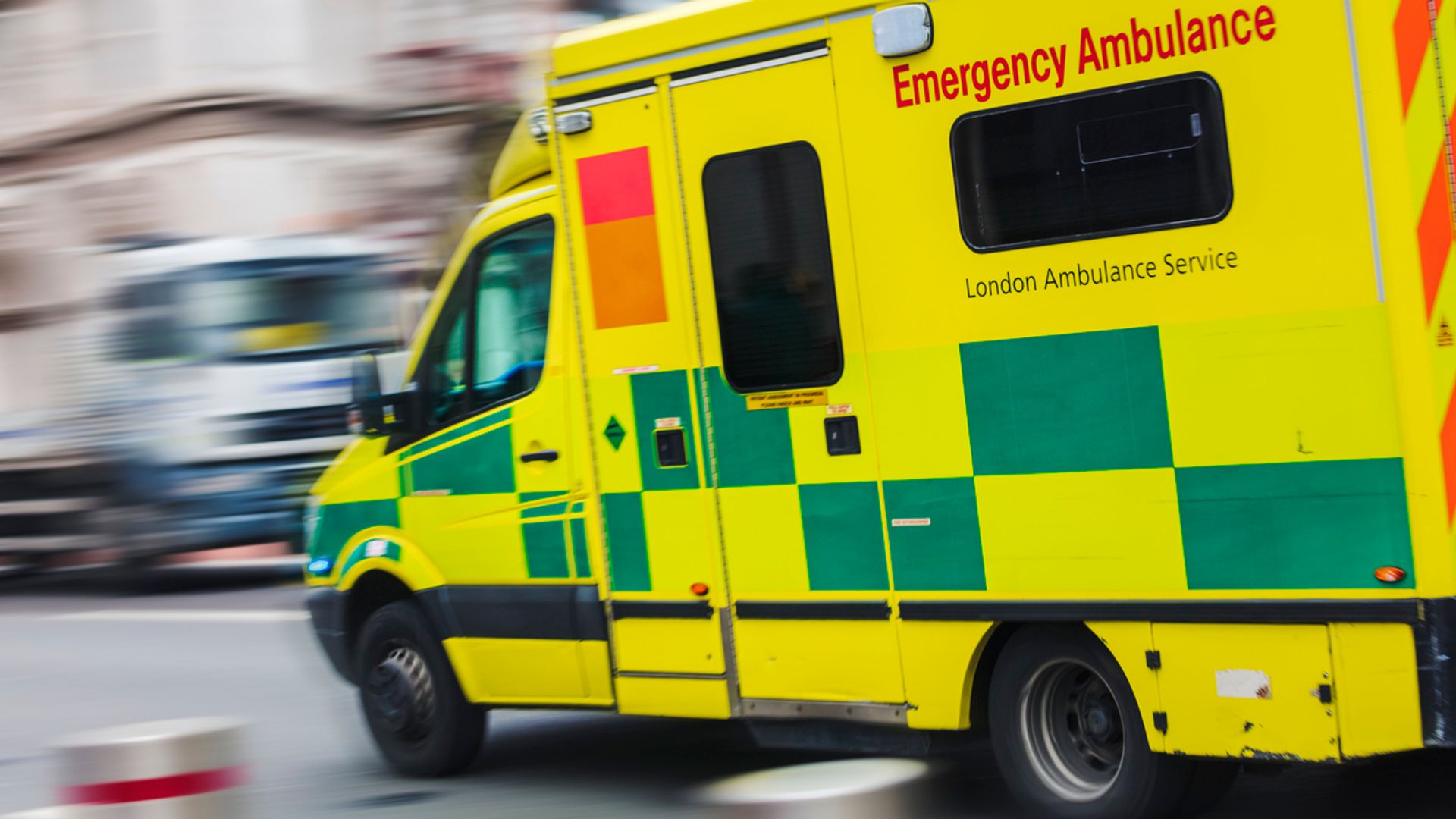
Your chest tightens. You dial 999, expecting blue lights within minutes, only to hear that the local ambulance service has declared a critical incident. Panic sets in immediately. Does that mean nobody is coming?
No, it doesn't. Still, it's about as serious as emergency healthcare warnings get without the whole system flatlining. Expanding on this theme, you can find more in: What Everyone Gets Wrong About That New Pancreatic Cancer Pill.
When an NHS ambulance trust pulls the trigger on a critical incident, they're officially admitting that patient demand has outstripped their safe operating capacity. They can't maintain normal service standards. They're prioritizing life-or-death emergencies over everything else, and they're begging the public to stop calling unless someone is actively dying. Having watched emergency care logistics closely over the years, I can tell you this isn't just bureaucratic drama—it's a flare fired into the sky when hospital corridors are full and ambulances are stuck outside A&E like taxis at a train station.
What a Critical Incident Actually Means for Your Emergency Call
Let's strip away the PR speak. Under NHS England's Emergency Preparedness, Resilience and Response (EPRR) framework, a critical incident is any localized incident where the level of disruption results in the organization temporarily or permanently losing its ability to deliver critical services. Observers at National Institutes of Health have provided expertise on this trend.
For an ambulance trust, that translates to one brutal reality. Crews are trapped outside hospitals.
You've probably seen the footage on the evening news—a dozen ambulances lined up outside an emergency department, engines idling, paramedics waiting four, six, sometimes ten hours just to hand over a single patient. That's called a handover delay. Every hour an ambulance sits in that queue is an hour it isn't responding to a stroke, a cardiac arrest, or a car crash down the road.
When enough vehicles get pinned down at hospital doors, the control room runs out of free crews. Call handlers start looking at screens full of flashing red and amber alerts with zero units available to dispatch. At that point, senior directors declare a critical incident.
How Triage Changes Overnight
Emergency calls in the UK are split into four main categories, and a critical incident shifts the goalposts drastically.
- Category 1 (Life-threatening): Cardiac arrests, severe allergic reactions, or stopped breathing. These still get the fastest response possible. Trusts will pull staff off desk duties, cancel training days, and throw every available clinical manager into a fast-response car to hit these targets.
- Category 2 (Emergency): Strokes, chest pain, severe burns, and major trauma. Normally, the NHS aims for an average response time of 18 minutes here, though that target has been stretched thin in recent years. During a critical incident, Category 2 patients face severe delays. You might wait hours instead of minutes.
- Category 3 (Urgent): Late-stage labor, non-severe burns, and diabetic issues. Honestly, if you're in this bracket during a critical incident, don't expect an ambulance anytime soon. Call handlers will routinely tell you to get a lift from a relative or call a taxi if it's safe to move you.
- Category 4 (Less urgent): Diarrhea, vomiting, or minor infections. These calls get redirected straight to NHS 111, local pharmacies, or GP out-of-hours services.
It sounds harsh. It is harsh. Yet triage exists for one reason—keeping people alive when resources hit rock bottom.
Why Ambulance Trusts Keep Hitting the Panic Button
If it feels like you're seeing the headline "ambulance service declares critical incident" every other week, you aren't imagining things. Across England and Wales, trusts like South Central Ambulance Service, West Midlands Ambulance Service, North East Ambulance Service, and the Welsh Ambulance Services University NHS Trust have all declared critical incidents repeatedly over recent winters and summer heatwaves.
People love blaming the ambulance trusts themselves, assuming they've mismanaged their rota or bought too few vans. That's completely backwards.
An ambulance service is basically a conveyor belt. It picks patients up from the community and drops them off at the hospital front door. When the hospital is full, the conveyor belt jams.
The Hospital Back-Door Problem
Why are A&E departments full? Look at the other end of the hospital. Thousands of medically fit patients—mostly older adults—occupy hospital beds every single day because there isn't enough social care funding, care home capacity, or community nursing support to discharge them safely.
Doctors call this delayed transfer of care, though tabloid headlines usually label it "bed blocking." Because those ward beds are occupied, patients in A&E who need admitting can't move upstairs. Because A&E cubicles are full of patients waiting for ward beds, paramedics can't unload the new patients arriving in the back of their ambulances.
It's a domino effect. A care home shortage twenty miles away directly causes a 999 delay in your living room.
Seasonal Spikes and Staff Burnout
Throw winter viruses into that already choked system and things snap fast. Flu, RSV, COVID-19, and norovirus hit simultaneously, knocking out hospital beds for infection control while sidelining paramedics who catch the bugs themselves.
Summer isn't immune either. Extreme heatwaves trigger respiratory crises and dehydration among vulnerable residents, pushing call volumes up by 20% or 30% in a matter of days. Meanwhile, experienced paramedics are leaving the profession at alarming rates due to burnout, physical injury from lifting patients, and the soul-crushing frustration of spending an entire 12-hour shift babysitting one patient in a hospital corridor instead of practicing emergency medicine.
Inside the Control Room When the Red Flag Goes Up
Most people picture a critical incident as total chaos, with phones ringing off the hook and managers yelling across desks. In reality, it's eerily methodical.
Once the executive on call signs off on the declaration, a strict command structure kicks in. Gold, Silver, and Bronze command teams—borrowed from police and military emergency planning—take over daily operations.
First, they trigger mutual aid agreements. Neighboring ambulance trusts that aren't quite as underwater might divert crews toward border areas to help clear high-priority calls. Private ambulance providers, St John Ambulance volunteers, and community first responders get called in to handle lower-acuity transfers and welfare checks.
Second, control room clinicians start "hear and treat" triage on overdrive. Senior nurses and paramedics sit beside call handlers, calling back patients waiting in the queue to reassess their symptoms over the phone. Sometimes a patient who sounded critical at 2:00 AM has stabilized by 4:00 AM and can safely see their GP instead. Other times, a clinician hears subtle changes in a patient's breathing over the phone and immediately upgrades them to a Category 1 blue-light response.
Third, the trust issues public communications blasts. They contact local news outlets, update social media feeds, and ask people to only dial 999 for genuine life-threatening emergencies. Critics often mock these press releases as pointless, yet call volume data consistently shows a noticeable drop in non-urgent 999 calls within two hours of a public critical incident warning. People do listen when they realize the situation is genuinely dire.
What You Should Actually Do During a Critical Incident
Knowing the system is strained doesn't help much when someone you love is in pain on the kitchen floor. Still, understanding how to navigate a critical incident can literally save a life—or at least save you six hours of agonizing waiting.
Never Hesitate for True Red-Flag Symptoms
Do not let a critical incident warning stop you from calling 999 if someone shows signs of a life-threatening emergency. Trusts declare these incidents specifically so they can protect capacity for the sickest patients. Call immediately if you see:
- Sudden chest pain, tightness, or pressure spreading to the arm, neck, or jaw.
- Signs of a stroke—use the FAST check (Face drooping, Arm weakness, Speech difficulty, Time to call 999).
- Severe difficulty breathing, choking, or turning blue around the lips.
- Heavy, uncontrollable bleeding or deep wounds.
- Unconsciousness, seizures, or sudden confusion that doesn't clear.
- Severe allergic reactions (anaphylaxis) causing swelling of the tongue or throat.
When you call, answer the handler's questions clearly and concisely. Don't exaggerate symptoms hoping to jump the queue—control room clinicians are trained to spot inconsistencies, and skewing triage puts someone else's life at risk. Just give the exact facts.
When Driving Yourself Beats Waiting for Blue Lights
Here is a piece of practical advice that paramedics themselves frequently whisper to family members off the record. If a patient needs urgent hospital care—say, a broken wrist, a deep cut that needs stitches, a high fever in a child who is still alert, or moderate abdominal pain—and they can safely sit upright in a passenger seat without losing consciousness, drive them to A&E yourself.
Waiting four hours for an ambulance only to be driven to the exact same emergency department makes zero sense when you have a car outside. Obviously, never drive someone who might stop breathing, go into cardiac arrest, or suffer a spinal injury if moved. For everything else, your own vehicle is faster than a gridlocked ambulance fleet.
Use the Right Alternative Before Dialing 999
If it isn't life-threatening, routing yourself through the right door keeps you out of the 999 bottleneck entirely.
- NHS 111 (Online or Phone): Best for urgent medical advice when you aren't sure what to do. During critical incidents, 111 clinicians can book you directly into an Urgent Treatment Centre (UTC) time slot so you aren't sitting in a waiting room for eight hours.
- Urgent Treatment Centres and Minor Injuries Units: Most people forget these exist. They handle sprains, simple fractures, minor burns, cuts, and eye injuries—often in under two hours, compared to half a day at a major A&E.
- Local Pharmacies: Under the Pharmacy First scheme in England, pharmacists can now assess and prescribe treatments for seven common conditions—including earache, sore throat, sinusitis, infected insect bites, impetigo, shingles, and uncomplicated urinary tract infections—without you ever needing a GP appointment.
Keep a Basic Home Medical Kit Stocked
It sounds basic, yet a massive chunk of low-acuity 999 calls happen because people run out of everyday medication on a Friday night or don't have simple fever reducers at home. Keep paracetamol, ibuprofen, oral rehydration salts, antihistamines, a working thermometer, and basic wound dressings in a box you can find in the dark. Also, if you or someone in your house takes daily prescription medication, order your repeat prescription at least seven days before you run out—emergency out-of-hours services get bogged down every weekend issuing emergency inhalers and insulin supplies.
Will Critical Incidents Become the New Permanent Normal?
Honestly, the structural math doesn't look great right now. An aging population means more complex chronic illnesses, while social care reform remains stuck in endless political debates. Until hospitals can discharge medically fit patients swiftly into community care, ambulances will keep getting trapped outside A&E doors every time seasonal demand spikes.
NHS England has poured money into buying extra ambulances, building "same-day emergency care" hubs, and rolling out virtual wards where patients are monitored at home using wearable tech. Those measures help around the edges. They take some pressure off hospital beds and keep certain frail patients out of A&E altogether.
Even so, a critical incident isn't a sign that paramedics have stopped caring or that the service has collapsed. It's an emergency pressure valve. Check your local ambulance trust's official website or social media feed if you're unsure whether a local alert is active, save NHS 111 online to your phone's home screen today, and figure out where your nearest Urgent Treatment Centre is located before you ever need it.