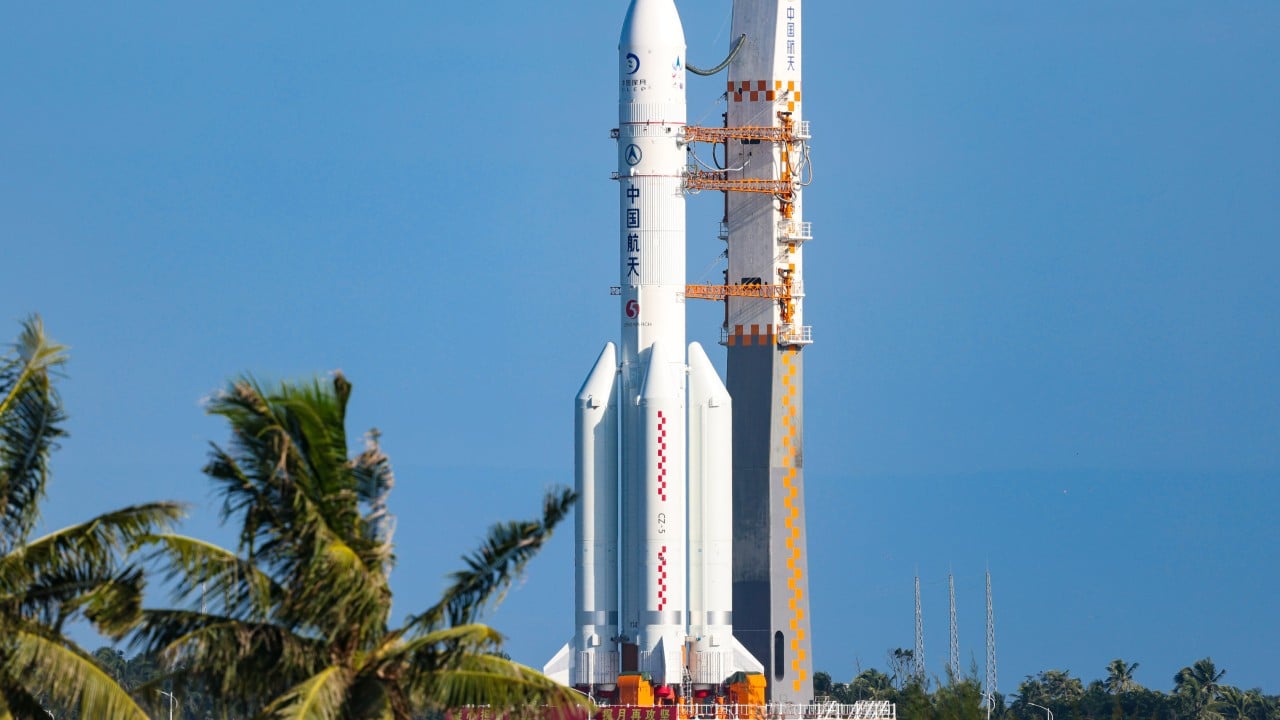
Late at night, when the glare of the monitors reflects off the glass of the cleanroom windows in Boca Chica, Texas, a quiet settles over the steel hull of Starship. It is the silence of an unfulfilled promise. For a decade, the narrative of human spaceflight has been tethered to a singular, intoxicating countdown. We were told that by the mid-2020s, boots would press into the rust-colored soil of Mars. The red planet was no longer a dot in a telescope; it was a destination with a deadline.
But look closer at the machinery, talk to the engineers who eat their meals out of plastic containers under the shadow of the world’s largest rockets, and a different reality emerges. The timeline has dissolved.
SpaceX, a company built on the sheer force of audacious deadlines, currently operates without a fixed calendar date for landing humans on Mars. The public relations engine still hums with visions of multi-planetary life, but the internal ledger tells a more grounded story. Meanwhile, away from the launchpads, in the sterile, data-driven world of prediction markets, the verdict is already in. People who bet real money on the future are looking at the calendar and shaking their heads.
Don't look for boots on Mars this decade. The math simply does not care about our enthusiasm.
The Weight of a Million Pounds of Steel
To understand why the path to Mars has lengthened, you have to look past the spectacular fireballs and the triumphant orbital insertions of recent test flights. You have to look at the sheer, brutal physics of survival.
Consider a hypothetical engineer named Marcus. He doesn't design the engines; he designs the plumbing that keeps human waste from freezing or floating into the electronics during a seven-month transit through deep space. For Marcus, the delay isn't a failure of vision. It is a triumph of engineering humility.
Every time a Starship prototype roars off the pad, the public sees a giant leap forward. Marcus sees a checklist that is still thousands of items long. It is one thing to throw a steel cylinder into low Earth orbit, let it skim the atmosphere, and splash down in the Indian Ocean. It is an entirely different universe of complexity to keep six human beings alive inside that cylinder for two hundred days, land them on a world with an atmosphere thin enough to boil blood, and then somehow manufacture fuel out of thin air to bring them home.
The sheer volume of technology that does not yet exist is staggering.
We have not yet mastered closed-loop life support systems that can run for years without spare parts from Earth. We have not conquered the radiation belts that cook human cells during deep-space transits. Most importantly, we have not proven orbital refueling—the foundational trick upon which the entire architecture relies. To send one Starship to Mars, SpaceX needs to launch multiple tanker ships into Earth orbit first, transferring supercooled liquid oxygen and methane from ship to ship like high-altitude gas stations.
It is a dance that has never been attempted with cryogenic fuels. It must be done perfectly, dozens of times over, before a single human climbs aboard.
The Cold Logic of the Bourse
While enthusiasts debate engine yields on internet forums, another group of people is analyzing the situation with a cold, mercenary detachment. These are the traders on Kalshi, a regulated financial exchange where people buy and sell contracts based on the likelihood of real-world events.
On Kalshi, optimism goes to die, replaced by the brutal efficiency of the market.
The current contracts betting on a human Mars landing before 2030 are trading at pennies on the dollar. The market consensus isn't just skeptical; it is certain. These traders aren't cynical luddites who hate space exploration. They are statisticians, hedge fund analysts, and aerospace insiders who look at the capital expenditure, the regulatory hurdles, and the historical cadence of aerospace development. They see a wall.
Consider what must happen before a Mars ship can even think about leaving Earth's gravity well.
First, SpaceX must fulfill its multi-billion-dollar contract with NASA to deliver a modified version of Starship—the Human Landing System (HLS)—for the Artemis III mission. This mission aims to put American boots back on the Moon. Originally slated for the mid-2020s, Artemis III has already slid down the calendar, pinned back by spacesuit delays, technical hitches, and the sheer complexity of returning to lunar orbit.
NASA is a cautious partner. They do not operate on the "fail fast, break things" ethos of Silicon Valley. They operate on the principle that loss of life is unacceptable.
So long as the Moon remains an unreached milestone, the red planet must wait. The resources, the engineering brains, and the political capital of the American space program are firmly bottlenecked at the lunar south pole. Mars is a luxury that the current aerospace ecosystem cannot afford to finance until the lunar foundation is poured.
The Mirage of the Two-Year Window
Every twenty-six months, a celestial alignment occurs. Earth and Mars swing close together in their elliptical races around the Sun, opening a brief, low-energy highway across the void. If you miss the window, the door slams shut for another two years.
This orbital mechanic creates a cruel cadence for planetary exploration.
If SpaceX cannot launch an uncrewed cargo mission to Mars during the window in the late 2020s—a mission designed merely to prove a ship can survive the journey and land intact—the entire timeline shifts by more than seven hundred days. If that uncrewed ship crashes, or burns up, or loses communication, the next attempt cannot happen until the turn of the decade.
The public often views progress as a linear graph, a steady climb toward the stars. But planetary exploration is a staircase with massive, jagged steps. Missing one step means tumbling back into years of waiting, watching the sky from a planet that suddenly feels very small.
This is the invisible friction that the prediction markets understand so well. It is not a matter of money or willpower. Elon Musk can pour billions into the sands of South Texas, and his engineers can work eighty-hour weeks until their eyes blur. But they cannot move the planets. They cannot force the solar system to align ahead of schedule.
The Human Core of the Delay
There is a temptation to view this delay as a disappointment, a betrayal of the grand sci-fi future we were promised in glossy animations and late-night tweets. But there is a deeper, more profound truth hidden inside the stalling numbers.
We are watching a young company grow up.
The early days of SpaceX were characterized by a manic, almost reckless energy. They built rockets in the desert, failed repeatedly, laughed off the explosions, and kept going. That methodology works beautifully when you are launching small communication satellites or empty cargo hulls. It breaks when the cargo has a heartbeat.
The shift from a disruptive startup to a foundational pillar of global infrastructure changes a company’s DNA. When you are responsible for the lives of astronauts, you can no longer afford to move fast and break things. You must move deliberately and fix everything before it leaves the ground.
The lengthening timeline for Mars is not a sign of failure. It is evidence of the immense gravity of the task. It is an acknowledgment that the gap between low Earth orbit and another world is not a difference of degree, but a difference of kind.
The steel towers in the Texas dust will continue to rise. The engines will continue to scream against the test stands, lighting up the night sky with the fire of thousands of pounds of thrust. We will watch, captivated, as each new prototype pushes a little further into the black.
But the red planet remains stubbornly where it has always been, millions of miles away, indifferent to our schedules, waiting for us to become the species capable of surviving the journey. For now, the traders on the floor and the engineers in the trenches agree on one thing: that transformation is going to take a little longer than we thought.