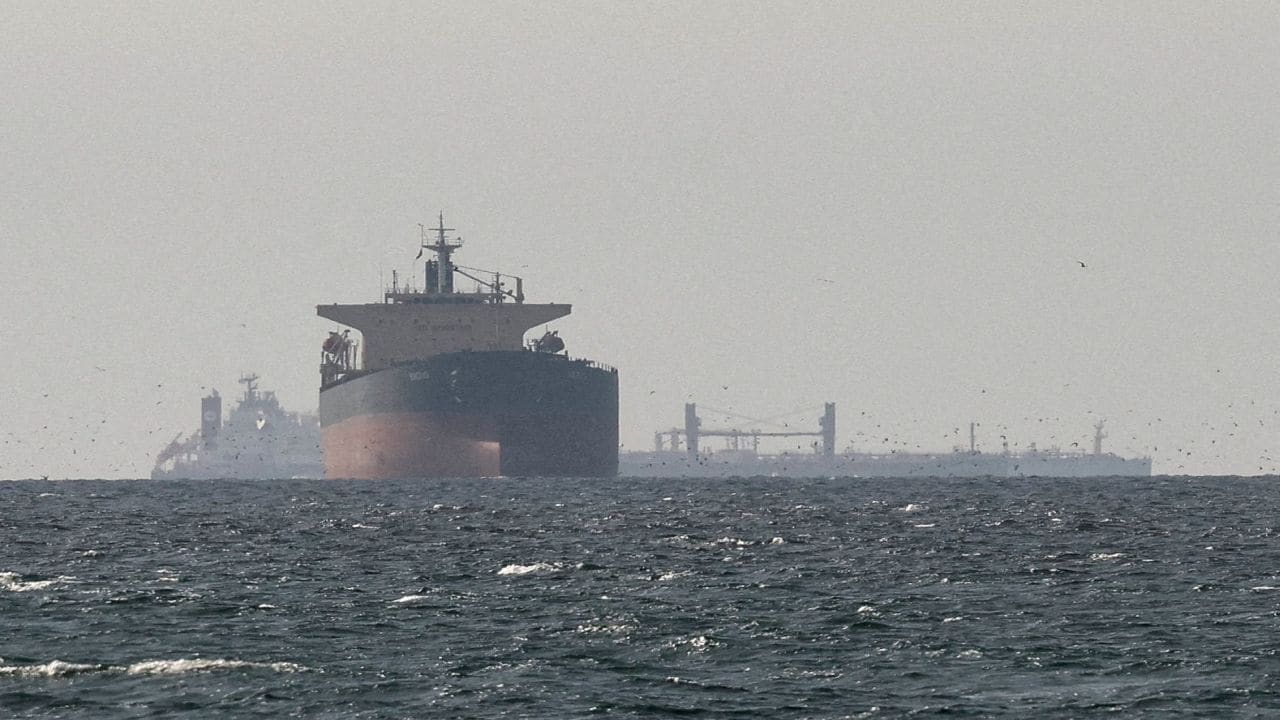
The sun doesn't just rise over the Strait of Hormuz; it bleeds. For the merchant sailors standing watch on the bridge of a Very Large Crude Carrier (VLCC), the dawn is rarely a moment of peace. It is a moment of calculation. They look out over a narrow strip of water—barely twenty-one miles wide at its tightest choke point—and realize that the world’s entire economic nervous system is currently squeezed through this single, salt-crusted needle’s eye.
Below their boots, two million barrels of crude oil hum in the dark. That oil is a ghost of the future. It is the morning commute in London, the heating in a Seoul apartment, and the plastic packaging of a medical kit in Ohio. But today, that ghost is under threat.
Washington has finally let the clock run out. The waivers are gone. For months, the United States allowed a select group of nations to continue purchasing Iranian oil despite a blanket of sanctions, a diplomatic "safety valve" designed to keep global prices from screaming into the stratosphere. That valve has been welded shut. The message from the State Department is no longer a suggestion; it is an ultimatum. Iran’s oil exports must hit zero.
Iran’s response wasn't found in a press release. It was found in the water.
The Geometry of a Choke Point
To understand the weight of this decision, you have to look at the map not as a geographer, but as a plumber. The world’s energy flow is a series of pipes. Most are buried underground, but the most important one is made of water.
The Strait of Hormuz carries roughly one-fifth of the world’s total oil consumption. Think about that. Every fifth car you see on the highway, every fifth factory chimney, every fifth lightbulb—it all depends on ships being able to pass through a gap so narrow that the inbound and outbound shipping lanes are only two miles wide.
When the US expires these waivers, they aren't just hitting a bank account in Tehran. They are tightening a tourniquet. Iran has long warned that if they cannot sell their oil, no one will. This isn't just bluster. It is a stated doctrine of asymmetric warfare. They don't need a massive navy to win; they only need to make the Strait of Hormuz uninsurable.
Imagine you are a logistics manager for a global shipping firm. You receive a notification that insurance premiums for the Persian Gulf have spiked 400 percent overnight because of "kinetic threats." Suddenly, the math of global trade breaks. If the ships stop moving, or even if they just slow down, the ripples turn into tsunamis.
The Invisible Stakes of Zero Exports
For the average person, "sanctions" feel like a dry, bureaucratic term used by men in grey suits. But for a father in Isfahan, they are the sound of a currency collapsing. When a nation’s primary source of lifeblood is severed, the value of the money in your pocket doesn't just dip—it evaporates.
The US strategy is built on the "Maximum Pressure" model. The logic is cold and mathematical: if you starve the regime of hard currency, you limit their ability to fund proxies, build missiles, and exert influence across the Middle East. It is a siege. But sieges are rarely clean.
The expiration of these waivers represents the final transition from a "managed" conflict to an open economic war. By removing the exceptions for countries like India, China, and Turkey, the US is forcing the world to pick a side. This creates a friction that transcends oil. It challenges the sovereignty of nations who argue that their energy security shouldn't be dictated by a desk in Washington D.C.
Consider the refinery worker in Mumbai. His plant is calibrated specifically for the "sour" heavy crude that comes out of Iranian fields. You cannot simply flip a switch and process light sweet crude from West Texas. It requires a total retooling of the infrastructure. Millions of dollars. Months of downtime. When we talk about "shifting suppliers," we are talking about rebuilding the physical machinery of the modern world.
The Shadow Fleet and the Blockade
As the official channels close, the "Shadow Fleet" wakes up. These are the ghosts of the sea—tankers with their Transponders (AIS) turned off, their hulls repainted, their ownership hidden behind layers of shell companies in the Marshall Islands or Cyprus.
They engage in ship-to-ship transfers in the middle of the night, huddling together like conspirators to move oil from one vessel to another, hoping to mask its origin. It is a high-stakes game of hide-and-seek played with billions of dollars on the line.
But a blockade is a different beast entirely.
If Iran decides to follow through on its threat to close the Strait, they don't need a traditional naval line. They use "swarm" tactics. Hundreds of fast-attack boats, sea mines, and shore-based anti-ship missiles. It is a nightmare for a traditional carrier strike group. It is a landscape—no, a theater—of chaos where a five-thousand-dollar drone can threaten a billion-dollar destroyer.
The tension in the Strait is a physical thing. You can feel it in the way the crew on a tanker scans the horizon. Every small fishing dhow is a potential scout. Every blip on the radar is a question mark. The sailors know that they are the primary targets in a war where no one has yet fired a shot. They are the collateral in a struggle for regional hegemony.
The Ledger of Risk
What happens when the oil stops?
The immediate reaction is a spike in Brent Crude prices. For the global economy, oil is the "tax on everything." When fuel costs rise, the cost of transporting a head of lettuce rises. The cost of manufacturing a silicon chip rises. Inflation is not an abstract concept; it is the slow, painful erosion of a family’s ability to buy groceries.
The US argues that increased production from the Permian Basin in Texas and from OPEC partners like Saudi Arabia will fill the void. They point to the "shale revolution" as a shield against price shocks. And on paper, the numbers almost add up.
But markets aren't made of numbers. They are made of nerves.
The fear of a closed Strait of Hormuz adds a "risk premium" to every barrel of oil that nothing else can offset. You can have all the oil in the world in a storage tank in Oklahoma, but if the tankers in the Gulf are sitting idle or burning, the world will panic.
We live in a "just-in-time" civilization. We do not keep vast reserves of most things. We rely on the constant, rhythmic motion of ships. The expiration of these waivers is a gamble that the rhythm can be maintained while one of the world's major drummers is forcibly removed from the stage.
The Human Core of the Conflict
Behind the geopolitical chess, there is a human exhaustion.
There is the diplomat who hasn't slept in three days, trying to convince an angry ally that the sanctions are for the greater good. There is the Iranian shopkeeper watching the price of imported medicine double every week. There is the American consumer at the gas pump, wondering why a conflict ten thousand miles away is eating thirty percent of their paycheck.
We like to think of ourselves as independent, modern individuals. But a blockade at Hormuz reminds us that we are all profoundly, terrifyingly connected. We are tied to the fate of a narrow strip of water and the stubbornness of governments that refuse to blink.
The waivers have expired. The grace period is over.
Tonight, the tankers will continue to slide through the dark waters of the Gulf. Their lights will flicker against the black coastline of the Musandam Peninsula. On the bridges of those ships, men will drink bitter coffee and stare at the radar, watching for a sign that the "Red Horizon" has finally arrived. They are waiting to see if the world’s most dangerous choke point finally decides to close its teeth.
The silence in the Strait right now isn't peace. It is the indrawn breath before a scream.