
The air in the Oval Office has a specific weight when the secure line rings. It isn't just the physical silence of a room designed to keep the world out; it is the crushing gravity of knowing that the person on the other end can change the trajectory of the next hundred years with a single, translated sentence.
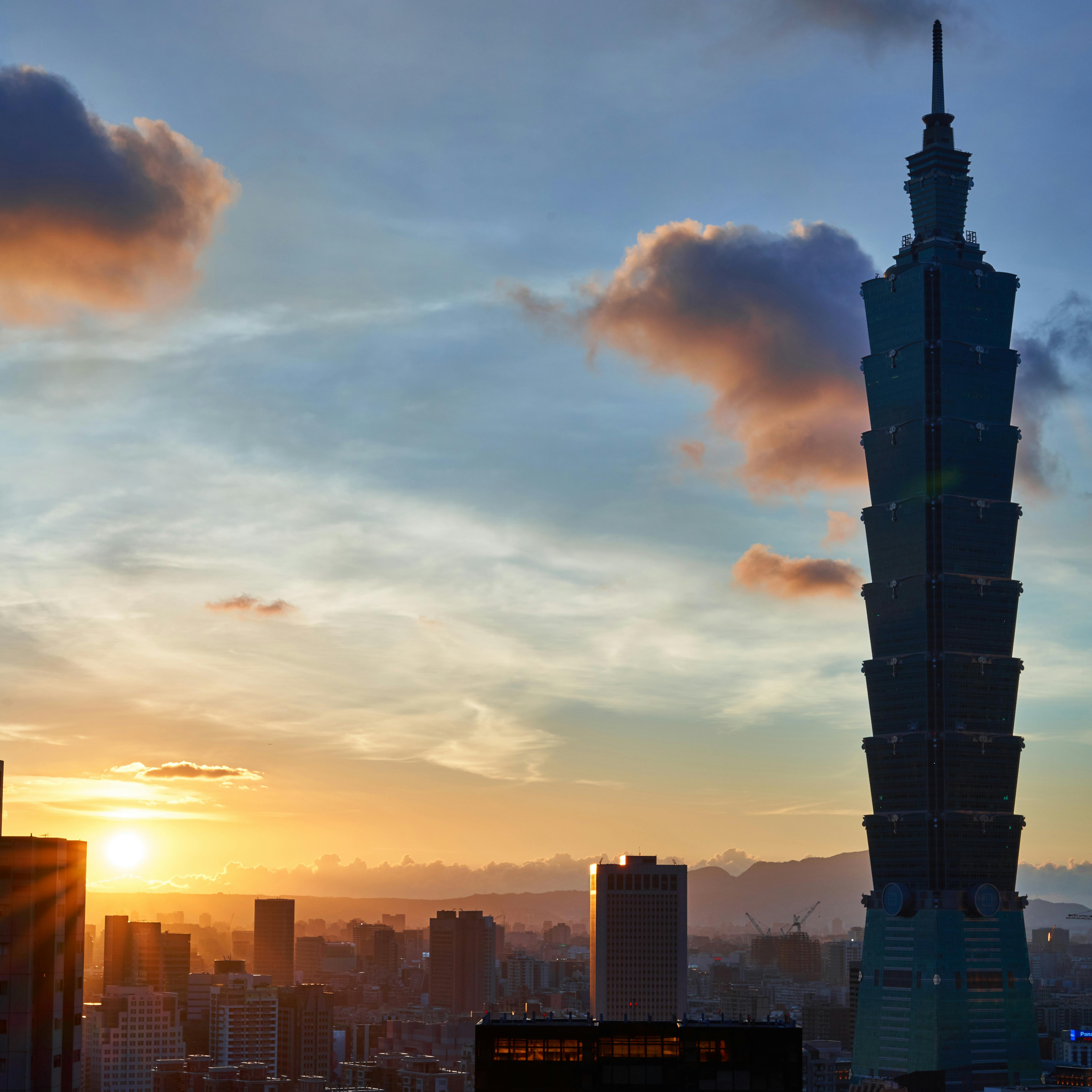
When Xi Jinping spoke to Donald Trump recently, the words transmitted across the Pacific weren't just diplomatic formalities. They were warnings wrapped in the velvet of "mutual respect." At the heart of this high-stakes conversation sat a small, mountainous island that most Americans know only as a name on the back of their semiconductor packaging: Taiwan.
To understand why a few sentences between two men can make global markets shudder, we have to look past the troop movements and the trade tariffs. We have to look at the chips.
The Silicon Shield
Imagine a modern hospital. In the intensive care unit, a ventilator breathes for a grandfather who cannot do it himself. In the basement, a massive MRI machine maps the mysteries of a human brain. Every single one of these life-saving miracles relies on a sliver of silicon no larger than a fingernail.
Most of these slivers come from one place.
Taiwan produces over 90% of the world’s most advanced semiconductors. If that supply chain breaks, the world doesn't just lose its ability to scroll through social media. It loses its ability to heal, to transport food, and to power the very grid that keeps our homes warm. This is the invisible stake Xi was referencing when he spoke of "mishandling." For China, Taiwan is a matter of national soul and sovereignty. For the United States, it is the heartbeat of the global economy.
When these two perspectives collide, the friction creates heat that can melt the world's financial foundations.
A Hypothetical Tuesday
Let’s consider a scenario. Not a war, but a whisper of one.
Suppose a young engineer in Taipei, let’s call her Mei, wakes up to find that the shipping lanes in the Taiwan Strait have been "restricted for exercises." She goes to work at the fabrication plant, but the atmosphere is different. The usual hum of precision machinery feels brittle.
Across the ocean, a car dealership in Ohio receives a notification that their shipment of electric vehicles is delayed indefinitely. In California, a tech giant watches its stock price plummet by 15% in three hours. There hasn't been a shot fired. There is only the threat of mishandling.
This is the "conflict" Xi warned about. It isn't always about explosions. Often, it’s about the sudden, terrifying realization that our modern lives are built on a very thin, very fragile piece of glass.
The Language of Red Lines
Diplomacy is a game of definitions. When the Chinese leader tells an American president that a specific issue is a "red line," he isn't just setting a boundary. He is describing a point of no return.
The historical context is a thick, complicated book that neither side seems to read the same way. Beijing sees a province that must eventually come home. Washington sees a vibrant democracy and a critical strategic partner.
During their call, the tension wasn't just about what was said, but what was understood. Trump, known for his transactional approach to foreign policy, views Taiwan through the lens of leverage and trade. Xi views it through the lens of history and destiny. These two worldviews don't just disagree; they occupy different dimensions.
If the U.S. shifts its stance too far toward formal recognition or increased military presence, the "mishandling" becomes a reality. The response from Beijing wouldn't just be a sternly worded letter. It would be a fundamental restructuring of how the East and West interact.
The Invisible Cost of Uncertainty
We often talk about the cost of war in terms of lives and dollars. We rarely talk about the cost of anxiety.
Businesses cannot plan for a ten-year future when the status of the world’s primary tech hub is discussed in terms of "sparking conflict." This uncertainty filters down to the average person in ways that are hard to track but easy to feel. It’s the reason your next laptop might cost twice as much as your last one. It’s the reason the global transition to green energy might stall because the chips needed for solar inverters are sitting in a warehouse in a contested zone.
The "human element" isn't just the leaders on the phone. It’s the millions of people whose livelihoods are tethered to a peace that feels increasingly like a tightrope walk.
The Architecture of a New Era
The conversation between Xi and Trump marks a transition. The era of "strategic ambiguity"—where everyone pretended the problem didn't exist so they could keep doing business—is evaporating.
We are entering a period of radical clarity.
Xi’s message was a demand for that clarity. He is asking the United States to decide what matters more: the ideological support of a distant island or the stability of the global status quo. It is a choice with no "right" answer, only a series of increasingly difficult trade-offs.
Consider the weight of that choice.
If the U.S. backs down, it signals the end of its era as the undisputed Pacific power. If it pushes forward, it risks a confrontation that could dwarf any conflict we have seen in the last eighty years.
The Silence After the Hang-up
When the call ends and the translators close their notebooks, the world remains exactly as it was ten minutes prior. The ships are still moving. The factories in Taiwan are still etching circuits with light.
But the air has changed.
Every time these two superpowers speak, they are checking the temperature of a pot that is dangerously close to boiling over. The "mishandling" Xi spoke of is a human error. A misunderstanding. A missed cue.
It is the terrifying reality that the fate of billions rests on the ability of two men to understand the nuances of a translated warning.
We live in a world where the most advanced technology ever created by our species is manufactured in a place that is one diplomatic mistake away from becoming a flashpoint. We are all passengers on a ship where the captains are arguing over the map while the icebergs loom in the dark.
The red line isn't a mark on a map. It is the trembling hand of a world trying to hold its breath.
:max_bytes(150000):strip_icc():focal(819x186:821x188)/Murdaugh-Family-e90854a716884d608fb6fd925e18d840.jpg)
