The glow of the terminal is a cold, unrelenting green until it isn't. When the screen turns red, it doesn't just represent a loss of capital. It represents a collective intake of breath across an entire hemisphere.
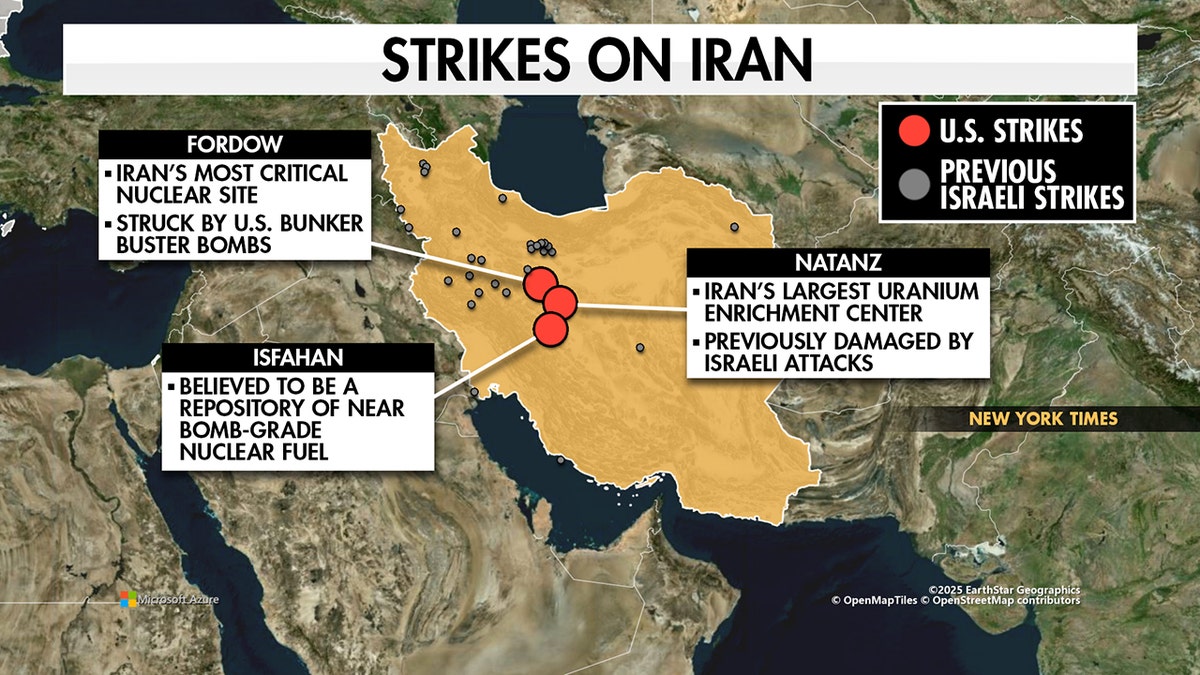
In a glass-walled office in Singapore, a trader named Chen watches the Nikkei 225 slide for the third consecutive day. He isn't thinking about percentage points or basis risk. He is thinking about his daughter’s tuition, currently tied to a portfolio that is hemorrhaging value because a drone halfway across the world found its mark. This is the reality of the "interconnected global market." It sounds like a buzzword until you realize it means your grocery bill in Tokyo is dictated by a missile battery in Isfahan.
The headlines call it a "market correction" or a "flight to safety." To the people living it, it feels more like a slow-motion car crash where everyone is shouting but no one is hitting the brakes.
The Geography of Fear
Money is a coward. It flees at the first scent of gunpowder. As the conflict between Israel and Iran moves from the shadows of cyber warfare into the blistering reality of ballistic exchanges, the financial centers of Asia—the engines of global growth—are stuttering.
Japan’s Nikkei sank over 2%. South Korea’s Kospi followed suit. These aren't just tickers. They are the gathered hopes of millions of pensioners and first-time investors who were told that the "Asian Century" was a safe bet. But geography is a cruel mistress. Asia is the world’s largest consumer of Middle Eastern energy. When the Strait of Hormuz becomes a chokepoint, the lights in Seoul get more expensive to keep on.
Consider the physics of a barrel of Brent crude. It sits near $90, vibrating with the tension of a plucked guitar string. If a single tanker is hit, or if a refinery in Kharg Island goes up in smoke, that price doesn't just walk up; it leaps. For the hypothetical small business owner in Manila—let’s call her Maria—this isn't an abstract geopolitical "event." It is the moment she realizes she has to cut her delivery driver’s hours because the cost of diesel just ate her month’s profit.
Maria doesn't follow the Iranian Revolutionary Guard on Twitter. She doesn't need to. She feels them at the pump.
The Invisible Threads
We often treat the stock market like a weather report, something that happens to us. In reality, it is a massive, real-time poll of human anxiety. Right now, the poll says we are terrified.
Investors are dumping "risk assets"—stocks, crypto, anything with a heartbeat—and sprinting toward the boring, dusty embrace of gold and U.S. Treasuries. It is a primal instinct. When the tribe is under threat, you stop looking for new hunting grounds and start reinforcing the cave.
The irony is that the very technology that was supposed to make us more resilient—high-frequency trading, instant global communication—has made the panic more infectious. A rumor in a Telegram channel can wipe out a billion dollars of valuation in Sydney before the sun has even fully risen. We have built a system that moves at the speed of light, but our brains are still wired for the speed of a fleeing gazelle.
The Ghost in the Machine
Why Iran? Why now?
The tensions have simmered for decades, a cold war fought through proxies and whispers. But the shift to direct confrontation changes the calculus of every board of directors on the planet. For years, the market "priced in" the Middle East. It assumed the noise would never become a symphony of destruction.
That assumption was a house of cards.
Now, analysts are scrambling to recalibrate. They use terms like "geopolitical risk premium." What they mean is that they are finally admitting they don't know what happens tomorrow. No one does. We are watching a live experiment in how much pressure the global supply chain can take before it snaps.
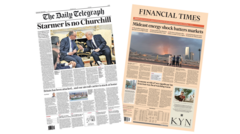
The stakes aren't just numbers on a Bloomberg terminal. They are the millions of barrels of oil that transit through the Persian Gulf every single day. If that flow stops, the "inflationary pressures" central banks have been fighting become an unstoppable wildfire. The "soft landing" everyone was hoping for becomes a nose-dive into a jagged mountainside.
The Human Cost of the Hedge
While the wealthy can hedge their bets—buying gold, shorting the indices, moving liquidity into Swiss francs—the average person is the hedge. They are the ones who pay for the instability through devalued currencies and rising costs of living.
In Tehran, a father sits at a kitchen table, looking at a currency that is losing its grip on reality. He isn't an operative. He isn't a politician. He is a man who wants to buy bread and medicine. The "war" is already happening to him, long before the first siren wails. The Rial's collapse is his battlefield.
In Taipei, a tech worker watches the chip manufacturing stocks dip. If the regional conflict draws in global superpowers, her city is the next logical piece on the board. The anxiety is a physical weight. It’s a tightness in the chest while standing in line for coffee. It’s the way people look at their phones a little too often, scrolling for updates that they hope they never see.
The Sound of Silence
The most frightening part of a market crash isn't the noise. It’s the silence that follows. The silence of a factory floor that has gone dark because the components are stuck in a port. The silence of a home where the parents are too stressed to talk about the future.
We are currently in the "noisy" phase. The shouting on the trading floors, the frantic pundits, the social media firestorms. But the real story is what happens when the dust settles and we realize that the world has become a smaller, more fractured place.
The markets are telling us that the era of easy peace is over. They are screaming that the friction of history has returned with a vengeance. We can look at the charts and talk about "support levels" and "resistance lines" all we want, but those lines are drawn in the sand, and the tide is coming in fast.
There is a specific kind of vertigo that comes from realizing the thinness of the ice we all skate on. We assume the electricity will work, the ships will arrive, and the currency will hold its value. These are the myths of a stable world. When two major regional powers decide to settle old scores, the myth evaporates, leaving us standing on the cold, hard ground of reality.
Chen closes his laptop in Singapore. The sun is setting, casting long, orange shadows across the skyscrapers. The red numbers are still burned into his retinas. He walks to the window and looks down at the harbor, where the massive container ships sit like silent sentinels. He wonders how many of them will be there next week. He wonders if he should go to the ATM and withdraw as much cash as the machine will give him.
He doesn't do it. Not yet. He waits, like the rest of us, for a sign that the madness has a limit.
But the screens are still glowing. And they are still red.
The world is holding its breath, and in that silence, you can almost hear the gears of the global economy grinding to a halt, waiting for the next spark to fly.
Would you like me to analyze the specific sectors most vulnerable to this regional escalation to help you identify where the "red" might spread next?