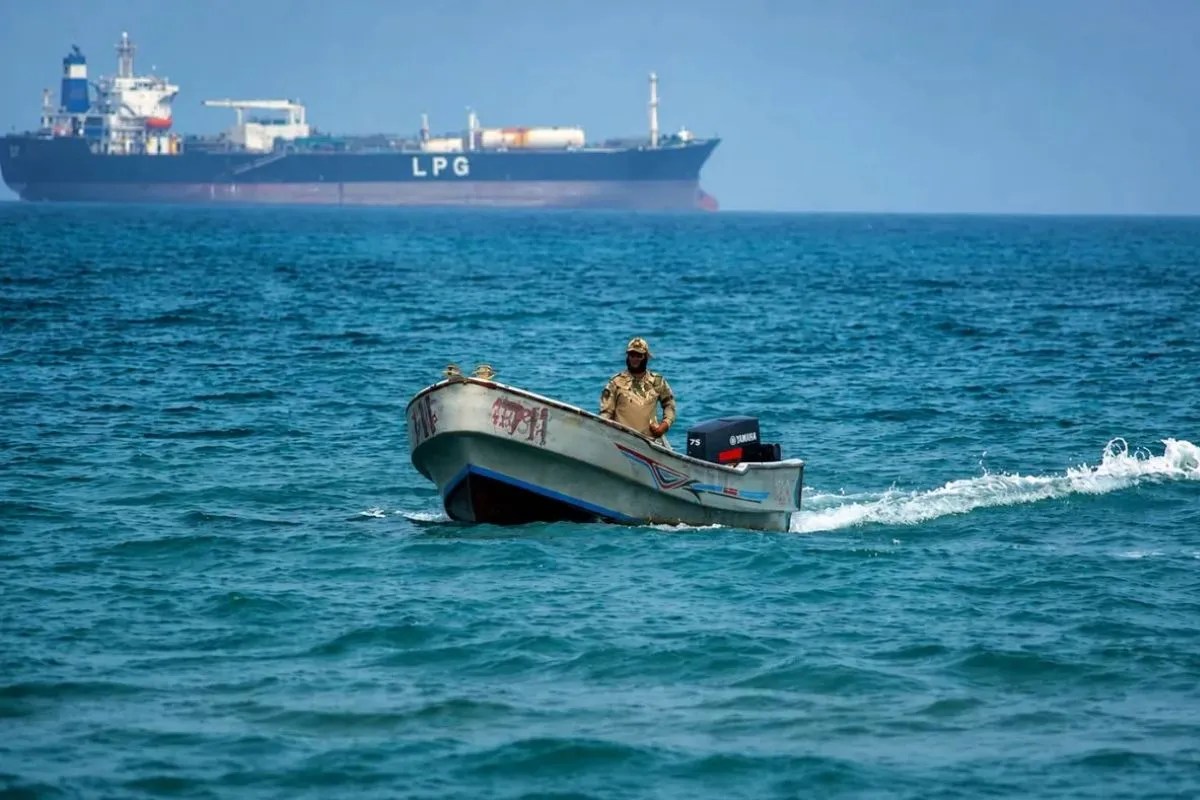
Commercial shipping through the Bab el-Mandeb strait remains exposed to structural threats despite recent diplomatic announcements. When Yemini Houthi movements announced that Red Sea transit would remain untaxed or unrestricted following high-level coordination with Iranian officials, global logistics boards exhaled. That exhale was premature. A strategic pause in maritime targeting is not a cessation of hostility. It is an operational recalibration.
Deciphering the geopolitical mechanics of the Red Sea shipping corridor requires stripping away diplomatic press releases. For months, missile strikes and drone swarms have forced container lines to circumnavigate the African continent via the Cape of Good Hope. This diversion adds thousands of nautical miles and millions of dollars in fuel costs to every single voyage between Asian manufacturing hubs and European consumer markets. When an armed political faction operating out of a fractured state declares a temporary suspension of harassment, the immediate economic relief masks a deeper calculation regarding regional leverage, international sanctions, and military exhaustion.
To understand why this latest declaration fails to provide long-term security, one must examine the operational structure of the Houthi command apparatus. Unlike conventional state navies bound by international maritime law, this force operates within an asymmetrical doctrine. Their capacity to disrupt global supply chains costs them very little while inflicting exponential economic pain on Western economies. A press statement issued after a meeting in Tehran does not dismantle missile batteries, nor does it disable coastal radar sites. It merely pauses a switch that can be flipped back at a moment's notice whenever diplomatic leverage requires it.
The Economics of Diverted Cargo
Container freight rates spiked violently when the crisis escalated. Insurance premiums for hulls transiting the southern Red Sea skyrocketed to prohibitive levels, pricing smaller operators out of the market entirely. Even with the promise of unmolested passage, major ocean carriers have refused to snap back to the Suez Canal route overnight.
Supply chain executives operate on risk management models, not political promises. A single miscalculated transit can result in a hull loss valued in the hundreds of millions of dollars, not to mention the human cost to civilian crews. The infrastructure of global trade relies on predictability. When that predictability shatters, rebuilding trust takes years, whereas destroying it takes a single anti-ship ballistic missile.
Consider the operational reality of moving consumer goods from Shanghai to Rotterdam. The traditional passage through the Suez Canal takes roughly thirty days. Diversion around the Cape of Good Hope extends that timeline by ten to fourteen days. This delay drains effective global container carrying capacity by absorbing vessels into longer transit loops. Ships burn more bunkers. Crews work extended rotations. Port congestion shifts from the Mediterranean to West African refueling stops and Northern European entry points.
An unverified promise of safety made during a political summit in Iran does nothing to alter these mathematical realities. Shippers who rush back into the danger zone based on temporary assurances risk absorbing catastrophic losses if the security umbrella evaporates mid-voyage.
Tehran and the Asymmetrical Hand
The diplomatic summit linking Houthi leadership with Iranian foreign policy architects highlights the command hierarchy governing these waters. Tehran provides the technical know-how, the guidance systems, and the strategic doctrine that transformed a local insurgency into a maritime choke-point master. When declarations regarding Red Sea shipping emerge from these meetings, they reflect Iranian regional bargaining strategies as much as domestic Yemeni politics.
Sanctions relief, nuclear file negotiations, and regional hegemony form the core objectives of this grand strategy. By turning the maritime faucet on and off, the alliance demonstrates its ability to throttle the global economy at will. This is coercion disguised as magnanimity. Offering free or unmolested passage is not an act of peace; it is an assertion of control. It establishes the premise that international commerce must secure permission from regional armed actors to use public international waters.
Maritime analysts tracking naval movements note that hardware transfers into Yemeni ports have not ceased. Coastal defense missiles remain hidden in rugged terrain, protected by decentralized networks that defy airstrikes. The military capability to shut down the Bab el-Mandeb strait remains intact, fully operational, and ready for deployment should diplomatic talks stall or external pressure increase.
The Illusion of Normalcy in Logistics
Global trade networks hate uncertainty more than they hate high costs. High costs can be passed down the consumer chain through inflation. Uncertainty, however, paralyzes capital investment and scrambles inventory forecasting. When executives read headlines about agreements ensuring free passage, they face a dangerous temptation to normalize operations prematurely.
This temptation leads straight into operational traps. Inventory buffers built up during the early panic phases of the crisis are currently stabilizing, but they remain fragile. Any sudden reversal by the insurgent coalition would instantly strand millions of tons of cargo in the middle of the Indian Ocean, forcing another chaotic scramble for alternative routing.
Furthermore, regional actors are watching how Western naval task forces respond to these diplomatic maneuvers. Operation Prosperity Guardian and allied defensive patrols have maintained a defensive posture, intercepting incoming drones and missiles. Yet, defensive measures alone cannot reopen a hostile waterway. They can only mitigate incoming damage. Without a fundamental restoration of deterrence or a political settlement that disarms the threat at its source, the Red Sea remains a contested zone masquerading as an open highway.
Insurance and the Reality Check
Marine underwriters do not base their rate structures on optimistic political communiques. Actuarial tables are cold, unforgiving instruments built on historical loss data and active threat assessments. Until war risk surcharges drop significantly and stay down for sustained quarters, the financial penalty for using the Suez route remains too high for prudent risk managers.
Insurance executives look at the underlying mechanics. If a ship is struck, who pays? If a crew is taken hostage, what is the diplomatic rescue path? These questions remain entirely unresolved by a simple announcement of goodwill originating from a capital city hundreds of miles away from the coastline.
The structural vulnerabilities exposed by this crisis will shape maritime security policy for decades. Navies are already redesigning escort protocols. Shipbuilders are evaluating whether future commercial vessels require passive defense systems or reinforced superstructures. The era of assuming open seas everywhere, all the time, has ended.
Global commerce is adapting to a fractured geography. Supply chains are hardening, shortening, or shifting toward near-shoring models that reduce reliance on long, vulnerable maritime corridors. A temporary reprieve announced in a political drawing-room does not reverse these massive structural realignments. The underlying risk persists, quietly waiting beneath the surface of the water.