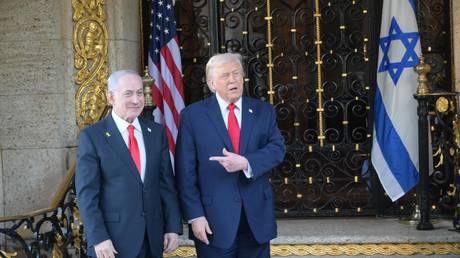
Reports of a heated phone call between Donald Trump and Israeli Prime Minister Benjamin Netanyahu over Iran policy have sparked immediate speculation about a rift between two leaders long viewed as ideological allies. While headline writers quickly framed the exchange as a "shouting match from hell," the real story lies not in the volume of the conversation, but in a fundamental strategic divergence between Washington and Jerusalem. Both leaders share a desire to contain Tehran, yet their definitions of success, tolerance for regional escalation, and domestic political constraints pull them in opposing directions.
Diplomacy between heads of state rarely resembles the polite choreography seen at press conferences. It is transactional, blunt, and frequently abrasive. When reports surfaced—initially through Israeli media outlets and subsequently echoed by international wire services—describing an explosive argument over military options and diplomatic timelines regarding Iran, observers treated it as an anomaly. Veteran watchers of US-Israel relations recognize it as a recurring structural friction.
The Core Friction Between Maximum Pressure and Direct Action
To understand why two leaders who frequently praise each other publicly would clash behind closed doors, one must examine the mechanics of their respective approaches to the Islamic Republic.
During his first administration, Trump dismantled the 2015 Joint Comprehensive Plan of Action (JCPOA) and instituted a "maximum pressure" campaign built on crippling economic sanctions and targeted kinetic actions, such as the 2020 strike that killed Islamic Revolutionary Guard Corps commander Qasem Soleimani. Trump’s doctrine relies heavily on economic coercion and unpredictable leverage to force adversaries to the negotiating table for a bilateral deal on his terms. He views prolonged, open-ended military entanglements in the Middle East as strategic traps that drain American resources and alienate his domestic base.
Netanyahu operates under an entirely different set of existential calculations. For decades, the Israeli Prime Minister has viewed Iran’s nuclear threshold status and its regional network of proxy militias—Hezbollah in Lebanon, the Houthis in Yemen, and various factions in Iraq and Syria—as an immediate threat to Israel's survival. From Jerusalem's perspective, economic sanctions alone have failed to halt Tehran's nuclear enrichment program or degrade its ballistic missile capabilities. Israel's military establishment favors decisive, preemptive, or retaliatory strikes designed to set Iranian capabilities back by years, even if such actions risk triggering a broader regional conflagration that inevitably draws in United States forces.
The collision is obvious. Trump wants leverage to cut a deal or force a capitulation without committing US troops to another Middle Eastern war. Netanyahu wants freedom of action—and American military backing—to neutralize threats directly before Iran crosses an irreversible nuclear threshold.
The Anatomy of Leaks in Jerusalem and Washington
When details of a private, high-level phone call appear in the press with colorful descriptions like "shouting match," the leak itself is a political weapon. Experienced foreign policy analysts always ask who benefits from the narrative before accepting the characterization at face value.
In Israel, coalition politics frequently dictate the timing and tone of media disclosures. Netanyahu governs alongside right-wing factions that demand uncompromising military posture against Tehran and its proxies. Allowing reports to circulate that the Prime Minister stood toe-to-toe with an American leader, refusing to back down on Israel's security requirements, reinforces his domestic brand as "Mr. Security"—a leader willing to absorb diplomatic heat from Washington to protect Israeli citizens.
Conversely, leaks originating from Washington circles often serve a different purpose. Signaling to Tehran and European allies that the US administration is actively restraining Israeli military escalation creates diplomatic breathing room. It projects control. It tells regional partners like Saudi Arabia and the United Arab Emirates—states deeply vulnerable to Iranian retaliatory strikes on their energy infrastructure—that Washington is not giving Jerusalem a blank check to ignite a regional war.
This dynamic is not new. Historical precedent demonstrates that friction between Washington and Jerusalem over Iran is the rule rather than the exception.
- The Obama Era (2012–2015): Relations between Barack Obama and Netanyahu deteriorated publicly over Israeli threats to launch unilateral strikes against Iran's Natanz and Fordow nuclear facilities, culminating in Netanyahu's controversial address to a joint session of the US Congress opposing the JCPOA.
- The Bush Administration (2008): Even George W. Bush, widely considered deeply supportive of Israel, reportedly refused Israeli requests for specialized bunker-busting munitions and overflight rights across Iraq to strike Iranian nuclear sites, fearing the fallout on US forces stationed in the region.
- The Biden Administration (2023–2024): Joe Biden repeatedly clashed with Netanyahu over the scope of Israeli retaliation following Iranian ballistic missile barrages, explicitly warning against strikes on Iranian nuclear or oil facilities to prevent global energy market shocks.
Trump and Netanyahu are simply the latest actors stepping onto a stage with pre-written structural constraints.
Why Oil, Proxies, and Timing Complicate the Equation
Any military confrontation with Iran carries immediate consequences that extend far beyond the Levant. The global economy remains acutely sensitive to disruptions in the Strait of Hormuz, through which roughly a fifth of the world's petroleum liquids consumption passes.
If Israel conducts major strikes against Iranian energy infrastructure or nuclear sites, Tehran’s most predictable asymmetric response is not merely launching missiles at Tel Aviv, but mining shipping lanes, harassing tankers, or striking oil production facilities in the Persian Gulf. A sudden spike in global crude prices would immediately translate into higher fuel costs for American consumers. For any US leader, domestic inflation and gas prices are existential political threats. Trump’s stated commitment to lowering energy costs directly conflicts with a Middle Eastern military escalation that sends Brent crude surging past $100 a barrel.
Furthermore, the operational reality of striking hardened Iranian facilities poses a massive logistical hurdle. Fordow, an enrichment facility buried deep beneath a mountain near Qom, is widely assessed by defense analysts to be impervious to conventional Israeli munitions. Destroying it from the air would likely require the US Air Force's GBU-57 Massive Ordnance Penetrator—a 30,000-pound bomb that only American B-2 stealth bombers can deliver.
This technological reality binds Israel to Washington. Jerusalem cannot fully execute the most decisive version of its military option without direct American participation. When Netanyahu pushes for maximum military action, he is implicitly asking for American aircraft, munitions, and intelligence support. When Trump pushes back, he is guarding the threshold of direct US military intervention.
The Myth of Perfect Alignment
A common analytical error in covering US-Israel relations is assuming that personal rapport or shared political rhetoric translates into identical national interests. It never does.
The United States is a global superpower balancing commitments across the Indo-Pacific, Eastern Europe, and the Middle East. Washington must weigh how an entanglement with Iran affects its deterrence posture against China in the Taiwan Strait or its commitments to NATO. Every Patriot battery, THAAD interceptor, and aircraft carrier strike group deployed to the Persian Gulf or Eastern Mediterranean is an asset unavailable elsewhere.
Israel is a regional power facing immediate, localized threats on multiple borders simultaneously. Its strategic horizon is measured in days and miles, not global theater balances. When rockets fall on northern communities or ballistic missiles target central cities, abstract discussions about global supply chains or great-power competition carry zero weight in Jerusalem.
Therefore, shouting matches—whether literal or exaggerated by aides—are the inevitable friction of two leaders representing fundamentally different geographic and strategic realities. They can agree entirely on the diagnosis that Iran is a malign actor while fiercely disagreeing on the prescription.
What Happens When Strategy Collides With Reality
Without direct access to classified transcripts or intelligence assessments, the exact decibel level of the call remains unverified, and treating anonymous characterizations as gospel is poor journalism. What remains verifiable is the policy deadlock both capitals face.
Iran’s nuclear program has advanced significantly since 2018, shrinking its "breakout time"—the period required to produce enough weapons-grade fissile material for a single nuclear device—from roughly a year to a matter of weeks, according to assessments from the International Atomic Energy Agency and US intelligence officials. Meanwhile, Tehran’s regional proxy network, despite suffering severe tactical setbacks and leadership decapitations from Israeli military operations, retains the capacity to disrupt maritime trade and launch asymmetric attacks.
Neither leader holds a risk-free card. If Trump pursues a new diplomatic agreement with Tehran, he risks alienating his closest regional ally and facing accusations of repeating the compromises of the 2015 nuclear deal. If he greenlights a joint military campaign to dismantle Iran's nuclear infrastructure, he risks plunging the United States into a protracted, expensive regional war with unpredictable economic consequences.
Conversely, if Netanyahu acts unilaterally without Washington's backing, he risks operational failure against deeply buried targets while severely straining the diplomatic and military lifeline Israel relies upon for resupply and United Nations Security Council protection. If he holds back entirely, he risks allowing Iran to cross the nuclear threshold on his watch.
The reported clash on the phone was not a breakdown in personal chemistry, nor was it an anomalous outburst. It was the predictable sound of two leaders hitting the hard wall of geopolitical limits, where slogans end and the actual cost of war begins.