The headlines cheer with predictable relief whenever an airport reopens after a volcanic eruption. Planes take off. Passengers clap. Tourism boards exhale. The lazy consensus says the crisis is over, the ash has settled, and the skies are safe again because government stamps gave the green light.
That narrative is a comforting lie.
I have watched aviation authorities scramble to appease balance sheets while particulate matter still hangs heavy in the upper atmosphere. Reopening airspace two days after a major stratospheric blow is not a triumph of engineering or safety management. It is a financial triage operation disguised as an operational victory.
The Myth of the Clean Sky
Standard travel journalism treats volcanic ash like dust on a coffee table. Once the eruption stops, the thinking goes, the wind blows the grey powder away and everything returns to normal. This betrays a fundamental misunderstanding of how jet engines and microscopic glass interact at 35,000 feet.
Volcanic ash is not dirt. It is pulverized stone, microscopic shards of silica and volcanic glass with a melting point far below the operating temperature of a modern commercial turbofan engine. When an engine ingests this material, the glass melts inside the combustion chamber, coats the turbine blades, and solidifies as it hits cooler sections further back.
The result? Rapid flameouts. Power loss. Complete engine failure.
Giving the all-clear after forty-eight hours assumes that satellite imagery and pilot reports can map every invisible plume of abrasive aerosol drift. They cannot. Atmospheric dispersion models are probabilistic guesses, not laser-guided maps. When flights resume in a rush, airlines are playing Russian roulette with a six-shooter loaded by Mother Nature.
The Economics of Grounded Fleets
Why the rush to clear the runway? Follow the money.
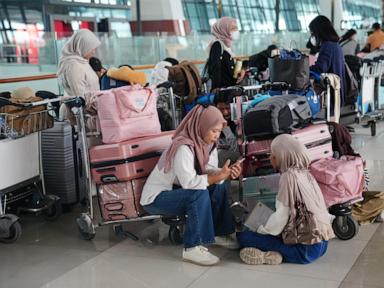
Every hour a widebody jet sits parked on tarmac in Southeast Asia, bleeding lease payments, crew costs, and scheduling synchronization credits, airlines lose millions. Indonesian tourism relies on hyper-compressed high-season volume. Local carriers operate on thin margins where a three-day shutdown threatens quarterly solvency.
When bureaucrats lift flight restrictions prematurely, they are responding to economic panic, not atmospheric clarity. The pressure from corporate stakeholders outweighs the marginal risk of a catastrophic compressor stall over the Java Sea.
Imagine a scenario where an airline executive had to personally ride in the cockpit of the first commercial flight out after a caldera collapse. The schedule would look remarkably different. Instead, liability is diffused across regulatory bodies, insurance syndicates, and anonymous dispatchers.
What the Authorities Refuse to Admit
Aviation safety protocols were rewritten after the 2010 Eyjafjallajökull eruption in Iceland paralyzed European airspace. Regulators shifted from a zero-tolerance policy to a manufacturer-guided risk threshold. Translated into plain English: airlines are now permitted to fly through low-to-moderate ash concentrations if they are willing to accept higher maintenance wear and tear.
That shift transferred the burden of safety from absolute prevention to calculated risk tolerance.
When officials announce that flights to and from Jakarta or regional hubs have resumed, they mean something very specific: the concentration of ash has dropped below the threshold where insurers threaten to void hull coverage. It does not mean the air is pristine. It means the accountants signed off.
Turbine blades suffer micro-abrasions that shorten their operational lifespan by thousands of cycles. Engines ingested with low-density ash don't always drop out of the sky immediately; they fail six months later during a routine climb out of Singapore or Tokyo, long after the volcanic event has faded from public memory.
The Passenger Dilemma
If you are currently booking a ticket through an archipelago prone to seismic tantrums, stop relying on airline PR statements.
Do not ask if the airport is open. Regulators will almost always say yes the moment political pressure peaks. Ask instead what specific dispersion models airlines are using, and whether they are enforcing mandatory engine borescope inspections after every rotation through an active ash zone.
The aviation sector has mastered the art of projecting confidence while managing severe latent hazards. Next time you board a flight immediately following a natural disruption, remember that the green light you are trusting is driven by quarterly forecasts, not atmospheric perfection.
Check the wind patterns yourself. Look past the corporate press releases. Sometimes the smartest move is letting everyone else rush onto the plane first.