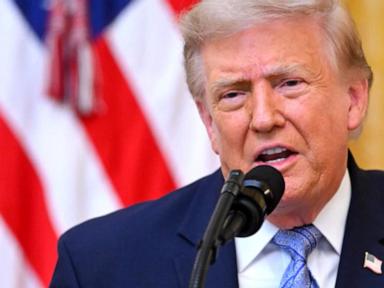
Political communication operating from the executive branch functions through a systematic optimization problem: maximizing base mobilization while minimizing the institutional friction required to pass stalled legislation. On July 16, 2026, the primetime address from the White House illustrated this dynamic. Ostensibly framed as an intelligence disclosure regarding foreign interference and the 2020 election cycle, the address operated on a structural level to solve a specific legislative and electoral bottleneck ahead of the 2026 midterm elections.
Evaluating this address requires moving past partisan narrative framing. Instead, it must be analyzed as a calculated deployment of declassified data intended to exert legislative leverage and shape the domestic information environment.
The Strategic Architecture: Information Asymmetry and Narrative Framing
The core mechanism of the address relied on a deliberate asymmetric information strategy. By utilizing executive declassification authority, the administration introduced a high volume of raw intelligence documents directly to the public via whitehouse.gov. This maneuver circumvents traditional legislative and bureaucratic clearinghouses, creating an immediate interpretative monopoly before institutional fact-checkers can contextualize the data.
The presentation structured its arguments across three distinct analytical pillars:
- The Foreign Adversary Input (The China Data Incursion): The primary data assertion centered on an alleged compromise of 220 million U.S. voter files by a dedicated data exploitation unit within the People's Republic of China.
- The Domestic Vulnerability Metric (Infrastructure Exposure): The speech classified mail-in voting mechanisms and electronic ballot-counting architectures as structurally vulnerable and "easily compromised," establishing an existential risk model.
- The Institutional Cover-Up Postulate: The narrative established a cause-and-effect relationship where intelligence actors deliberately withheld these vulnerabilities from executive and congressional oversight.
The Data Disconnect: Raw vs. Actionable Intelligence
An analysis of the declassified documents reveals a structural variance between the rhetorical assertions and operational realities. The headline claim—the acquisition of 220 million voter files—describes a massive data capture but conflates publicly accessible information with compromised infrastructure.
In the United States, voter registration datasets (including names, addresses, party affiliations, and historical turnout metrics) are structurally open. State election boards and third-party political vendors systematically distribute these files for campaign targeting. The acquisition of this data by a foreign intelligence service represents a standard signal-intelligence harvesting operation rather than an active breach of ballot integrity or a manipulation of vote-counting infrastructure.
The second analytical flaw lies in the vulnerability model assigned to voting machines. U.S. election infrastructure is radically decentralized, split across thousands of independent county and municipal jurisdictions. Because these systems rely on air-gapped hardware, paper audit trails, and diverse localized software configurations, executing a localized hack that alters aggregate national outcomes requires physical, synchronized access across thousands of distinct points. Scaling an exploit under these conditions introduces a near-prohibitive operational cost and logistical complexity for any foreign adversary.
The Legislative Objective: Forcing the SAVE America Act
The timing of the address—exactly 110 days prior to the 2026 midterm elections—reveals its primary legislative function. The speech served as a public-pressure mechanism to force action on the SAVE America Act, a restrictive voting bill currently bottlenecked in Congress.
The strategic logic follows a predictable cost-benefit framework designed to alter legislative behavior:
[Public Disclosure of Raw Intel]
       │
       ▼
[Heightened Voter Threat Perception]
       │
       ▼
[Direct Electoral Pressure on Lawmakers]
       │
       ▼
[Reduction of Legislative Resistance to the SAVE Act]
The administration's focus on eliminating mail-in ballots (excepting specific military, medical, or travel exemptions) and enforcing federal photo identification and citizenship verification is designed to structurally reshape the electorate. By pairing these domestic statutory goals with a major national security threat (Chinese cyber incursions), the rhetorical framework shifts the legislative debate from a dispute over voter access to a binary vote on national sovereignty.
The structural bottleneck to this strategy is the Senate filibuster. Achieving the 60-vote threshold required to pass the SAVE America Act remains mathematically improbable under the current party breakdown. The address implicitly acknowledged this barrier by functioning as a tool to mobilize base voters to alter the legislative composition in the upcoming midterms, or alternatively, to signal an executive push toward reforming the 60-vote threshold itself.
Media Deplatforming and the Fragmentation of the Attention Economy
A significant structural variable of the July 16 address was the distribution model. Major broadcast networks, including NBC and ABC, opted not to carry the address live on their primary over-the-air channels, relegating the feed to digital streaming platforms due to concerns over non-verified partisan claims.
This decision backfired analytically by feeding directly into the administration’s institutional cover-up narrative. Rather than limiting the reach of the speech, the network blackout allowed the executive to execute a classic multi-channel distribution pivot:
- The Censorship Premium: By framing the network refusal as an active "plot" to hide information, the administration increased the perceived value of the information among its core audience.
- Direct Traffic Capture: Directing viewers to whitehouse.gov bypassed corporate media filters completely, allowing the White House to control the entire user experience, data presentation, and adjacent messaging.
- Audience Fragmentation Optimization: Modern political communication no longer requires mass broadcast consensus. Reaching a highly concentrated, motivated baseline via streaming and alternative media ecosystems yields higher conversion rates for political action (e.g., contacting congressional representatives, voter turnout) than a diluted broad-market audience.
The executive threat to review or revoke the broadcast licenses of non-complying networks serves as an enforcement signal designed to alter the future cost-benefit analysis of media executives facing subsequent primetime addresses.
Strategic Forecast: Electoral and Geopolitical Fallout
The deployment of this executive communication strategy yields predictable trajectories across domestic politics and international relations over the current fiscal quarter.
Domestically, the address successfully hardens the target base’s skepticism toward institutional election outcomes. By providing official White House documentation—regardless of its actual operational context—the administration establishes a durable diagnostic framework to challenge prospective losses in the November 2026 midterms. If Republican candidates underperform, the narrative framework for systematic structural interference has already been fully articulated, validated by declassified files, and distributed directly to the consumer.
Geopolitically, the explicit focus on Chinese state-sponsored data harvesting escalates structural tensions between Washington and Beijing. By elevating standard intelligence-gathering operations to the level of an "election security nightmare," the administration restricts its own diplomatic flexibility. This positioning complicates upcoming bilateral trade negotiations and security summits, as any future concession to Beijing will be critiqued domestically against the backdrop of the data vulnerabilities outlined in this address. The immediate denial issued by the Chinese Embassy underlines the rapid diplomatic friction generated by utilizing foreign policy data as a tool for domestic legislative mobilization.