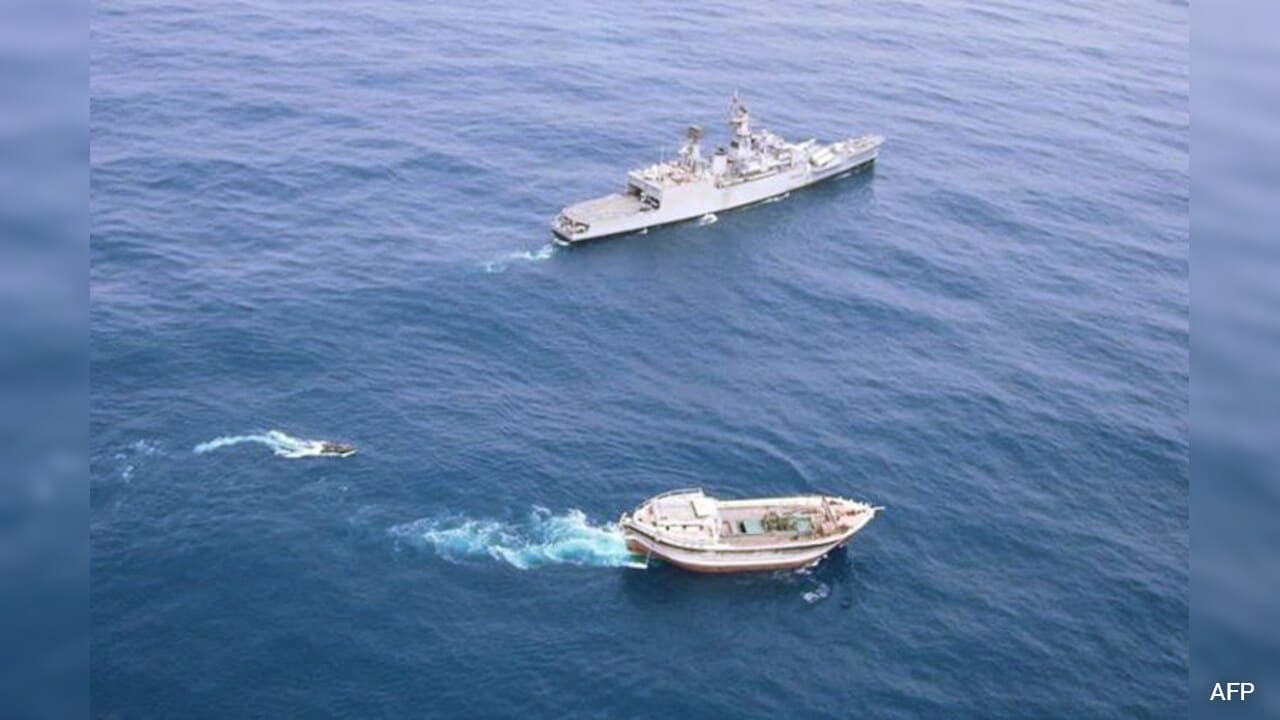
Maritime choke points operate on thin margins of security, where a single vessel interception cascades through geopolitical supply chains, insurance syndicates, and diplomatic channels. When commercial shipping lanes intersect with regional conflict zones, the calculus of risk shifts from standard operational logistics to crisis management. The seizure of a cargo vessel carrying dual-use materiel near the Horn of Africa, involving multi-national crew members including Indian nationals, exposes the structural vulnerabilities inherent in modern maritime commerce. To evaluate incidents of this magnitude, observers must discard superficial news aggregation and instead analyze the underlying risk vectors: cargo composition profiling, crew vulnerability indexing, and jurisdictional friction points.
The Vector of Vulnerability Cargo Profiling and Geopolitical Exposure
Commercial transit through the Gulf of Aden and the Somali basin requires continuous threat assessment. Cargo profile analysis dictates whether a vessel becomes a high-value target for state-sponsored actors, insurgent groups, or opportunistic criminal syndicates. Vessels transporting industrial hardware, military-adjacent equipment, or contested national shipments operate with an elevated threat multiplier compared to bulk commodity carriers.
When a ship carries cargo designated for a specific government—such as Turkish-manufactured defense materiel or security equipment—the vessel ceases to be a neutral commercial entity in the eyes of regional belligerents. The primary risk variables include:
- Manifest Transparency: The degree to which a ship's bill of lading is public knowledge or intercepted through signals intelligence by hostile non-state actors.
- Flag State Protections: The willingness and capability of the flag registry state to project naval power or negotiate emergency extractions.
- Destination Volatility: The political stability of the unloading port and the contested nature of the maritime corridors leading to it.
Insurgency groups and maritime militias monitor regional shipping movements using automated identification system data, visual spotters, and electronic intelligence gathering. When a vessel carrying sensitive cargo traverses waters with diminished naval patrols, the probability of interdiction approaches certainty if deterrence mechanisms fail. The presence of non-national crew members, such as Indian seafarers working under international contracts, introduces a secondary diplomatic dimension. These workers are frequently treated by captors as political leverage against their home governments or corporate employers rather than direct combatants, complicating rescue operations.
The Crew Risk Matrix Operational Human Capital in Contested Waters
The human element remains the most vulnerable variable in maritime security incidents. Commercial shipping companies deploy mixed-nationality crews to optimize operational labor costs, drawing heavily from nations with deep pools of maritime labor like India, the Philippines, and Eastern Europe. When a vessel is boarded and hijacked, this demographic distribution triggers distinct diplomatic and crisis response protocols.
Corporate risk management frameworks often fail to account for the secondary effects of crew detention. The operational cost of a hijacking extends far beyond ransom demands or hull insurance payouts. It incurs deep institutional friction across three distinct operational tiers:
- Consular Negotiation Latency: The time required for foreign ministries to establish secure communication backchannels with localized authorities or tribal factions holding the crew.
- Employer Liability Thresholds: The legal obligation of shipowners to maintain wage continuity, psychological support systems, and family liaison operations during extended captivity periods.
- Crew Psychological Depreciation: The long-term degradation of workforce retention and hazard premium demands across the broader maritime labor market following high-profile seizures.
Naval coalitions operating in the region, such as European Union Naval Force operations or combined maritime forces, prioritize high-value asset protection and freedom of navigation. However, resource constraints mean that merchant vessels operating outside designated maritime security transit corridors often rely entirely on onboard Best Management Practices. When these passive defenses—such as razor wire, citadel rooms, and acoustic deterrents—are breached by armed boarding teams, the crew transitions immediately from operational staff to hostages.
Supply Chain Contagion Insurance, Rerouting, and Economic Friction
A maritime interdiction of a vessel carrying strategic cargo triggers immediate corrections in global trade pricing models. Marine underwriters respond to regional instability by adjusting War Risk premiums. When the perceived probability of a hijacking or missile attack increases, insurance syndicates alter the baseline cost of transit through the Bab el-Mandeb strait and the Gulf of Aden.
[Threat Event] ---> [Underwriter Risk Re-pricing] ---> [Spike in War Risk Premiums]
                                                            |
[Supply Chain Delay] <--- [Cape of Good Hope Rerouting] <---+
This financial mechanism alters trade economics instantly. Ship operators face a binary optimization problem: absorb the exorbitant war risk surcharges or reroute vessels around the Cape of Good Hope. Rerouting adds thousands of nautical miles and multiple weeks of transit time to voyages connecting Asian manufacturing hubs with European markets. The second-order effects of this shift include fuel consumption surges, port congestion in alternative refueling stops, and localized inventory shortages for critical manufacturing components.
Furthermore, the transport of state-backed or defense-related hardware introduces legal liabilities under international maritime law. If a vessel is carrying cargo that violates UN arms embargoes or lacks proper end-user documentation, insurers may void coverage entirely. This leaves shipowners exposed to catastrophic loss liabilities and exposes charterers to regulatory penalties from international bodies.
Strategic Operational Mandates for Maritime Stakeholders
Mitigating the recurrence of cargo vessel seizures requires a structural pivot from reactive naval escorts to predictive threat engineering. Ship operators and charterers must implement rigorous verification protocols before accepting commissions for politically sensitive or defense-related cargo bound for high-risk zones.
The primary line of defense relies on strict compartmentalization of cargo manifests and the deployment of armed private security teams where permitted by flag state regulations. Transparency must be balanced against operational security to prevent commercial data from serving as an open-source targeting directory for regional threat actors. Furthermore, crew recruitment agencies must ensure that mariners deployed into volatile corridors are backed by comprehensive hazard insurance and rapid-response diplomatic support frameworks that do not depend solely on corporate negotiation capacity.
Stakeholders must decouple commercial logistics from regional geopolitical conflicts by enforcing dynamic route planning that responds to real-time threat intelligence rather than static schedules. Eliminating single points of failure in maritime transit requires continuous coordination between private shipping consortia, international naval task forces, and national labor ministries to ensure that when a vessel is compromised, the mechanism for recovery operates with institutional speed rather than bureaucratic friction.