The silt remembers what the water forgets.
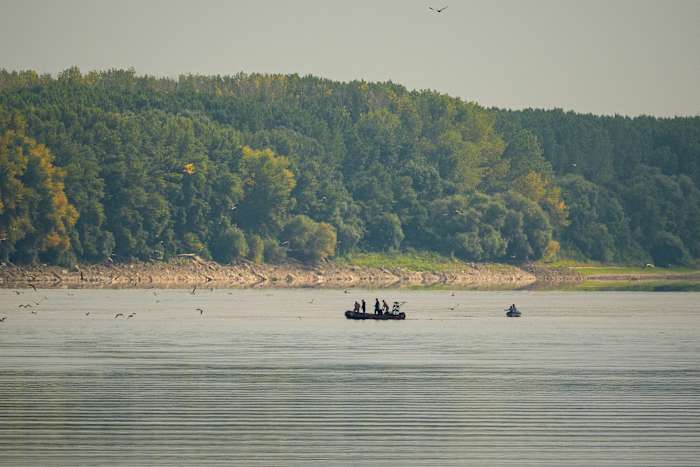
For generations, the great blue artery of Central Europe has carried the weight of nations on its back. Barges loaded with grain, coal, and steel crawl across its surface like heavy beetles. Fishermen cast their nets into currents that tasted of mountain snow and ancient mud. Children skip smooth gray stones across its skin during the endless, amber-lit stretches of July. It feels permanent. It feels like an altar of geography that time forgot how to touch.
Until the mud cracks open.
Stand today on the sun-baked banks near Zimnicea or Budapest, and the river does not roar. It gasps. The water level has dropped so low that the ghosts of long-sunken World War II warships—hulks packed with explosives and twisted iron—rise from the evaporating depths like skeletal fingers clutching at the empty air. The channel is choking.
(Note: The following personal account is a narrative framing device, built to reflect verified meteorological patterns across the Danube basin.)
I remember the smell of dead carp baking in the noon heat, a sharp, metallic stench that clung to the back of the throat like ash. I remember talking to a barge captain named Mihai, a man whose family had steered vessels through these locks for four generations. He stood on the deck of his immobilized freighter, staring at a wall of dry brown earth where deep water used to welcome his hull. He didn’t curse. He just lit a cigarette, his calloused thumb trembling slightly against the plastic lighter.
"The river isn't just low," Mihai told me, his voice flat with a terrifying realization. "It’s gone."
The Anatomy of a Slow-Motion Collapse
To understand the energy emergency gripping Eastern Europe, you have to look past the bureaucratic jargon of kilowatt-hours and reservoir capacities. You have to look at the rain that never fell.
The Danube basin spans ten countries, a sprawling hydrological net catching moisture from the Alps to the Black Sea. But last winter brought a cruel ghost of a snowfall. Spring arrived without its usual torrential floods. Then came the furnace. Weeks of relentless, record-shattering heatwaves baked the soil until it turned to concrete, swallowing any sudden rain before it could ever hope to reach a tributary.
The consequences ripple outward with brutal mathematical precision.
Consider the hydro-plants. The Iron Gates gorge, straddling the border between Romania and Serbia, houses some of the largest hydroelectric facilities on the continent. Massive turbines that normally hum with the frictionless fury of millions of gallons of rushing water now sit half-silenced, spinning lazily in the thin soup of a shrunken current.
Electricity generation plummeted by half in some regions. Then by two-thirds.
When the river slows, the lights flicker. That is the inescapable physics of a region overly dependent on the wet muscle of nature to keep its grid alive.
The Domino Effect of Dry Earth
Energy crises do not arrive with sirens. They creep in through the logistics ledger.
When the water drops below critical navigation marks, cargo ships cannot carry full loads. A barge that once hauled two thousand tons of coal must shed half its cargo just to keep from scraping its belly on the riverbed. Freight costs skyrocket. Factories in Serbia, Hungary, and Romania face an impossible choice: pay double to ship raw materials by congested, potholed highways, or shut down the assembly lines.
Coal sits piled high at regional mines, completely stranded because the floating conveyor belt of Europe has run out of juice. Meanwhile, natural gas prices surge as nations scramble to fire up backup thermal plants, desperately trying to plug the gaping hole left by silent turbines.
It is a vicious, self-feeding loop. The heat dries the river. The dry river starves the hydro-plants. The starving grid forces a reliance on fossil fuels, which pump more carbon into the atmosphere, deepening the very drought that started the nightmare.
The politicians call it a contingency scenario. The economists call it a supply chain bottleneck.
Mihai calls it the end of the world he knew.
Looking Beyond the Shallow Banks
We have built our modern civilizations on the arrogant assumption that resources are infinitely renewable conveyor belts. We pave over the recharge zones. We straighten winding rivers into concrete speedways for our convenience. We ignore the slow, warning pulse of the earth until the pulse stops entirely.
The low water marks on the stone pillars of bridges across Eastern Europe are not just environmental data points. They are tombstones. They mark the boundary where human infrastructure collides with ecological reality.
The crisis along the Danube is a preview. It is a dry-run for a future where climate volatility turns our most reliable arteries into seasonal creeks.
A lone heron stands knee-deep in cracked gray mud where a deep-water channel used to run, staring intently at a puddle that is shrinking by the minute.