The water did not knock. It arrived as a heavy, breathless rumor in the dark, a low-frequency vibration that rattled tea tins on kitchen shelves before anyone realized the mountain was coming down.
Along the high, fractured frontier where Nepal bleeds into Tibet, the border is not merely a line drawn on an old map. It is a vertical world of slate, ice, and fragile stone, stitched together by the Bhote Koshi river. For generations, the people who carved their lives into these steep gorges lived with a healthy, ancestral fear of the monsoon. They knew the sky could open. They knew the soil could saturate. But what broke the night open this time was different. It was an invisible, catastrophic accumulation of weight—glacial meltwater pooling high in the hidden basins, waiting for a threshold to snap.
When the earthen dams finally gave way, the torrent did not simply rise. It charged.
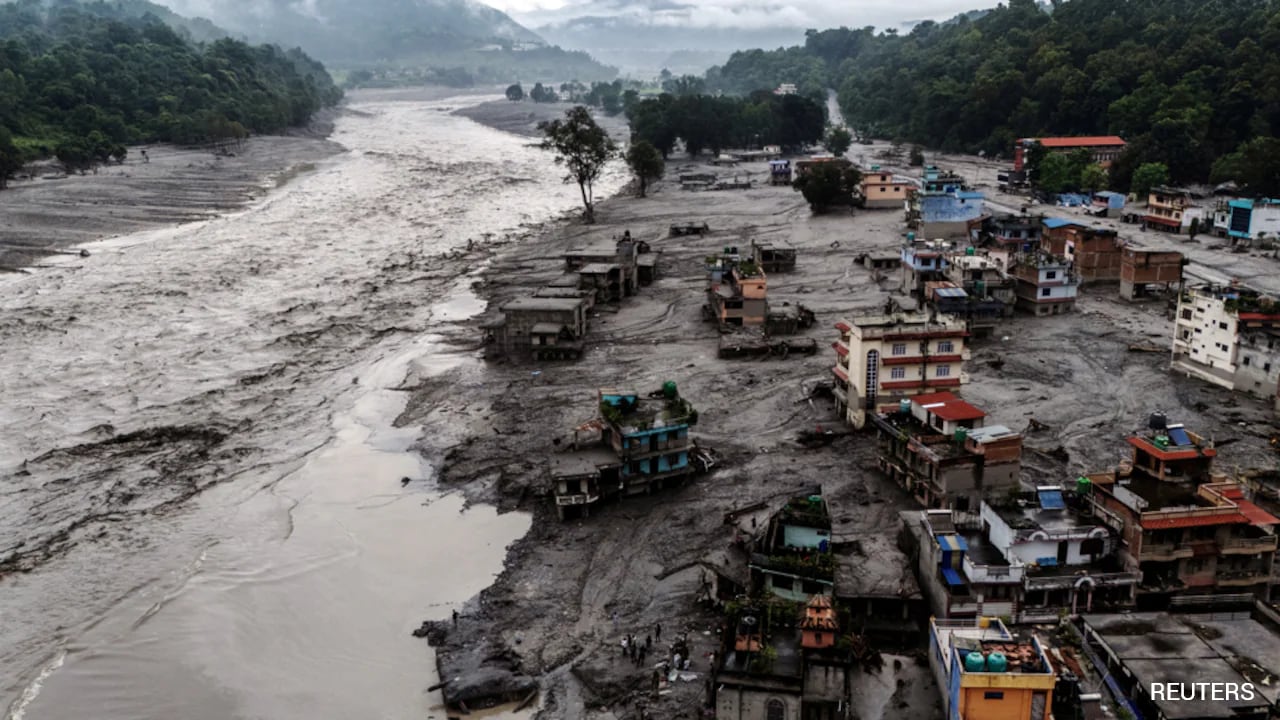
Imagine standing on a narrow terrace above the gorge, listening to the familiar roar of the river, only to watch that sound multiply a hundredfold in seconds. The water turned the color of wet cement, churning with boulders the size of houses, pine trees ripped screaming from the earth, and the remnants of stone-built homes. It swallowed footbridges as if they were thread. It erased paths that grandparents had walked.
In the immediate aftermath, the statistics arrived in sterile police reports and flickering television dispatches. Homes gone. Bridges severed. A tally of the missing that ticked upward with every passing hour as relatives made frantic phone calls to cellular towers that had long since been sheared from their foundations.
Behind every cold digit in those casualty reports is an ordinary morning interrupted. Take Pemba, a hypothetical shopkeeper whose family has run a roadside tea stall in the valley for decades—a composite profile drawn from the dozens of villagers whose lives are upended by these Himalayan flash floods every single year. Pemba’s world was simple: the smell of cardamom tea, the clatter of tin cups, the morning laughter of children walking the trail to the local school. In less time than it takes to boil a kettle, that entire micro-economy was swept downstream, leaving behind a gray plain of mud where a vibrant community used to stand.
Rescue is a race against geography. That is the brutal reality of the Nepal-Tibet border.
When disaster strikes at high altitudes, the modern world’s swift response mechanisms stall against the sheer hostility of the terrain. Roads are blocked by landslides the size of cathedrals. Helicopters cannot fly when the monsoon clouds drop a low, blinding ceiling over the passes. The search and rescue teams—a brave coalition of local police, armed forces, and volunteers from neighboring villages—must rely on the oldest technology available: their own boots, ropes, and bare hands.
They trace the edges of the swollen, angry riverbank. They look for familiar signposts buried under ten feet of silt. Every boulder shifted is a gamble. Every hour lost diminishes the hope of finding anyone alive in the pockets of air beneath the debris.
We watch these tragedies unfold from thousands of miles away on flat screens, translating human agony into a brief news alert before scrolling to the next headline. But the geography of survival is intimate and enduring. The mountains do not forgive engineering miscalculations, nor do they care about geopolitical borders when they decide to shift. Climate change is rewriting the hydrology of the Himalayas, turning once-stable glacial lakes into ticking time bombs suspended thousands of feet above unsuspecting villages.
The water eventually recedes. The mud dries into a crust that cracks under the punishing sun. The cameras pack up and move on to the next breaking crisis somewhere else on the globe.
Yet, in the gorge, the work of picking through the wreckage continues in the silence that follows the flood. Families gather what little remains—a battered copper pot, a photograph caked in gray silt—and they look up at the towering, indifferent peaks. They know the monsoon will return next year. They know the rivers will rise again. And still, they begin to clear the stones, refusing to let the mountain have the last word.