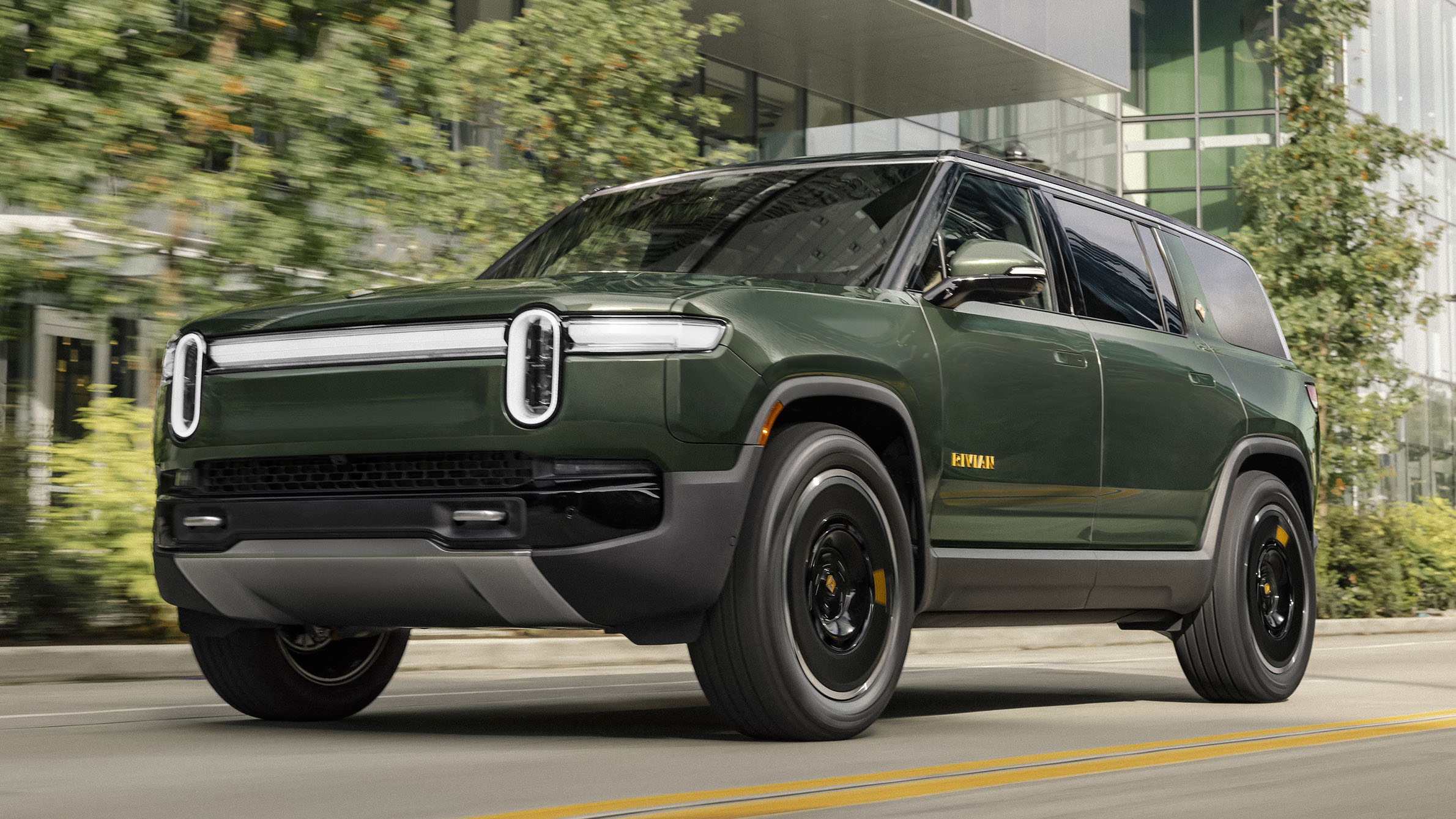
Rivian beat third-quarter earnings expectations by leaning on two distinct engines—high-margin software licensing from its Volkswagen joint venture and accelerating deliveries of its mass-market R2 SUV. For years, Wall Street treated the Irvine-based automaker like a luxury cash-burning machine doomed to drown in factory overhead. That thesis just cracked. While competitors slashed prices on aging electric crossovers and watched their automotive gross margins evaporate, Rivian quietly shifted its financial center of gravity away from stamped aluminum and toward electrical architecture and mid-size volume.
The headlines focus on the earnings beat. They miss the structural transformation underneath it.
If you have covered Detroit and Silicon Valley long enough, you learn to separate accounting magic from operational survival. Automakers love to trumpet top-line revenue growth while quietly bleeding cash on every vehicle rolling off the assembly line. Rivian used to be the poster child for that exact dysfunction. During the early ramp of the R1T pickup and R1S SUV, the company was losing tens of thousands of dollars per vehicle, trapped by an overly complex wiring harness, bespoke components, and a supply chain negotiated from a position of desperation.
Third-quarter numbers tell a radically different story. The beat was not powered by selling more $90,000 flagship trucks to affluent early adopters. It was driven by the software and electrical architecture segment—specifically the monetization of the Volkswagen Group joint venture—paired with the real-world scaling of the R2 platform. One brings high-margin intellectual property revenue that requires zero steel stamping; the other finally gives Rivian a vehicle priced for the heart of the American automotive market.
Why Software Revenue Changed the Math on Rivian
Traditional automakers have spent a decade promising investors that they would become software companies. Almost all of them failed. Legacy manufacturers tried to build operating systems on top of fragmented, decades-old electronic control units supplied by dozens of Tier-1 vendors. The result was glitchy infotainment screens, delayed launches, and billions in wasted R&D.
Rivian took the opposite approach from day one. It built a zonal electrical architecture.
To understand why Volkswagen was willing to commit billions of dollars to access this technology, you have to look inside the doors and dashboards of a modern vehicle. A traditional car uses over a hundred individual microcontrollers, each running separate software and connected by miles of heavy, expensive copper wiring. Rivian consolidated those functions into a handful of powerful zonal computers controlled by a unified software stack. Fewer chips. Miles less wire. Over-the-air updates that actually work without bricking the vehicle in a customer's driveway.
When Rivian recognizes revenue from this joint venture, the margin profile looks nothing like traditional auto manufacturing. Stamping sheet metal, painting bodies, and assembling battery packs carry brutal fixed costs and razor-thin margins, typically hovering between 8% and 15% even for healthy legacy OEMs. Software licensing and engineering services carry software-like margins. By decoupling its financial survival from pure vehicle assembly, Rivian created a profit buffer that insulates it from the brutal price wars currently tearing through the electric vehicle sector.
Critics argue that joint venture revenue is finite and tied to specific engineering milestones rather than recurring consumer subscriptions. They have a point. Licensing fees from Wolfsburg will not grow infinitely on their own, and Rivian still has to prove it can sell recurring digital services—like autonomous driving features, advanced connectivity, and fleet management tools—directly to retail buyers. Yet in the near term, that software revenue accomplished something no Wall Street analyst thought possible two years ago: it turned Rivian's balance sheet from a ticking time bomb into a self-funding R&D engine.
The R2 Ramp and the End of the Boutique Era
Software keeps the lights on, but volume builds an automaker. For years, Rivian's biggest vulnerability was its addressable market. The R1T and R1S are phenomenal machines, praised by off-road enthusiasts and suburban families alike, yet their price tags—routinely crossing $80,000 to $100,000—capped total annual demand. You cannot build a global automotive powerhouse on six-figure vehicles alone. Even Porsche needed the Cayenne and Macan to fund the 911.
The R2 is Rivian's Macan.
Priced to compete directly in the heart of the mid-size SUV segment—the exact territory dominated by the Tesla Model Y, Ford Mustang Mach-E, and gas-powered staples like the Honda CR-V and Toyota RAV4—the R2 represents a complete rethinking of how Rivian builds cars. Rising R2 deliveries in the third quarter demonstrate that the company navigated the hardest part of automotive manufacturing: transitioning from prototype validation to sustained, repeatable assembly line output without catastrophic quality defects.
Look closely at the engineering compromises Rivian made to hit the R2's price point, because that is where the real story lives.
- Structural battery pack integration: Instead of building a separate battery box and bolting it into a frame, the R2 uses large cylindrical cells integrated directly into the floor structure, cutting part counts and assembly time.
- Simplified interior actuation: Rivian eliminated motorized air vents and redundant screens, replacing complex mechanical parts with software-controlled alternatives.
- Zonal wiring consolidation: The R2 takes the electrical architecture validated in the second-generation R1 vehicles and strips out even more weight and complexity, shaving thousands of dollars off the bill of materials.
- Normal, Illinois manufacturing optimization: By utilizing existing plant infrastructure and expanding capacity rather than waiting years for a greenfield factory in Georgia to come online, Rivian avoided billions in upfront capital expenditure during a high-interest-rate environment.
That decision to prioritize the Normal plant over the delayed Georgia facility deserves more credit than it gets. When capital markets tightened and EV demand cooled across North America, stubborn executives at rival startups kept spending like money was free. Rivian management swallowed its pride, paused the massive Georgia buildout, and squeezed every square foot of efficiency out of Illinois. The third-quarter R2 delivery numbers are the direct payoff of that discipline.
What the Bulls Are Missing About Margin Pressure
Before anyone declares victory, we need to look at the friction points hidden inside a strong quarter. Automotive manufacturing is unforgiving, and scaling a mass-market vehicle introduces risks that boutique production never faces.
First, product mix dilution is real. Every R2 delivered carries a lower average selling price than an R1S. As R2 volume scales rapidly over the next four quarters, Rivian's overall vehicle average selling price will drop. If manufacturing efficiencies and battery cell cost reductions do not outpace that drop in selling price, automotive gross margins will face renewed compression. Selling twice as many cars only helps if you make money on every single one of them.
Second, the competitive environment in the $45,000 to $55,000 electric SUV bracket is a bloodbath. Tesla continues to adjust Model Y pricing and financing incentives aggressively to defend market share. Hyundai and Kia are flooding dealerships with the Ioniq 5 and EV6, backed by massive promotional lease cash. Legacy automakers like General Motors are finally getting their Ultium-based crossovers onto dealer lots in volume. Rivian cannot rely on brand novelty anymore; the R2 has to win cross-shoppers who care less about adventure branding and more about monthly lease payments, charging speeds, and insurance rates.
Third, service and charging infrastructure must scale in lockstep with deliveries. Nothing kills a rising automotive brand faster than a three-month wait for a body shop appointment or a broken fast charger on a holiday weekend. Rivian's transition to the North American Charging Standard (NACS) gave its drivers access to Tesla's Supercharger network, solving a massive headache overnight, yet its physical service center footprint remains stretched thin in major metropolitan areas. When R1 owners waited six weeks for a repair, they tolerated it because they were early adopters who loved the mission. Mainstream R2 buyers will not be nearly as forgiving.
The Real Meaning Behind the Numbers
For the past three years, the financial press has framed the electric vehicle industry as a binary race between Tesla and everyone else, with startups inevitably headed for bankruptcy court. Look at the graveyard of names that proved the skeptics right—Fisker, Lordstown, Arrival, Proterra. Each collapsed under the weight of negative gross margins, broken supply chains, and an inability to raise fresh capital when institutional investors lost patience.
Rivian survived that culling because it recognized early that hardware alone is a commodity trap.
By turning its electrical architecture into a high-margin revenue stream via Volkswagen, Rivian bought itself time and capital. By stripping cost and complexity out of the R2, it built a vehicle capable of competing on unit economics rather than hype. The third-quarter earnings beat is not a fluke driven by one-time tax credits or creative accounting. It is the first clear financial proof that a pure-play American EV startup outside of Tesla can cross the chasm from niche luxury manufacturer to viable mass-market automaker.
Watch the next two quarters closely—not for top-line delivery records, which will naturally climb as the factory ramps, but for automotive gross profit per unit excluding software licensing. If Rivian can keep hardware margins positive while R2 volume overtakes R1 volume, the short thesis on this company is permanently dead.