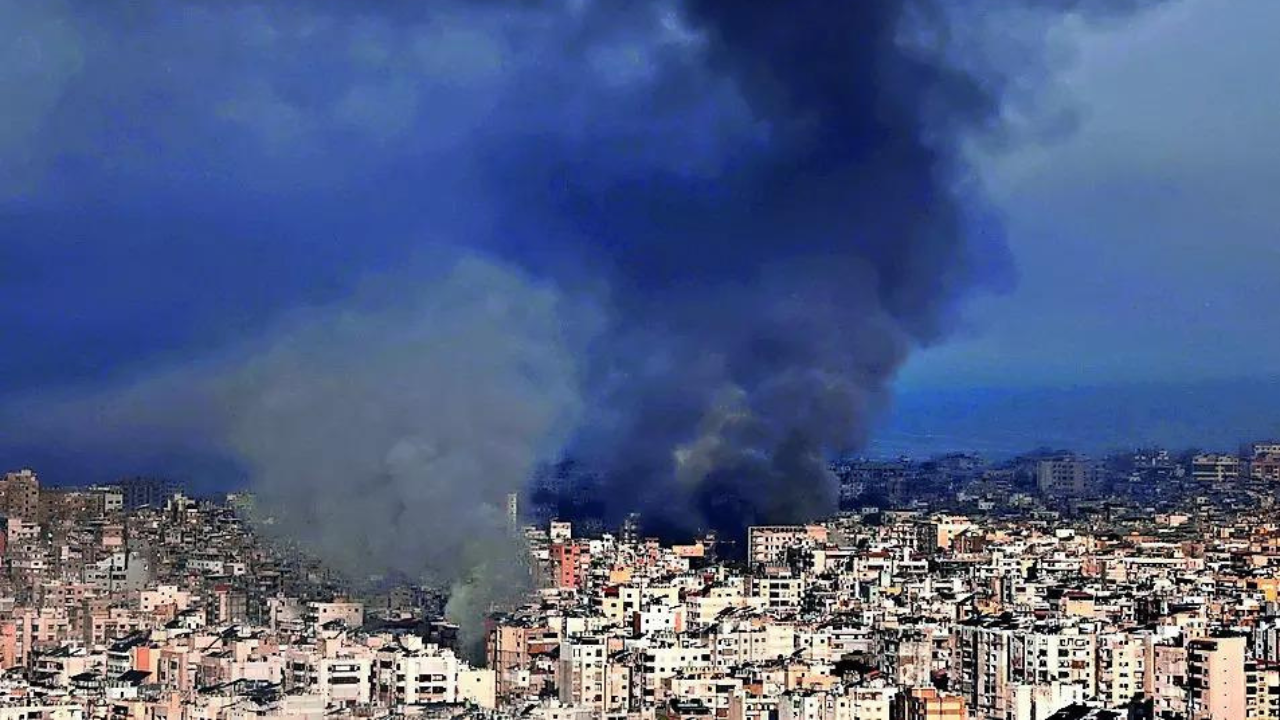
The iron-clad assurance of the Diplomatic Quarter in Riyadh died at 1:30 AM on March 3. For decades, this high-walled enclave was marketed as one of the safest patches of earth in the Middle East, a gilded sanctuary where global powers conducted business behind layers of Patriot missiles and elite Saudi security. That illusion vanished when two Iranian drones pierced the most sophisticated air defense umbrella on the planet to gut the heart of the American mission.
While initial reports from the Saudi Defense Ministry spoke of a "limited fire" and minor debris, the reality on the ground was a calculated, surgical strike on the U.S. intelligence apparatus. The drones didn't just hit the embassy; they liquidated three floors of the building housing the CIA station.
This was not a lucky shot. It was a demonstration of a terrifying new reality in asymmetric warfare. The first drone acted as a kinetic key, breaching the structural integrity of the secure wing. Exactly sixty seconds later, a second drone followed through the exact same hole. This level of "double-tap" precision, executed from hundreds of miles away, confirms that the era of the safe haven is over.
The Anatomy of a Blind Spot
For years, Western defense contractors sold the Gulf on a vision of total sky dominance. Billions were poured into high-altitude missile defense systems designed to intercept ballistic threats. But the March 3 attack exposed the fatal flaw in that strategy. These systems are often tuned to look for the massive heat signatures of rockets, not the low, slow, and cool profile of a carbon-fiber drone.
The drones used in the Riyadh breach were indigenous Iranian models, likely evolved from the Shahed lineage but featuring advanced guidance systems that bypass traditional jamming. By hugging the terrain and utilizing the urban clutter of Riyadh, they remained invisible until they were over the target.
The political fallout is equally devastating. Saudi officials spent nearly twelve hours downplaying the event while the blaze inside the embassy raged. This wasn't just about saving face; it was about protecting the valuation of a security narrative that underpins the entire region’s stability. If the U.S. Embassy—the most protected site in the Kingdom—can be hollowed out by a few thousand dollars worth of lawnmower engines and fiberglass, every oil refinery and desalination plant in the Gulf is a sitting duck.
Intelligence Under Fire
The choice of target suggests a deep penetration of U.S. operational security. Hitting the CIA station was a message. It signaled that Tehran knows the exact floor plan of American facilities and possesses the technical capability to strike specific rooms.
Former intelligence officials are now grappling with the "blackout" of information surrounding the actual damage. If the CIA’s localized servers and secure communication lines were compromised or destroyed, the regional intelligence-gathering capability of the United States has just been set back by years. This occurred in the context of a broader regional conflict that began in late February, but the Riyadh strike stands out because of its symbolic and practical weight. It proved that "Fortress Diplomacy" is a relic.
The Ukrainian Pivot
In a move that highlights the desperation in Riyadh, the Kingdom has recently turned to an unlikely ally for help. On March 27, just weeks after the strike, Saudi Arabia signed a defense pact with Ukraine. The goal is simple: Riyadh wants the expertise Ukraine gained from years of being a testing ground for these exact Iranian systems.
This shift marks a departure from reliance on heavy, expensive American hardware toward the gritty, electronic-warfare-heavy tactics used on the front lines of Eastern Europe. The Saudis are realizing that you don't fight a $20,000 drone with a $3 million missile. You fight it with localized jamming, automated autocannons, and a distributed defense network that doesn't rely on a single point of failure.
A New Map of Risk
The implications for global business and diplomacy are stark. If an embassy in a "stable" capital is no longer a sanctuary, the cost of doing business in the Middle East is about to skyrocket. Insurance premiums for infrastructure will rise, and the "hardened" diplomat will become a thing of the past.
We are seeing a democratization of precision strike capabilities. The technology required to humiliate a superpower is now affordable for middle-range powers and their proxies. This isn't a localized skirmish; it is the blueprint for the next decade of global friction. The debris near the Riyadh preschool and the charred remains of the CIA’s third floor are not just evidence of a strike—they are the wreckage of the old world order.
Washington and Riyadh can continue to issue joint statements about "robust cooperation," but the charred concrete tells a different story. The technical gap has closed. The walls didn't hold.
Move your assets. Recalibrate your risk. The sky is no longer yours.