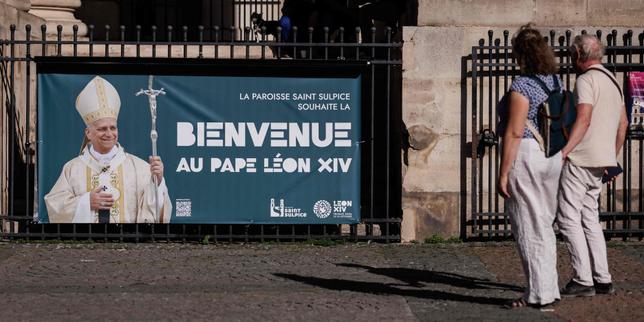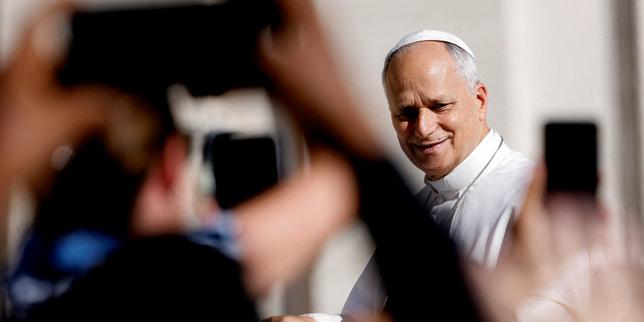
Dawn in Paris smells of wet stone, espresso roasting in copper-plated machines, and the distant, heavy promise of rain. Across the cobbled courtyards of the Latin Quarter, the city is waking to a different rhythm than usual. There is a hush in the air, an electric tension that precedes an arrival of historical proportions. Pope Leo XIV has crossed the threshold into France, and with his footsteps, the ancient dialogue between the secular republic and the Roman See has ignited once more.
To understand this journey, you have to look beyond the crimson velvet carpets rolled out on tarmac or the polished black limousines idling behind police cordons. You have to look at the faces pressed against the wrought-iron barricades near Notre-Dame. In their eyes, you see a complex mixture of skepticism, hunger for meaning, and an old, stubborn European nostalgia for the sacred. France is a nation that prides itself on laïcité—the strict, uncompromising separation of church and state born from the ashes of 1789. Yet, whenever a Pontiff walks these boulevards, the boundary blurs. The air thickens with questions about identity, belonging, and what remains of the soul when the altars go dark.
Consider what happens next in the quiet cathedrals and crowded public squares. Pope Leo XIV does not merely visit a country; he navigates a minefield of modern anxieties. France today is a patchwork of fierce secularism, deep spiritual exhaustion, and vibrant cultural debate. When the papal motorcade cuts through the heart of Paris toward the Seine, it passes cafes where people argue passionately about politics over cheap wine, indifferent to holy waters, and yet deeply concerned with justice, solidarity, and hope.
The schedule of this grand stay is dense with diplomatic handshakes, closed-door meetings at the Élysée Palace, and massive open-air liturgies that will draw hundreds of thousands. But the real narrative is not written in the official communiques. It is written in the silence of an old woman lighting a candle in a damp Parisian crypt, or in the sharp editorials of morning newspapers questioning the cost and symbolism of the visit.
History hangs heavy over every mile of this itinerary. France has long styled itself the eldest daughter of the Church, a title earned through centuries of crusades, theological revolutions, and intellectual awakenings. Yet, it is also the country that famously dismantled royal and clerical authority with the guillotine and the Enlightenment. This duality creates a fascinating friction. When Leo XIV speaks to the French people, he is addressing a public caught between a magnificent, crumbling religious heritage and a high-tech, fast-paced secular future.
Listen closely to the murmurs outside the basilicas. You will hear young people asking whether an ancient institution can possibly understand the loneliness of the digital age. You will hear theologians debating whether the Pope's message on climate and economic inequality can pierce through political cynicism. These are not academic exercises. They are the heartbeat of a culture trying to figure out what it values most when the old certainties dissolve.
The French government, ever watchful of the delicate balance between state neutrality and pastoral hospitality, has orchestrated a security operation of staggering proportions. Thousands of police officers line the routes, steel barriers segment the grand plazas, and every movement is scrutinized through the lens of national security and political optics. Yet, beneath the operational armor, there is a palpable sense of anticipation. Even the most hardened cynics pause when the white robes appear against the gray backdrop of northern French skies.
As the days unfold, the itinerary shifts from the grandeur of Paris to the regional echoes of provincial France—places where stone churches anchor sleepy agricultural villages and faith is lived out quietly, away from the national media spotlight. Here, the visit takes on an entirely different texture. It becomes personal. It is about local bakeries baking extra loaves for pilgrims sleeping in parish halls, and local priests welcoming strangers who have driven hours just to catch a glimpse of the procession.
We often mistake these grand state visits for mere diplomatic theater, easily forgotten once the planes take off and the barricades are dismantled. But they leave residue. They force a culture to look in the mirror and confront its own spiritual reflection. Whether viewed with profound reverence or sharp political dissent, the presence of Leo XIV in France forces a pause in the relentless march of daily life.
The bells of the city are ringing now, echoing across the rooftops of Paris, bouncing off the zinc tiles and disappearing into the mist over the river. The crowds are swelling, pressing forward against the steel lines, eager for a moment of connection, a blessing, or simply a witness to history. The motorcade approaches, lights flashing silently against the morning fog, carrying a man draped in centuries of tradition into the restless, beautiful chaos of the twenty-first century.