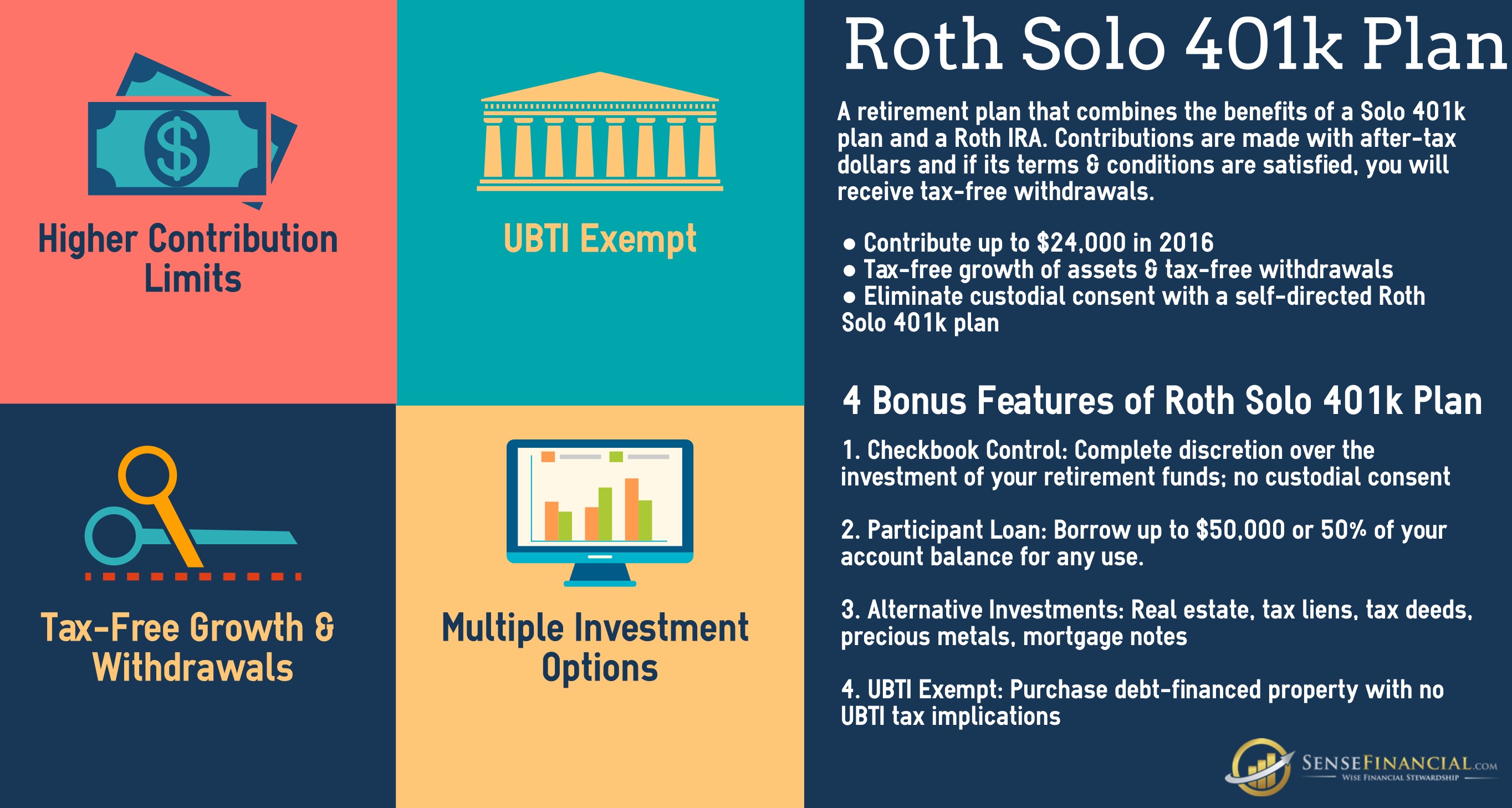
The financial media is currently obsessed with the "Roth Revolution." Every major brokerage and HR department is pushing the same tired narrative: pay your taxes now at "historically low rates" so you can enjoy a tax-free retirement later. They paint a picture of a golden age where you pull millions out of your account without giving Uncle Sam a dime.
It is a beautiful story. It is also mathematically illiterate for a huge swath of the professional class.
The "lazy consensus" assumes that tax rates are going nowhere but up. It assumes your lifestyle in retirement will be more expensive than your peak earning years. Most dangerously, it assumes that locking in a 24% or 32% tax hit today is a "bargain." I have spent a decade watching high-earners set fire to their liquidity because they fell for the Roth marketing machine.
If you are a mid-career professional earning six figures, the Roth 401(k) isn't a benefit. It’s a tax hike you volunteered for.
The Myth of "Tax Rates Can Only Go Up"
The primary argument for the Roth is a gamble on macroeconomics. Proponents argue that with the national debt spiraling, the federal government will inevitably hike income taxes. Therefore, you should pay now while rates are "low."
This logic ignores how the tax code actually functions. Even if the top marginal rate spikes to 50%, we live in a progressive tax system. When you contribute to a traditional 401(k), you are peeling money off the top of your current income—avoiding taxes at your highest marginal bracket. When you withdraw that money in retirement, it fills the bottom tax brackets first.
Imagine a scenario where a married couple earns $350,000 today. Every dollar they put into a traditional 401(k) saves them 24% or 32% in federal taxes immediately. To make a Roth "win," their average effective tax rate in retirement would have to exceed their marginal tax rate today.
That is a massive hurdle. You would need to be pulling a massive seven-figure annual income from your portfolio to make the math work. For the vast majority of people, your expenses drop in retirement. You aren't saving for retirement anymore. Your mortgage is paid off. Your kids are through college. Why would you pay 32% today to avoid a 15% or 20% effective rate in twenty years?
The Opportunity Cost of the Missing Refund
The "Roth is better" crowd loves to show you two accounts with $1 million in them and ask, "Which would you rather have? The one that's taxed or the one that's free?"
This is a dishonest comparison. It ignores the cost of entry.
If you put $23,000 into a Roth 401(k), it costs you $23,000 of after-tax cash. If you put $23,000 into a traditional 401(k) and you're in the 32% bracket, it only "costs" you $15,640. You have an extra $7,360 in your pocket right now.
If you take that $7,360 tax savings and dump it into a brokerage account—buying low-cost index funds—the traditional 401(k) plus the side-car brokerage account will almost always outperform the Roth. You are choosing to hand the government a massive, interest-free loan for thirty years.
The Flexibility Fallacy
We are told that Roth accounts offer "flexibility" because you aren't subject to Required Minimum Distributions (RMDs) if you roll them into a Roth IRA.
This is a niche benefit for the ultra-wealthy who intend to use their 401(k) as an estate planning tool rather than a retirement fund. For everyone else, liquidity is the real flexibility. By choosing the Roth, you are killing your current cash flow.
I’ve seen professionals pass up high-return investment opportunities—like a down payment on a rental property or seed funding for a side business—because they were "maxing out their Roth." They locked their capital behind a thirty-year wall to save a hypothetical tax bill, missing out on massive wealth-building levers in the present.
When the Roth Actually Makes Sense (The Narrow Truth)
I am not saying the Roth is universally evil. I am saying it is misapplied. There are exactly three groups who should be using it:
- The Entry-Level Grinder: If you are 22, making $45,000, and your tax bracket is practically zero, take the Roth. You’re buying a tax-free future for pennies.
- The Super-Saver (The Max-Out Plus): If you are already maxing out every possible tax-advantaged space and you still have an extra $23,000 lying around, the Roth 401(k) effectively allows you to "hide" more money from the IRS because a $23,000 Roth limit is "worth" more than a $23,000 traditional limit.
- The Tax-Bracket Floor: If you have zero other sources of taxable income in retirement (no Social Security, no pensions, no traditional IRA), you might want some Roth money to avoid hitting the standard deduction.
If you don't fall into those buckets, you are likely just a victim of a trend.
The Behavioral Trap
The real reason HR departments and 401(k) providers love the Roth is that it’s easier to sell. It feels good. Humans hate the idea of a looming bill. We would rather pay a $100 "all-inclusive" price than an $80 price with a $10 tax at the end.
Financial advisors play into this because it simplifies their job. They don't have to explain the nuance of marginal vs. effective tax rates or the time value of money. They just say "tax-free" and watch the client nod.
But wealth isn't built on what feels good. It’s built on arbitrage.
The traditional 401(k) is a massive arbitrage play against the federal government. You take the deduction at your highest career earnings (high tax) and pay it back when you’re a "low-income" retiree (low tax).
Rethink the Premise
Stop asking which account is "better." Start asking what your current tax rate is worth to you today.
If you are in your peak earning years, your tax deduction is at its most valuable point in your entire life. Giving that up for a promise from a government that will change the tax code a dozen times before you retire is not "safe" investing. It is a speculative bet on future legislation.
Don't pay the tax man early. Take the deduction. Invest the difference. Stop being a voluntary donor to the Treasury.
Check your latest pay stub. Look at your marginal bracket. If it starts with a 3, and you're clicking the Roth box, you're losing.


