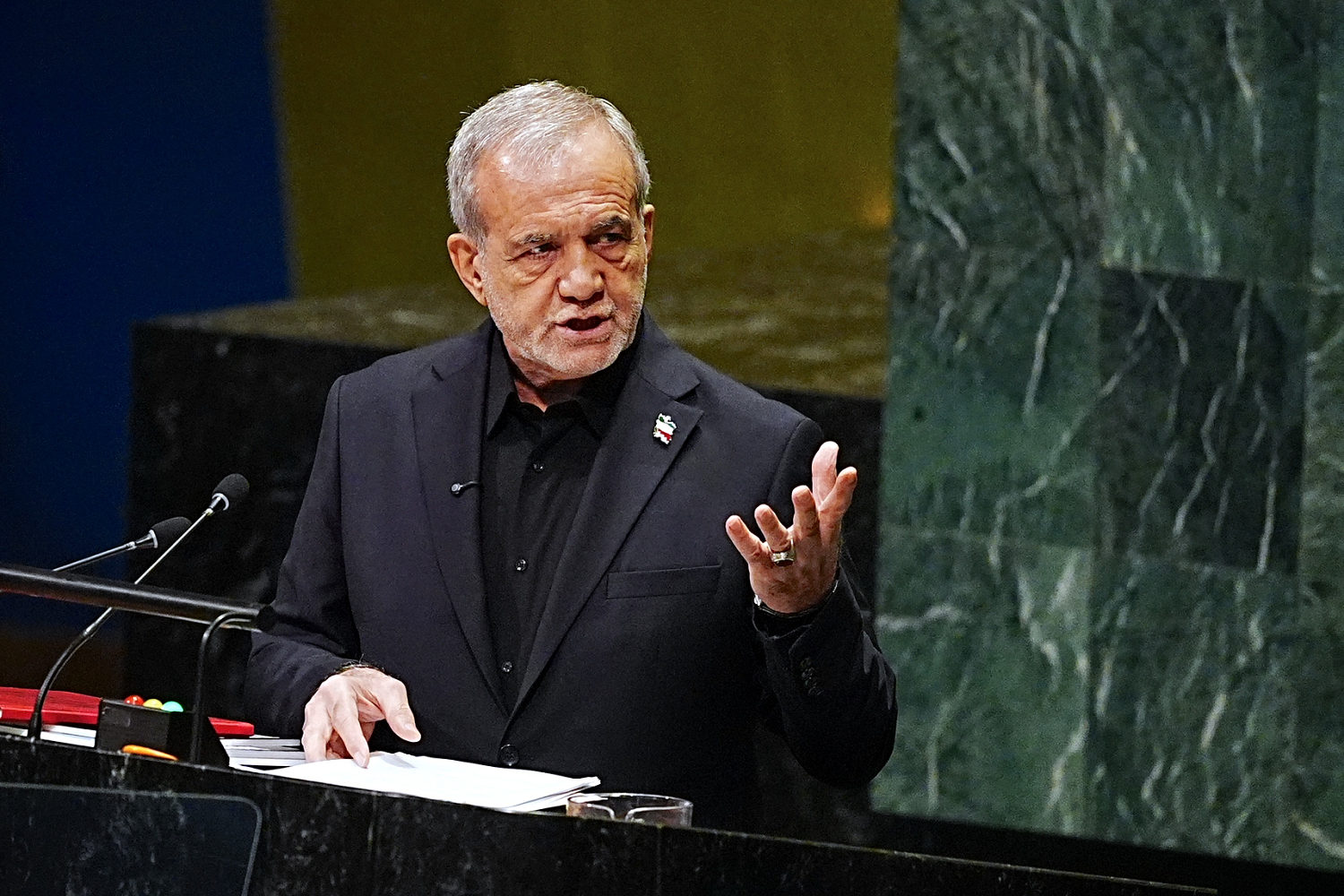
When Iranian President Masoud Pezeshkian stepped up to the podium and signaled that Tehran wanted an understanding with Washington before the American midterm elections, political analysts scrambled to decode the timeline. Everyone loves a deadline. But deadlines in international diplomacy are rarely what they seem on the surface. Pezeshkian wasn't just tossing out a casual diplomatic overture; he was trying to lock down a framework before domestic political tremors in the United States completely scrambled the board.
Most commentary framed this as a sign of weakness or desperation from a sanctions-battered regime. That misses the entire point. Tehran's calculation was rooted in pure political self-preservation and cold arithmetic. If you understand how American midterms rattle foreign policy, you understand why Pezeshkian's administration was pushing so hard for a diplomatic window before voters went to the polls.
The Misunderstood Urgency Behind Tehran's Diplomatic Push
Diplomacy in the Middle East moves at a glacial pace until it suddenly accelerates into hyper-speed. Back in September during the United Nations General Assembly in New York, Pezeshkian made it crystal clear that Tehran wanted the United States to return to previous memorandums of understanding before the midterms arrived. He explicitly noted that his government wanted to avoid getting dragged down by the chaotic political fallout of the US election cycle.
Why the rush? Because American elections change everything and nothing all at once. When a sitting US administration faces a bruising midterm battle, foreign policy becomes a high-stakes gamble. A president facing domestic backlash over fuel prices, economic inflation, and prolonged military entanglements starts looking for quick wins. Conversely, if the opposition party makes major gains, any existing diplomatic momentum can instantly freeze under congressional pressure.
Tehran's leadership knew this dynamic intimately. They saw an opportunity to extract concessions while the White House was politically vulnerable and eager to stabilize global energy markets. Crude oil prices were swinging wildly, hovering in the mid-nineties, driven in large part by the tense standoff and blockade in the Strait of Hormuz. A deal before the midterms meant the Biden or Trump administration—depending on how you view the shifting political winds—might be willing to drop oil sanctions, unfreeze billions in assets, and wind down counter-blockades just to claim a diplomatic victory before ballots were cast.
Yet, this push immediately triggered fierce resistance at home. Iran's powerful hardliners and military generals spent weeks walking a very fine line. They wanted relief from crushing economic sanctions, but they deeply mistrusted American intentions. Every time Pezeshkian opened the door to talks, state television and military commanders rushed to remind the public that Iran’s defensive posture hadn't softened. It was a classic split-screen strategy: soft-spoken diplomacy on the international stage paired with fiery rhetoric back home to appease the ideological base.
Why the Midterm Elections Completely Altered the Calculus
Elections have consequences. Sometimes those consequences arrive like a freight train. When the midterm results finally rolled in, they delivered a stunning shock to Washington's political establishment and instantly altered the geopolitical landscape across the Middle East.
The Republican losses, fueled in part by voter frustration over foreign wars and economic friction, caught international observers off guard. In Tehran, the reaction was immediate and polarized. Iranian leaders quickly framed the election outcome as a direct rejection of Washington's hardline policies. Hardliners celebrated the shift as a strategic defeat for the White House, rolling out massive billboards and holding rallies in Enqelab Square to project defiance.
But beneath the celebratory propaganda, real anxiety set in. The momentum for a quick deal evaporated almost overnight. Officials like Iranian Foreign Minister Abbas Araghchi pointed out that mediator travel ground to a complete halt following the election shock. When the political ground shifts beneath your negotiating partner, you don't sign agreements. You wait, watch, and recalculate.
The White House faced its own internal friction. While some factions within the administration toyed with the idea of securing a historic foreign policy win before leaving office, others argued that Washington no longer needed to rush toward a compromised settlement with Tehran. Vice President JD Vance shifted focus toward domestic enforcement campaigns, and high-ranking officials dismissed initial Iranian terms as completely unrealistic.
This is where casual observers get confused. They look at a failed deadline and assume diplomacy is dead forever. That is naive. Diplomacy doesn't die; it hibernates until the incentives align again. The midterms didn't erase the underlying pressures—inflation, energy security, and the persistent threat of escalation around the Strait of Hormuz. They simply reset the chess pieces.
The Core Bottlenecks Blocking a Breakthrough
If you want to know why a comprehensive agreement remains elusive, look past the public posturing and examine the structural deadlocks. Every serious diplomatic push breaks down over three distinct friction points.
First, there is the sequencing trap. Regional mediators, including Turkish officials working on multi-point frameworks, repeatedly ran into the classic chicken-and-egg problem: who moves first? Tehran demanded the immediate lifting of oil sanctions and the release of frozen funds before it would even consider scaling back its nuclear development or easing its maritime blockades. Washington and its allies demanded verifiable curbs on uranium enrichment and a permanent end to maritime harassment before a single dollar was unfrozen. Neither side trusts the other enough to jump first.
Second, domestic political survival trumps international stability. In Washington, foreign policy decisions are weighed against upcoming election cycles and congressional majorities. In Tehran, every diplomatic opening is scrutinized by security apparatuses and revolutionary guards who derive their authority from perpetual confrontation with the West. When Pezeshkian floated pragmatic compromises, he constantly risked stepping over invisible red lines drawn by hardline clerics and military commanders who view ideological purity as non-negotiable.
Third, the scope of the demands keeps expanding. What started as a focused conversation about nuclear inspections and oil exports quickly morphed into a sprawling wishlist covering regional proxy groups, ballistic missile capabilities, and maritime security in the Indian Ocean. Trying to solve decades of deep-seated hostility in a frantic pre-election sprint was always a long shot.
Surviving the Political Fallout at Home and Abroad
The dust from the midterms is still settling, but the long-term trajectory is already coming into focus. Iran's economy remains severely damaged by sanctions, meaning the underlying incentive for a deal hasn't vanished. At the same time, the domestic political landscape in the United States means any future agreement will face fierce congressional scrutiny and skepticism.
If you are trying to make sense of where things go next, stop looking for silver bullets or sudden breakthroughs. Watch the quiet channels. Watch how regional mediators adjust their proposals now that the immediate election deadline has passed. Pay attention to whether oil flows through the Strait of Hormuz face renewed friction or if both sides quietly establish informal de-escalation guardrails to prevent accidental military clashes.
The push for a pre-midterm deal failed because complex geopolitical conflicts cannot be forced into arbitrary electoral timelines. But the attempt exposed the real anxieties driving both capitals. Real power isn't about grand speeches at the United Nations or triumphant rallies in city squares. It is about recognizing when the old playbook stops working and figuring out who blinks first when the political costs of inaction finally outweigh the risks of compromise.