Moscow has just crossed a diplomatic Rubicon that would have been unthinkable even a year ago. By issuing a formal demand for foreign embassies to evacuate Kyiv, the Kremlin is no longer just fighting a territorial war; it is attempting to dismantle the very concept of diplomatic immunity to shield its own domestic vulnerabilities. The Russian Foreign Ministry sent an official note to every accredited mission in the Ukrainian capital on Wednesday, citing the "inevitability" of a massive retaliatory strike. This is not a standard military warning. It is a calculated act of psychological warfare designed to isolate Ukraine and create a hollowed-out "green zone" in the heart of its capital.
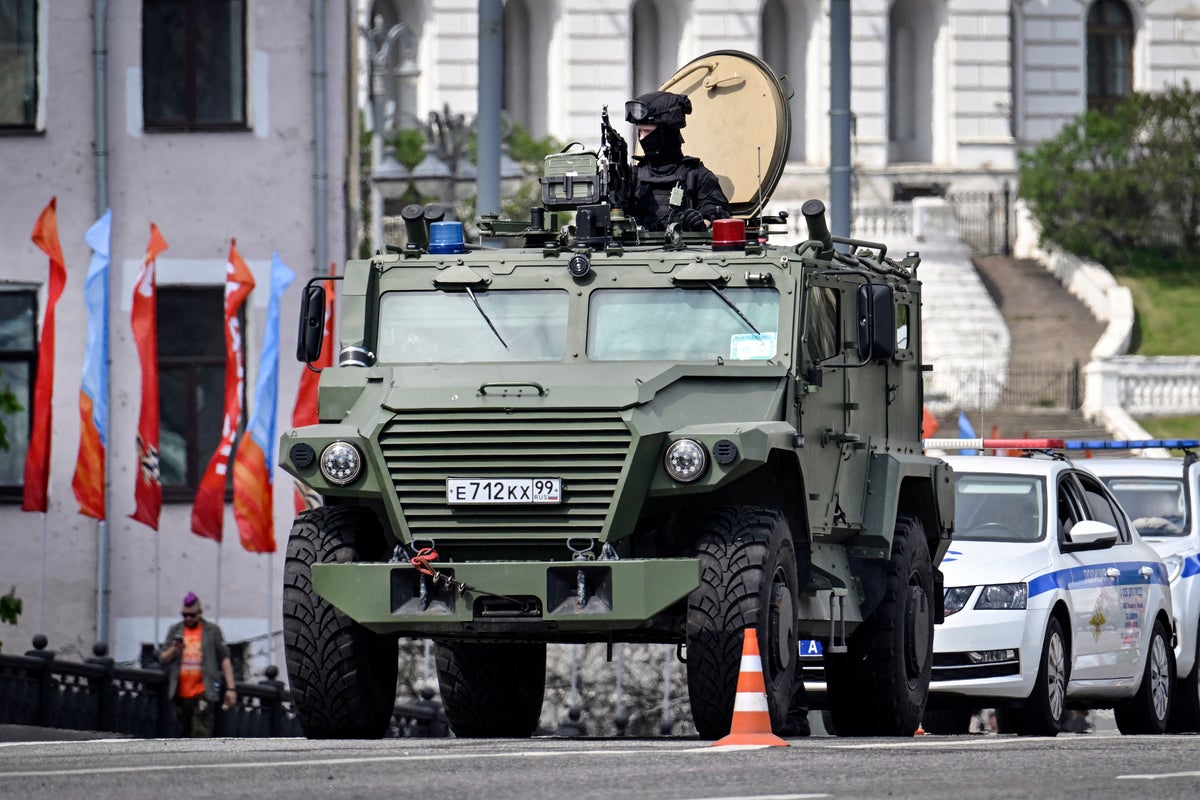
The timing is far from coincidental. Russia is preparing for its May 9 Victory Day celebrations, an event that has historically served as the cornerstone of Vladimir Putin’s nationalist narrative. However, the 2026 iteration of this parade is already a ghost of its former self. With the Kremlin previously announcing that the ceremony will proceed without heavy military hardware due to "security concerns," the Russian leadership is telegraphing a profound fear. They are terrified that Ukrainian drones, which have already crippled 40 percent of Russia’s oil export capacity in the first quarter of this year, will find their way to Red Square while the cameras are rolling.
The Strategy of the Empty Embassy
By demanding that foreign diplomats flee, Moscow is attempting to clear the "human shields" that currently protect central Kyiv. For two years, the presence of Western, Global South, and international organization personnel has acted as a cooling factor on Russian targeting. Moscow knows that killing a French, Indian, or Brazilian diplomat would trigger a geopolitical crisis that even its few remaining allies could not ignore.
Removing these diplomats accomplishes three specific goals for the Kremlin.
- Targeting Freedom: It allows Russian missile commanders to target "decision-making centers" in central Kyiv—including the Government Quarter—without the risk of collateral diplomatic damage.
- Political Isolation: A mass exodus of embassies would provide a powerful visual of a "failed state" or an "untenable capital," feeding the Russian propaganda machine’s narrative that the end of the conflict is near.
- Leverage: It forces foreign capitals to choose between their safety and their solidarity with Ukraine, creating friction within the coalition supporting Kyiv.
This is a desperate gamble. The Russian Foreign Ministry spokeswoman, Maria Zakharova, framed the move as a reaction to President Zelenskyy’s recent comments at the European Political Community summit in Yerevan. Zelenskyy had mocked the hardware-free parade, suggesting the Kremlin "fears drones may buzz over Red Square." Moscow took these remarks, arguably distorted them through translation, and branded them a direct threat of a holiday terrorist attack.
The Logistics of Terror
The "retaliatory strike" Russia is threatening isn't just about a few drones. Intelligence reports suggest a buildup of Kalibr cruise missiles in the Black Sea and Tu-95MS strategic bombers at Olenya airbase. The threat of a "massive missile strike" on central Kyiv on May 8 or 9 is intended to freeze Ukrainian operations. If Ukraine strikes Moscow, the Kremlin says it will flatten Kyiv. If Ukraine stays quiet, the Kremlin claims it won through "deterrence."
But there is a flaw in this logic. Russia has already been striking Kyiv for years. The city has survived hundreds of drone and missile waves. By threatening the embassies, Moscow is admitting that its previous "red lines" were ignored, and it is now trying to draw a new one using the lives of third-party diplomats as the ink.
The Reaction from the Ground
So far, the response from the diplomatic corps has been a mixture of defiance and quiet preparation. Most European missions have moved their non-essential staff to the western city of Lviv or across the Polish border over the last 48 hours. However, the core diplomatic presence remains. They understand that leaving now isn't just a safety measure—it is a surrender of the diplomatic front.
The United States and United Kingdom have remained notably silent on specific evacuation plans, though security alerts for their citizens have been elevated to the highest possible level. The real test will be the "neutral" nations. If countries like India, China, or South Africa—who still maintain functional relationships with Moscow—decide to pull their staff, it will signal a genuine belief that the Kremlin is prepared to go further than ever before.
A Parade Without a Purpose
The most revealing aspect of this crisis is the state of the Victory Day parade itself. A Red Square parade without tanks or armored vehicles is an admission of exhaustion. In early 2026, the Russian economy hit a wall. Oil and gas revenues plummeted by 47 percent in January and February alone. The hardware that should be rolling through Moscow is either burning in the Donbas or being hoarded to prevent a total collapse of the front lines.
The threat against Kyiv is a mask for this weakness. It is a loud, violent distraction from the fact that the Russian military can no longer guarantee the security of its own capital during its most important holiday. Putin needs a victory, even if it is a manufactured one based on the "successful" intimidation of foreign diplomats.
The Cost of the Bluff
If May 9 passes without a major strike on Moscow and without the promised "retaliation" on Kyiv, the Kremlin will have spent what little diplomatic capital it had left on a bluff that didn't work. However, if they do strike, they risk a permanent severance of ties with any nation whose personnel are caught in the crossfire.
This isn't about military strategy anymore. It is about a regime that has run out of conventional options and is now resorting to the tactics of a cornered animal. They are gambling that the world is more afraid of a fire in Kyiv than they are of a drone in Moscow.
The diplomats in Kyiv are currently sitting in the most dangerous offices in the world. Their decision to stay or go will determine the narrative of the war for the remainder of 2026. If the embassies remain, the Kremlin's "Diplomacy of Fear" fails. If they leave, the silence in the streets of Kyiv will be the loudest victory Putin has had in months.