The Predictability Trap
Two tragedies on Long Island. One outside a Wendy’s, one in a quiet residential neighborhood. The headlines treat these as a sudden spike in local chaos. They frame it as a failure of location, or worse, a failure of the specific shift at a fast-food joint. They are wrong.
Standard reporting loves a pattern it can blame on "the streets." It’s comfortable. It allows the reader to think, "I don’t go to that Wendy’s, so I’m safe." This is the lazy consensus of modern crime reporting. It focuses on the where because the why is too uncomfortable to address. These weren't random acts of urban decay. These were targeted breakdowns of human relationships that no amount of street lighting or corporate "safety protocols" could have stopped.
We need to stop talking about "dangerous areas" and start talking about "dangerous proximity."
The Wendy’s Fallacy
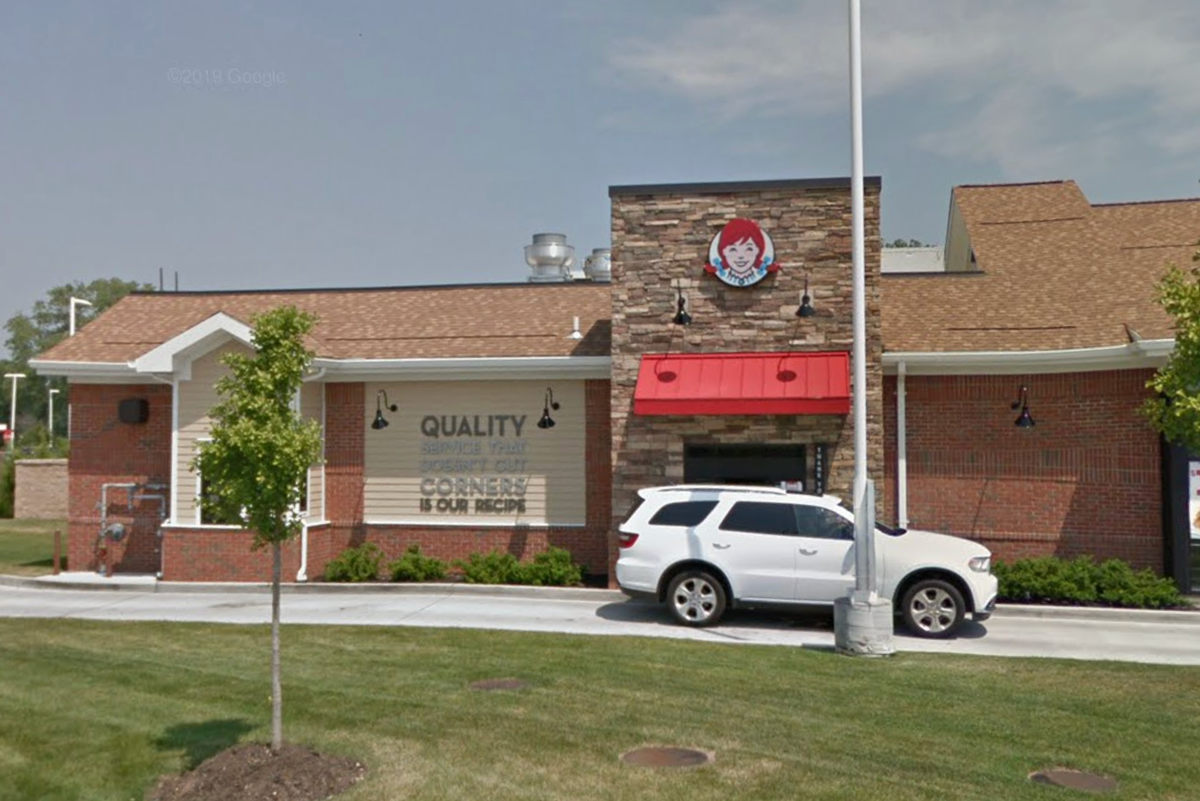
The media fixation on the Wendy’s parking lot is a red herring. By focusing on the workplace, the narrative shifts toward corporate responsibility. Was there enough security? Was the lighting adequate? Did the manager let her walk out alone?
This line of questioning is a massive cope. It’s an attempt to turn a visceral human tragedy into a HR compliance issue. If we can blame a corporation for a stabbing, we can pretend that a new policy or a better-lit parking lot would have saved a life.
I’ve spent years analyzing risk assessment in high-stakes environments. Here is the cold reality: Hardware does not stop targeted intent. A killer who is waiting for a specific individual—not a random victim, but a specific target—is not deterred by a security camera. They are not deterred by a well-lit drive-thru. They are operating on a different psychological plane than the petty thief looking for an unlocked car.
When we demand "better safety" from employers in the wake of a targeted attack, we are asking for a security theater that provides zero actual protection. We are looking for a scapegoat because the alternative—that a person can be hunted by someone they know, regardless of where they work—is too terrifying to acknowledge.
Suburban Sanctity is a Lie
The second incident happened in a house. A "quiet" neighborhood. The juxtaposition in the news is always the same: "It can even happen here."
Why are we still surprised?
The data has screamed the truth at us for decades. According to the Bureau of Justice Statistics, the majority of violent crimes against women are committed by someone known to them. This isn't a revelation, yet we treat it like one every time it happens in a zip code with a high median income.
The "safety" of the suburbs is a statistical mirage based on the absence of stranger danger. It does absolutely nothing to mitigate intimate danger. In fact, the isolation of suburban life often acts as a silencer. In a dense city, a scream is heard by twenty people through thin walls. In a sprawling Long Island cul-de-sac, it’s muffled by double-pane glass and a half-acre lot.
We aren't seeing a "crime wave" on Long Island. We are seeing the inevitable outcome of human volatility. Stop looking at the map. Start looking at the people.
The Myth of the Random Act
The public is obsessed with the idea of the "random stabbing." It feeds our lizard-brain fear of the dark. But if you look at the mechanics of these Long Island cases, they aren't random. They are the climax of a long, often invisible, buildup.
- Logic Check: A random attacker wants a quick score or a thrill. They choose the path of least resistance.
- Targeted Intent: A killer with a grudge chooses the path of highest impact.
When a woman is killed outside her workplace, it’s often because that is the only place her movements are predictable. Her job didn’t fail her; her predictability was weaponized against her.
If you want to actually address this, you have to stop asking how to make Wendy’s safer and start asking why our social and legal systems fail to intercept the escalations that lead to these moments. We focus on the knife because the knife is simple. We don't focus on the restraining order that wasn't enforced, or the behavioral red flags that were ignored by friends and family for months.
Stop Asking for More Cops
The immediate reaction to a "back-to-back" crime cycle is a demand for more patrols. It’s the most expensive and least effective way to handle this.
Imagine a scenario where you double the police presence on every block in Nassau County. Does that stop a man from waiting in the shadows of a parking lot for three minutes to strike a specific person? No. Police are reactive. They arrive after the blood is on the pavement.
The "more boots on the ground" argument is a political band-aid. It makes the public feel like something is being done while changing exactly nothing about the underlying risk factors. True safety isn't found in a patrol car; it’s found in the radical restructuring of how we track and respond to domestic threats. But that’s hard work. It requires nuance. It’s much easier to just hire ten more guys in uniforms and call it a day.
The Responsibility Pivot
Here is the part where people get angry.
Safety is a personal liability, not a corporate one. We have been conditioned to believe that someone else is always responsible for our environment. Your boss, the city council, the police department. This mindset creates a dangerous complacency.
When you believe the environment is "safe" because it’s a "good neighborhood," you stop looking over your shoulder. You stop checking your mirrors. You stop trusting your gut when something feels off.
The industry consensus is that we need more "systemic solutions." My contrarian take? Systemic solutions are a fantasy. The system is a slow-moving, bureaucratic beast that will never move fast enough to save you in the thirty seconds that matter.
The Actionable Truth
If you want to survive the human variable, you have to stop participating in the safety theater.
- Discard the Zip Code Shield: A low crime rate in your neighborhood doesn't mean you are safe; it just means your neighbors are quiet.
- Audit Your Predictability: If someone wanted to find you, how many locations are you guaranteed to be at every single day? That is your primary vulnerability.
- Trust the Friction: Violence is rarely a light switch. It’s a dimmer switch that’s been turning up for a long time. If there is friction in a relationship, or a sense of being tracked, that is the alarm. Don't wait for the "system" to validate it.
The media will keep giving you the "where" and the "when." They will keep talking about Wendy's and suburban streets as if the asphalt itself was the problem. They are distracting you from the only reality that matters: Geography is not a bulletproof vest.
Stop looking at the crime scenes. Look at the shadows before the crime happens. That is the only place where the outcome can be changed.
The "back-to-back" nature of these deaths isn't a trend. It’s a reminder that the world is indifferent to your sense of security.
Get uncomfortable. It's the only way to stay sharp.