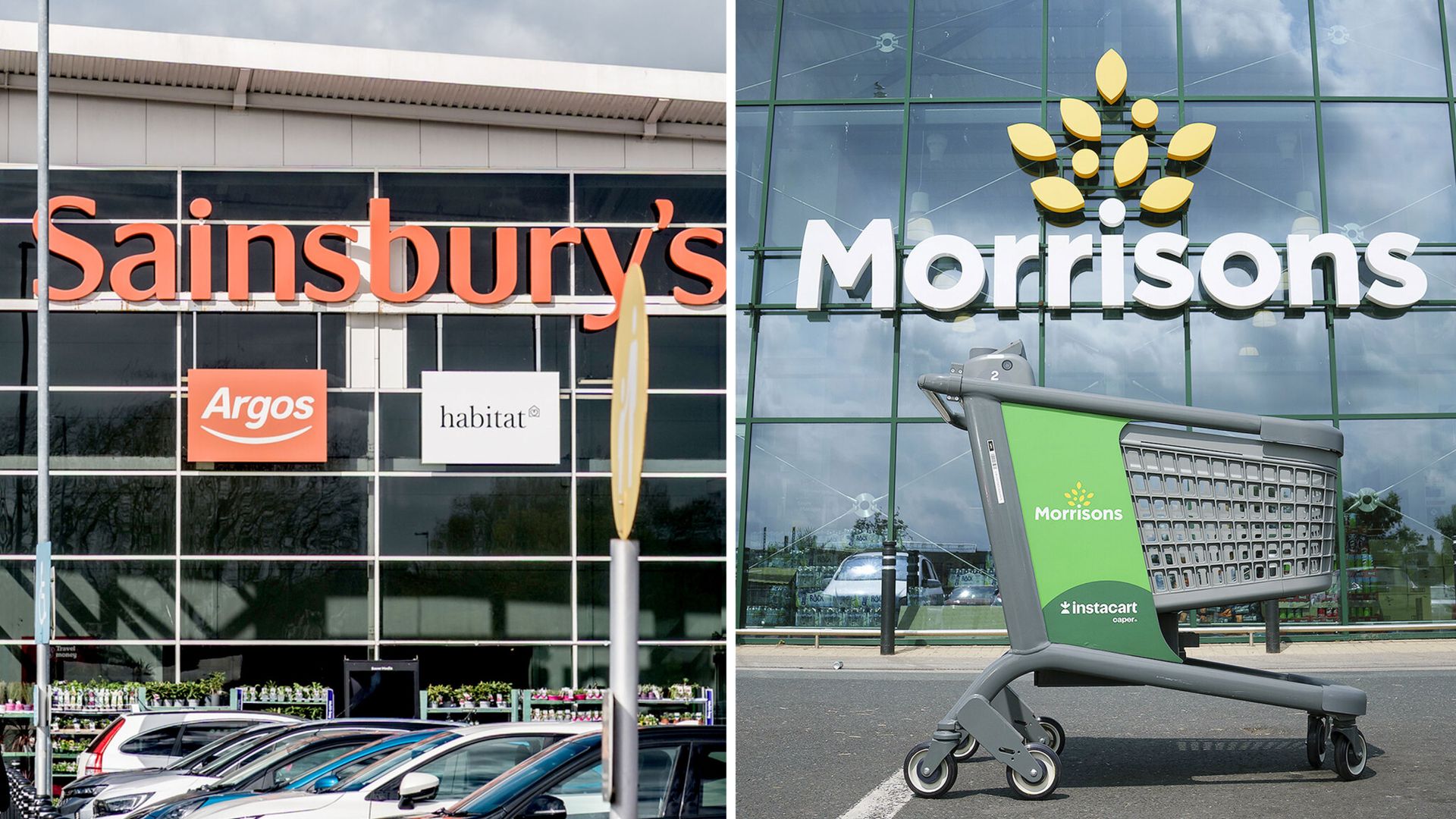
Every time retail executives start panicking about market share, they immediately reach for the oldest crutch in the corporate playbook: the mega-merger. The lazy consensus across City trading floors and grocery trade publications treats the prospect of a Sainsbury and Morrisons hook-up as an inevitable masterstroke. The narrative writes itself. Combine two legacy British supermarkets, achieve massive procurement scale, squeeze suppliers until their eyes water, and magically halt the relentless march of Aldi and Lidl.
It sounds tidy on a PowerPoint deck. In reality, it is a catastrophic waste of capital that completely misunderstands why British grocery shoppers are currently abandoning traditional middle-market supermarkets.
I have spent years watching boardrooms chase paper-thin margins through bloated consolidation strategies while ignoring the rot in their core operations. Merging Sainsbury and Morrisons does not solve their mutual existential crisis. It doubles down on it.
The Scale Fallacy That Keeps CEOs Awake
The entire justification for grocery consolidation rests on a tired article of faith: that bigger always means better procurement terms. Executives love to talk about buying power as if volume alone shields you from market disruption.
That logic worked in 1995. Today, it is an anchor dragging down anyone foolish enough to bolt two sprawling retail networks together.
Sainsbury operates a high-density, urban, convenience-heavy model anchored by its Argos acquisition and central London real estate. Morrisons relies on an extensive vertically integrated supply chain, running its own abattoirs and food manufacturing facilities, heavily weighted toward northern working-class catchments and massive hypermarkets with vast footprint overheads.
Stitching these two beasts together creates an operational Frankenstein monster. You are trying to harmonize two entirely divergent supply chains, IT architectures, and corporate cultures while drowning in billions of pounds of integration costs. Meanwhile, the discount competitors you are trying to crush will use your three-year distraction to steal your remaining price-sensitive shoppers.
Scale does not protect you when your cost structure is bloated. It just makes your inevitable collapse more expensive.
The Geographic Mismatch Nobody Mentions
Look at a map of where these stores actually sit. The retail analysts pushing for this tie-up conveniently ignore the brutal reality of market overlap and Competition and Markets Authority restrictions.
In dozens of towns across the Midlands and the North, Sainsbury and Morrisons sit within spitting distance of each other. If a merger ever reached the regulatory desk, the CMA would demand forced divestments by the dozen. You would be ordered to sell off your most profitable stores just to get the deal across the line, leaving you with a patchwork portfolio of damaged assets.
The stores you are forced to keep are often tied into long, inflexible leases signed decades ago when out-of-town hypermarkets were the pinnacle of consumer ambition. Consumers do not want massive, cavernous supermarkets anymore unless prices match the discounters. And neither Sainsbury nor Morrisons can match German discount pricing models while carrying the overhead of a legacy corporate headquarters and centralized distribution networks built for a bygone era.
The Private Equity Factor and the Death of Long-Term Strategy
Morrisons went through a bruising private equity buyout with Clayton, Dubilier & Rice. Private equity firms do not buy grocery chains to build enduring retail institutions; they buy them to extract value, optimize real estate, and flip them or squeeze cash flow.
When you introduce that kind of financial engineering into merger talks with a publicly traded giant like Sainsbury, you get a toxic mix of short-term survival tactics masquerading as strategic vision. Executives spend eighteen months negotiating transaction structures, appeasing shareholders, and managing regulatory hurdles instead of fixing the actual shopping experience inside the stores.
The shelves do not stock themselves better because two holding companies exchanged shares. Shoppers do not care about your EBITDA synergies when they are choosing between basic staples and heating bills.
What They Should Be Doing Instead
If leadership at both firms had the courage to look past defensive consolidation, they would realize that survival requires radical subtraction, not addition.
Morrisons needs to lean aggressively into its manufacturing roots, treating itself as an agile food producer that happens to own retail outlets, supplying independent convenience stores and wholesale partners rather than trying to beat Tesco and Sainsbury at the national scale game.
Sainsbury needs to stop pretending it can fight the discounters on price while maintaining sprawling supermarkets. Double down entirely on urban convenience, digital integration, and high-margin proprietary ranges. Shrink the box sizes. Cut the dead weight.
Merging two lumbering giants does not create a nimble competitor. It just creates a bigger target.
Stop looking for salvation in spreadsheets. The market has already moved on.