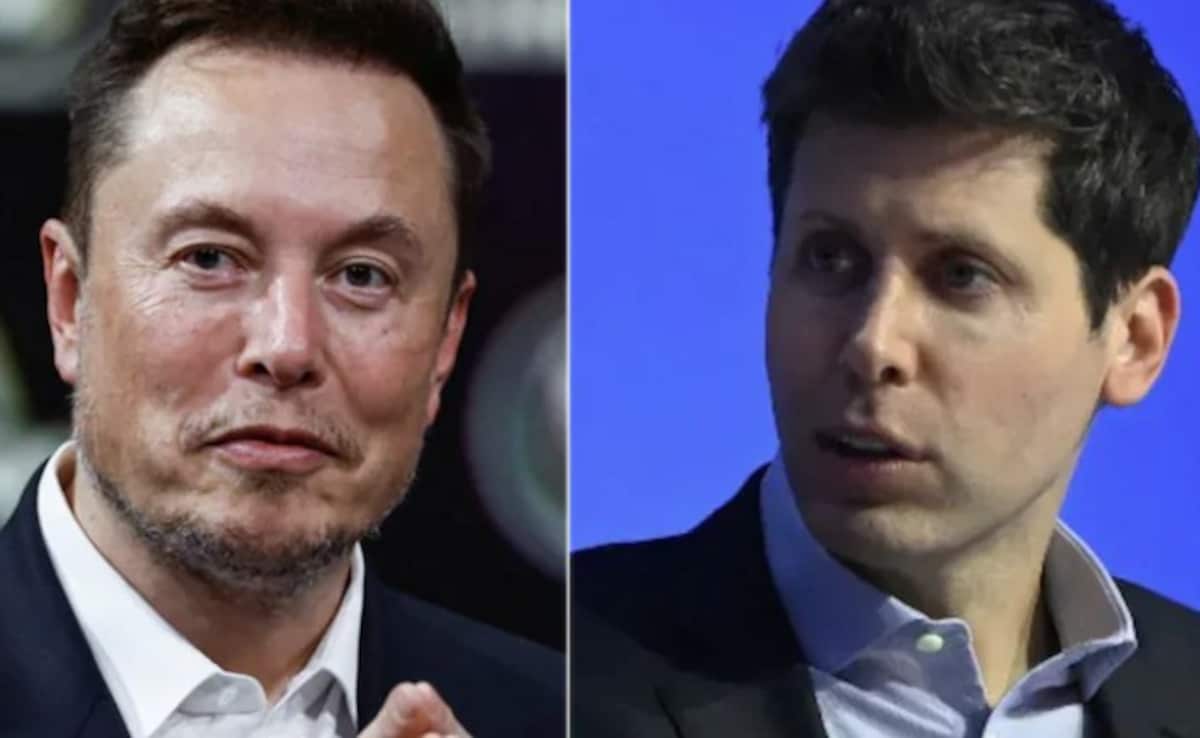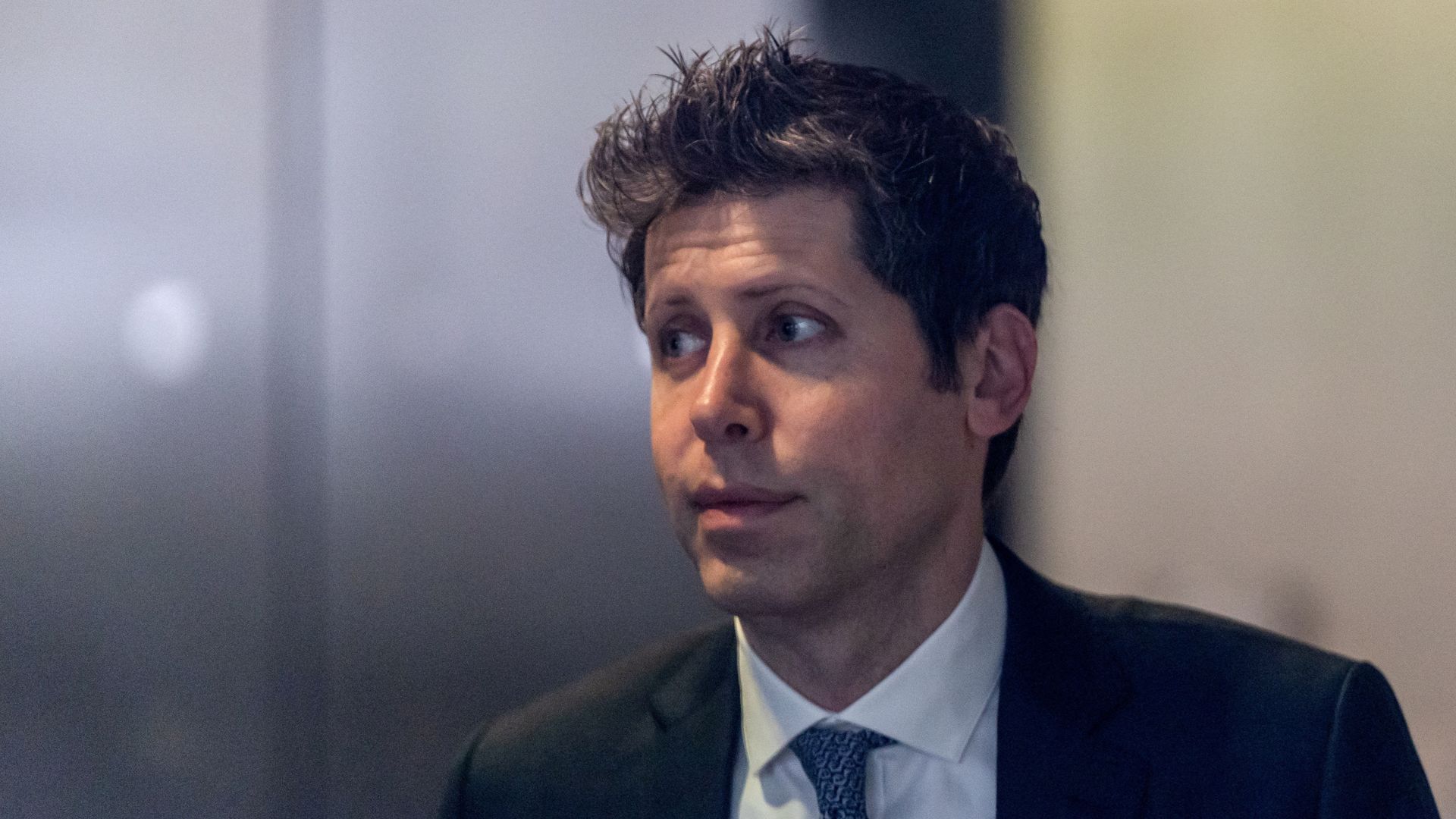
Sam Altman is currently engaged in the most expensive charm offensive in the history of Silicon Valley. As OpenAI moves further away from its non-profit roots and deeper into the pockets of Microsoft, the organization's chief executive has taken to the global stage to deliver a singular message: trust me, not the skeptics. While Elon Musk files lawsuits alleging a "betrayal" of the company’s founding mission, Altman is positioning himself as the adult in the room, the steady hand capable of steering artificial intelligence toward a utopian future.
But trust in the tech sector is a depreciating asset. To understand why Altman is so desperate to win this PR war, one must look past the polished interviews and examine the structural shifts happening within OpenAI itself. This isn't just a spat between two billionaires. It is a fundamental conflict over who controls the most powerful technology of our generation and what they intend to do with it.
The Architect of Controlled Transparency
Altman’s strategy relies on a specific brand of "controlled transparency." He acknowledges the risks of AI—sometimes in hyperbolic terms—to gain credibility, then argues that only his team is responsible enough to mitigate those same risks. This creates a circular logic where the danger of the product becomes the justification for its centralized control.
When Musk claims that OpenAI has become a closed-source, maximum-profit subsidiary of Microsoft, he isn't just venting. He is highlighting the pivot from a research lab to a product powerhouse. Altman counters this by emphasizing safety protocols and "red-teaming" efforts. However, the internal logic of a for-profit entity eventually demands growth above all else. You cannot serve two masters indefinitely.
The Microsoft Weight
OpenAI’s relationship with Microsoft is the elephant in the boardroom. With billions of dollars in compute credits and capital flowing from Redmond, the independence of Altman’s venture is a mathematical improbability. Microsoft needs ROI. They need AI integrated into every piece of enterprise software they sell.
This pressure creates a friction point for Altman’s "trust me" narrative. If the safety of a model suggests a slower rollout, but the quarterly earnings report requires a launch, history tells us which side the scales usually tip toward. Altman’s recent world tour, where he met with heads of state and regulators, was designed to signal that he welcomes oversight. Yet, there is a difference between welcoming regulation and helping to write it in a way that creates a moat around your own business.
The Musk Factor and the Ghost of 2015
Elon Musk’s vitriol toward OpenAI is deeply personal. He was there at the beginning, providing the initial funding and the "Open" name. Seeing it transform into a proprietary giant is, for him, a tactical and ideological defeat. Musk’s argument is that by moving away from open-source principles, Altman has created a "God-like" intelligence hidden behind a corporate veil.
Altman’s rebuttal is often dismissed as simple deflection, but it carries a pragmatic weight. He argues that open-sourcing highly capable models is akin to giving everyone a blueprint for a biological weapon. It is a compelling fear. It also happens to be extremely convenient for a company that wants to charge monthly subscription fees for access to its API.
A Culture of Silence and NDAs
Investigative scrutiny into OpenAI’s internal culture reveals a discrepancy between the public-facing altruism and the private legal mechanics. Recent reports concerning aggressive non-disclosure agreements—which reportedly threatened to claw back vested equity from departing employees—paint a picture of an organization obsessed with control.
Altman eventually apologized for these "restrictive" agreements, claiming he was unaware of the specific language. For a detail-oriented CEO who manages one of the most complex technical stacks on earth, this "oops" defense is difficult to swallow. It suggests a culture where legal intimidation was a standard tool for maintaining the "trust" he now asks for so publicly.
The Safety Versus Speed Trap
The departure of key safety researchers, including Ilya Sutskever and Jan Leike, sent shockwaves through the industry. These weren't just disgruntled employees; they were the ideological backbone of the "Superalignment" team, the group tasked with ensuring AI doesn't eventually decide humans are redundant.
When the people in charge of safety leave because they feel the company has reached a "breaking point" regarding its priorities, the public "trust me" plea loses its resonance.
- The Speed Metric: OpenAI is no longer alone. With Google’s Gemini and Anthropic’s Claude breathing down their neck, the lead is shrinking.
- The Revenue Metric: To justify a valuation nearing $100 billion, the company must move from cool demos to indispensable business tools.
- The Compute Metric: Training the next generation of models requires a level of capital that only the largest sovereign wealth funds or tech giants can provide.
These three forces act as a centrifugal force, pulling the company away from its original safety-first ethos. Altman is effectively asking the world to believe he can resist the strongest economic gravity in human history.
The Governance Mirage
OpenAI’s governance structure is a bizarre hybrid. It is a non-profit board overseeing a for-profit entity. This was supposed to be the "kill switch" that protected humanity. But as the events of late 2023 showed—when the board fired Altman only for him to be reinstated days later by the grace of Microsoft and an employee revolt—the kill switch is broken.
The board now includes heavyweights like Larry Summers and has a "non-voting observer" seat for Microsoft. This is no longer a group of academic researchers dreaming of a safe future. It is a corporate board designed for stability and expansion. Altman’s victory over his previous board was a clear signal: the mission is now synonymous with the man.
The Regulatory Moat
Altman is remarkably consistent in his calls for international regulation. To a casual observer, this looks like a CEO being responsible. To an analyst, it looks like "regulatory capture." By pushing for licensing requirements and high barriers to entry for "frontier models," OpenAI is effectively ensuring that no two-person startup in a garage can ever compete with them.
The cost of compliance becomes a barrier to entry. If Altman can convince the U.S. government and the EU to mandate massive safety audits that only OpenAI and Google can afford, he wins the market by default.
Engineering a New Social Contract
The transition we are witnessing is the "Googlification" of AI. Much like Google began with the slogan "Don't Be Evil" before becoming a dominant advertising and surveillance engine, OpenAI is moving through its "Trust Us" phase.
Altman’s rhetoric is built on the idea of the "Global Stack." He isn't just building a chatbot; he is building the infrastructure for a new type of economy. In this world, the AI provider becomes the ultimate gatekeeper of information, creativity, and labor.
"We are building a tool that will change everything, and we are the only ones who can be trusted to hold the keys."
This is the subtext of every Altman keynote. It is a request for a blank check of public confidence. But trust is earned through transparency, not through carefully managed media appearances and secret legal settlements.
The Hard Reality of Alignment
Technical alignment—the process of making AI do what we want—is an unsolved mathematical problem. We do not actually know how to ensure a superintelligent system remains subservient to human values over the long term.
Altman knows this. His researchers know this. By telling the public that everything is under control, he is making a bet on a solution that doesn't yet exist. It is a high-stakes gamble where the chips belong to everyone, but the winnings stay with OpenAI and its investors.
The true test of Altman’s "trust me" plea won't be found in his words, but in the next model release. If the focus remains on shiny features and consumer engagement while the safety teams continue to shrink or lose influence, the answer will be clear.
The tension between a billionaire's ego and a CEO’s duty to his shareholders has created a vacuum where the truth used to live. Musk may be an imperfect messenger, driven by his own competitive grudages, but his central question remains valid. If this technology is for everyone, why is it being built behind a wall of Microsoft-backed secrecy?
The era of taking Silicon Valley founders at their word ended a decade ago. We are now in the era of verification. Altman wants the world to look at his smile; we should be looking at his cap table and his server farms. The move from "Open" to "Trust" is not an evolution. It is a pivot toward a closed, profitable, and increasingly opaque future where the only thing being aligned is the bottom line. Stop listening to what the bosses say and start watching where the capital flows. That is the only roadmap that doesn't lie.