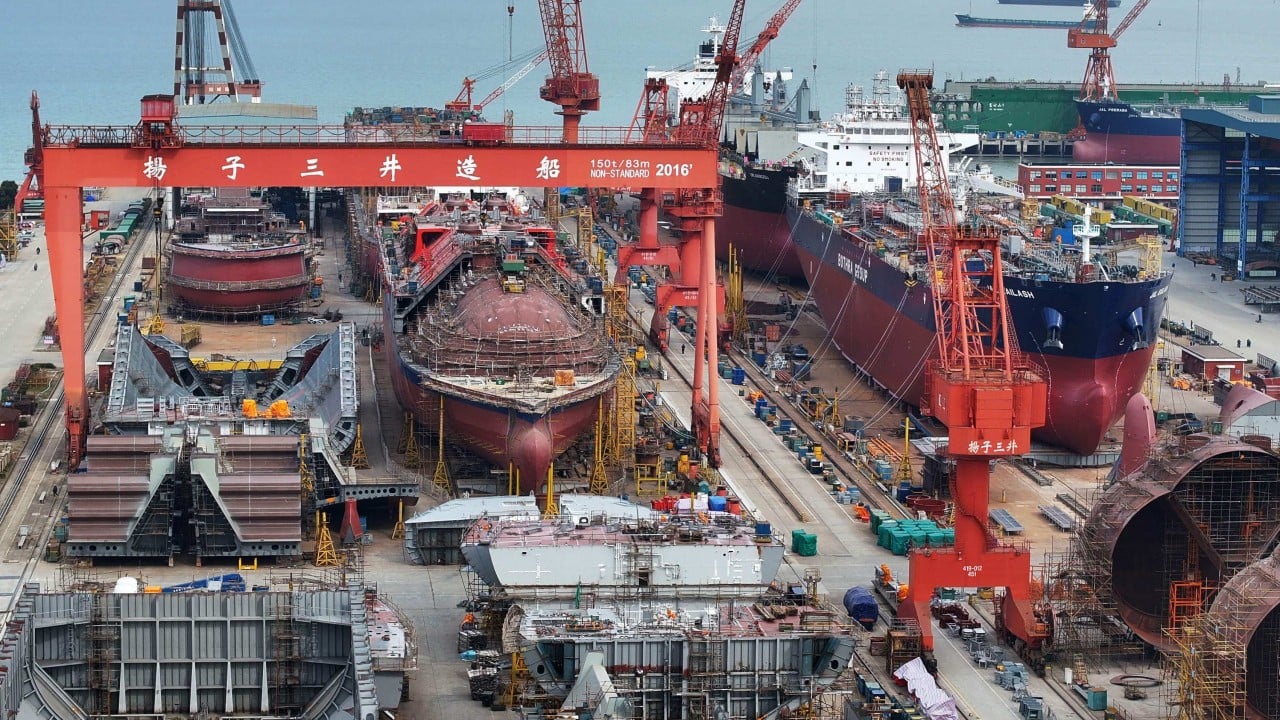
The United States is trying to tax its way out of a commercial shipbuilding crisis, and it isn't going to work.
Lawmakers on Capitol Hill and officials at the Office of the U.S. Trade Representative (USTR) have rolled out sweeping tariffs, targeted port fees, and Section 301 penalties aimed squarely at China’s massive maritime sector. The goal sounds straightforward enough: penalize Chinese state-subsidized shipyards, discourage global shipping lines from using Chinese-built vessels, and force trade back toward domestic shipbuilders.
It’s a bold political move. It’s also completely disconnected from the operational realities of global logistics.
If you look past the political theater in Washington, the math simply doesn't add up. Penalizing foreign vessels arriving at American ports won't magically resurrect a domestic shipbuilding industry that has been decaying for four decades. Instead, it threatens to drive up freight costs for U.S. importers while doing almost nothing to close the vast production gap between Asian shipyards and American ones.
The Astonishing Reality of Global Ship Production
To understand why Congressional tariffs and port fees miss the mark, you have to grasp the sheer scale of the imbalance.
China currently controls over 50% of world commercial shipbuilding capacity. When you add South Korea and Japan to the equation, East Asia builds roughly 95% of all commercial ocean-going ships on the planet.
And the United States? The entire U.S. commercial shipbuilding capacity accounts for less than 0.2% of global output.
Read that number again: 0.2%.
American shipyards produce just a handful of large ocean-going commercial vessels per year—often zero to two ships in a given twelve-month cycle. Meanwhile, Chinese state-owned enterprises like China State Shipbuilding Corporation (CSSC) roll out dozens of massive container ships, bulk carriers, and LNG tankers every month, backed by heavy state subsidies, cheap steel, and massive automated infrastructure.
Slapping a $50 to $140 per net ton fee on Chinese-operated vessels or targeting Chinese-built ships calling at U.S. ports won't persuade ocean carriers to buy American. Ocean carriers couldn't buy American even if they desperately wanted to. The capacity simply does not exist.
How Port Fees hit U.S. Supply Chains First
The USTR’s Section 301 actions introduced phased fees on Chinese-owned or operated vessels, as well as service fees on non-Chinese operators utilizing Chinese-built ships. On paper, these measures are supposed to create a financial disincentive against buying from Chinese shipyards.
In practice, shipping lines operate on tight scheduling and global asset allocation. They aren't going to scrap or reroute multi-billion-dollar fleets because of a port entry tax in Los Angeles or Savannah. Instead, they will pass those fee increases straight down the supply chain.
When a carrier pays hundreds of thousands of dollars in new port charges per voyage string, that cost gets tacked on as a maritime security surcharge or import tax.
- U.S. Importers: Pay higher shipping rates for containerized retail items, manufacturing components, and electronics.
- U.S. Exporters: Agriculture and energy sectors face retaliatory friction overseas. China has already demonstrated a willingness to hit back with matching port fees on U.S.-linked vessels.
- American Consumers: Suffer the ultimate price increase at retail, fueling sticky inflationary pressures.
You can't penalize your way to industrial capacity when you don't have the factories to pick up the slack.
Why Washington Keeps Relying on Protectionism
American maritime policy has relied heavily on protectionist trade laws for over a century, most notably the Merchant Marine Act of 1920 (commonly known as the Jones Act). The Jones Act mandates that any cargo transported by water between U.S. ports must be carried on ships that are U.S.-built, U.S.-crewed, and U.S.-flagged.
The intent was noble: preserve domestic shipyards and maintain a strong merchant marine for national defense.
The execution, however, created a protected, captive market. Without exposure to international competition, U.S. commercial shipyards became drastically less efficient than their global peers. Today, a coastwise-compliant tanker built in an American yard costs four to five times more than a similar ship built in East Asia.
Because domestic builds are so expensive, American shipping companies hold onto aging vessels long past their prime rather than ordering new ones. This has starved domestic yards of the consistent, volume-driven orders needed to modernize facilities and automate labor.
Adding new tariffs on top of a century of protective trade barriers won't fix the core problem. It just repeats the same broken strategy while expecting a different outcome.
What a Real American Maritime Strategy Would Actually Require
Punishing China's maritime dominance gets headlines, but building American capacity requires heavy lifting at home. If Congress actually wants to compete on the high seas, it needs to stop relying solely on punitive trade actions and address domestic structural failures.
1. Rebuild the Domestic Maritime Workforce
American yards face a desperate shortage of skilled labor. Welders, naval architects, pipefitters, and marine engineers can't be minted overnight. Without sustained, federally backed vocational pipelines and competitive wages, yards can't scale up even if orders pour in.
2. Modernize Shipyard Infrastructure
Asian shipyards use massive gantry cranes, modular building blocks, and robotic welding systems to construct ships at remarkable speeds. Most U.S. yards rely on aging facilities and manual labor. Capital subsidies and tax incentives must be strictly tied to technological modernization and automation rather than executive payouts or static maintenance.
3. Coordinate Orders with Allied Nations
The United States cannot match Chinese shipbuilding volume on its own. A practical strategy involves deep integration with trusted allies like South Korea and Japan. Allowing U.S. naval repairs, non-combatant fleet builds, and commercial vessel construction to leverage allied yards in the short term would alleviate domestic bottlenecks while American yards focus on modernizing core national security vessels.
How Logistics and Supply Chain Managers Should Handle the Trade Shift
If you manage international logistics, freight forwarding, or supply chain strategy, you can't wait for Capitol Hill to figure out maritime policy. The friction between U.S. trade policy and Chinese shipping will persist regardless of who holds office.
Here is how you protect your operations right now:
- Audit Your Carrier Fleet Structures: Review which ocean lines carry your primary import/export volumes. Check whether your primary loops utilize Chinese-flagged or Chinese-operated tonnage that subjects your cargo to unexpected port fee surcharges.
- Diversify Port Entry Strategy: Port fee structures and retaliatory measures disproportionately affect major gateway routes. Evaluate secondary entry points or multi-modal routes through Canada or Mexico if direct U.S. port calls become bogged down in administrative fee disputes.
- Lock in Fixed Surcharge Clauses: When negotiating long-term service contracts (BCO agreements) with ocean carriers, explicitly negotiate how government-imposed port service fees and Section 301 surcharges are allocated. Don't leave regulatory fee pass-throughs open-ended.
- Monitor Retaliatory Tariffs: Keep a close eye on China's Ministry of Transport notices. If your goods travel on U.S.-linked or U.S.-flagged vessels into East Asian ports, you risk facing counter-fees that can instantly destroy your margins.