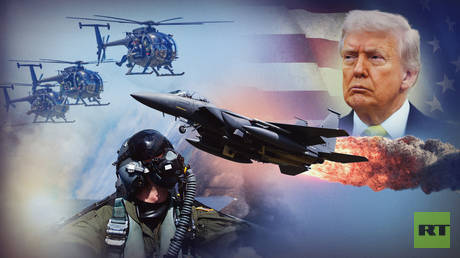
The desert is never truly silent. If you stand in the Great Salt Desert of Iran, miles from anything resembling a road, the wind creates a low, rhythmic hum against the dunes. It sounds like breathing. On April 24, 1980, that natural respiration was choked out by the roar of low-flying engines. Men sat in the dark interiors of C-130 Hercules transport planes, their faces painted, their hearts hammering against their ribs. They were the best the United States had to offer, sent to rectify a national humiliation.
Operation Eagle Claw was supposed to be the surgical strike that brought 52 American hostages home. Instead, it became a ghost story that still haunts the Pentagon.
We often talk about military operations in terms of budgets, geopolitical chess moves, and strategic outcomes. We look at the $150 million price tag of that single night and wince. But the real cost wasn't just in the charred remains of aircraft left at a site called Desert One. The real cost was the shattering of an illusion. It was the moment the world realized that even the most sophisticated superpower could be humbled by a handful of dust and a series of mechanical hiccups.
Consider the perspective of a young Delta Force operator sitting in the back of one of those planes. To him, the mission wasn't about the Cold War or oil prices. It was about the man sitting to his left and the terrifying, tactile reality of a "haboob"—a massive, unexpected dust storm. In the cockpit, pilots were flying blind. Their instruments were fine, but their eyes were useless. The sand was everywhere. It infiltrated the seals of the engines; it coated the glass; it turned the night vision goggles into glowing green walls of static.
Success in these high-stakes environments doesn't depend on bravery alone. It depends on the harmony of three fragile elements: hardware, weather, and luck. That night, all three failed.
The Weight of the Hardware
The plan was a masterpiece on paper. Eight RH-53D Sea Stallion helicopters were to fly from the USS Nimitz to a remote landing strip in the desert. From there, they would meet the transport planes, refuel, and move toward Tehran. It was a ballet of logistics. But the Sea Stallion was designed for minesweeping at sea, not for enduring the abrasive grit of the Iranian interior.
One helicopter went down early with a cracked rotor blade. Another turned back after its navigation system succumbed to the dust. A third arrived at Desert One with a failed hydraulic system. Suddenly, the mission was below the minimum number of aircraft required to proceed.
This is the hidden tax of complexity. When we build systems that require perfection to function, we invite catastrophe. The military planners had calculated for resistance from the Iranian Guard, but they hadn't fully respected the entropy of the machine. Every nut, bolt, and sensor is a potential point of failure. When you multiply those points by eight helicopters and thousands of miles of hostile territory, the odds of a "clean" mission begin to vanish.
The commander on the ground, Colonel Charlie Beckwith, had to make the hardest call a leader can face. He aborted. The mission was over before a single shot was fired at the enemy.
But the tragedy was just beginning.
The Fire in the Dark
In the scramble to evacuate the desert site, a helicopter collided with a C-130. The explosion was a sun rising in the middle of the night. Eight Americans died in that fireball. The images of the wreckage, broadcast to a stunned global audience days later, didn't just show burned metal. They showed the vulnerability of a giant.
For the families of those eight men, the "cost" of the operation isn't a line item in a congressional report. It is an empty chair at Thanksgiving. It is the silence that followed the news. We frequently get lost in the "why" of foreign policy, debating whether the rescue was a noble attempt or a fool’s errand. We forget that the machinery of war is fueled by the lives of individuals who don't get to vote on the risks they take.
The financial fallout was immense, leading to a complete overhaul of how the U.S. military handles special operations. If you want to know why the 1980s saw the birth of USSOCOM (United States Special Operations Command), you look at the embers in the Iranian sand. We bought our way out of that failure by spending billions to ensure different branches of the military could actually talk to one another. Before Eagle Claw, the Army, Navy, and Air Force operated like rival kingdoms. The radios didn't always match. The training wasn't integrated.
Chaos. That was the primary export of Desert One.
The Psychological Toll of the "Almost"
There is a specific kind of grief associated with a mission that never truly started. For the hostages in Tehran, the failure of Eagle Claw was a death knell for their immediate hopes. They were split up and moved to secret locations, making any future rescue attempt nearly impossible. For the American public, it was a moment of profound national anxiety. It felt as though the tools that had won World War II were suddenly obsolete in a world of asymmetric threats and shifting sands.
We struggle with the idea that some problems cannot be solved by throwing money or technology at them. The rescue operation was a peak example of "technological hubris." We believed our sensors could see through the dust of history. We were wrong.
The lesson we should have learned—and often still ignore—is that the "human element" isn't just about the soldiers. It's about the people on the other side, the environment, and the sheer unpredictability of existence. The Iranian revolution wasn't just a political shift; it was a psychological wall that the U.S. tried to climb with helicopters and ended up falling against.
The Invisible Stakes
Why does this matter now, decades later? Because we are still obsessed with the "clean" solution. We look at drone strikes, cyber warfare, and specialized raids as the way to solve global friction without the "mess" of traditional war. But Eagle Claw reminds us that there is no such thing as a clean mission.
Every time a government decides to put boots on the ground—or rotors in the air—they are gambling with a currency that cannot be printed. They are gambling with the soul of the nation. When the mission fails, it doesn't just hurt the military; it alters the course of elections, changes the map of the Middle East, and dictates the lives of millions who will never know the names of the pilots involved.
The 444 days of the hostage crisis eventually ended through diplomacy, not through the barrel of a gun. The helicopters at Desert One remain there, half-buried, slowly being reclaimed by the earth. They are monuments to a specific kind of failure: the failure to realize that power is not the same thing as control.
The wind in the Great Salt Desert still hums. It carries the grit that grounded the Stallions and the heat that ignited the C-130. If you listen closely, it doesn't sound like a mission report or a budget briefing. It sounds like a warning. It tells us that for all our satellites and our gold-plated defense contracts, we are still small. We are still at the mercy of a sudden storm. We are still human, trying to navigate a world that doesn't care about our plans.
The sand doesn't keep secrets; it just waits for the next set of engines to arrive, confident that, eventually, the desert always wins.