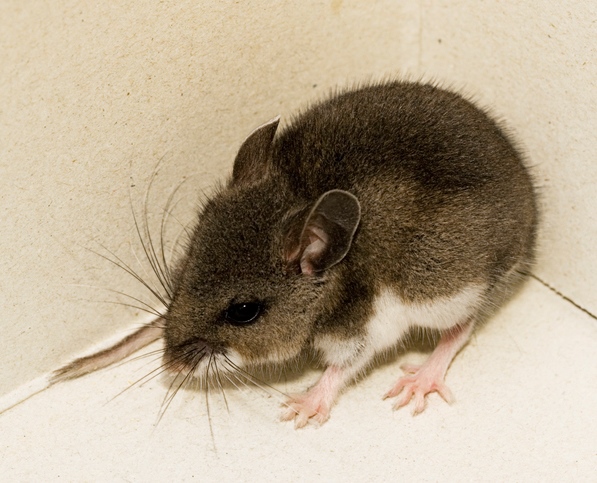
You’ve probably heard the horror stories about cleaning out an old barn or a dusty summer cabin and ending up in the ICU. In Saskatchewan, those stories aren't just urban legends. They're a reality tied to the deer mouse, a tiny creature that carries one of the deadliest pathogens in North America. We're talking about hantavirus, a disease that literally drowns your lungs from the inside out.
Right now, if you contract Hantavirus Pulmonary Syndrome (HPS), doctors don't have a "cure" to give you. There’s no magic pill or specific antiviral sitting on the shelf. You get supportive care—basically, a ventilator and a prayer that your body fights it off. But inside the Vaccine and Infectious Disease Organization (VIDO) in Saskatoon, researchers are working to change that status quo. They’re hunting for a treatment that can actually stop the virus in its tracks before it turns fatal.
The Brutal Reality of HPS
Don't let the "flu-like" label fool you. Hantavirus starts with fever and muscle aches, but it scales up with terrifying speed. Within days, your capillaries begin to leak fluid into your lungs. It’s a 35% to 40% mortality rate. Those aren't great odds.
In Saskatchewan, we’ve seen nearly 40 cases since the mid-90s. While that number seems low compared to something like the flu, the lethality makes every single case a local emergency. The problem is that by the time you realize it isn't just a bad cold, you’re already in respiratory distress. This is why the work at the University of Saskatchewan is so heavy. They aren't just looking for a way to treat the sick; they're looking for a way to keep people from dying while the clock is ticking.
What’s Happening Inside the Saskatoon Lab
The scientists at VIDO have a unique advantage. They operate one of the most advanced containment facilities in the world. You can’t just study hantavirus in a standard high school lab; you need Level 3 containment where the air is filtered and every breath is monitored.
I’ve looked into their approach, and it’s not just about one "silver bullet." They’re attacking the problem from two sides.
- Antiviral Discovery: They’re testing compounds that can block the virus from replicating. If you can stop the virus from making copies of itself early on, the lung leakage never happens.
- Vaccine Development: This is the long game. Imagine being a farmer, a construction worker, or a weekend warrior cleaning a shed and knowing you’re already immune. VIDO is leveraging its new Vaccine Development Centre to move these candidates from a petri dish into something that can eventually be manufactured.
Why We Don’t Have a Treatment Yet
You’d think with a 40% kill rate, we’d have a vaccine by now. Honestly, the biggest hurdle is how rare the virus is. Pharmaceutical giants don't usually pour billions into a "niche" disease that affects dozens of people a year instead of millions.
That’s where public labs like VIDO come in. They aren't driven by the same profit margins as big-cap pharma. They’re driven by the fact that this is a prairie problem. The deer mouse is our neighbor. Since the virus is spread through aerosolized droppings—basically breathing in dust when you sweep a garage—the risk is constant for anyone living outside a concrete jungle.
How to Stay Alive Until Science Catches Up
While the geniuses in Saskatoon do their thing, you need to be smart. Most people get infected because they’re reckless with a broom. If you’re opening up a cottage or a shed this spring, stop and think.
- Don't sweep. I mean it. Sweeping kicks the virus into the air.
- Soak it first. Use a bleach solution (1 part bleach to 9 parts water). Drench the droppings. Let them sit for 10 minutes.
- Mask up. Not just a flimsy cloth mask. Use an N95 or better if you’re in a high-risk area.
- Ventilate. Open the doors and windows and walk away for 30 minutes before you start cleaning.
We're at a point where the technology for a vaccine exists, but the clinical trials take time and massive amounts of funding. The Saskatoon lab is currently the tip of the spear for this research in Canada. Until they get a breakthrough to the finish line, your best defense is a bottle of bleach and some common sense. If you start feeling "flu-y" after a weekend of cleaning, don't wait. Tell the ER doctor exactly what you were doing. That piece of info could be the difference between a recovery and a statistic.