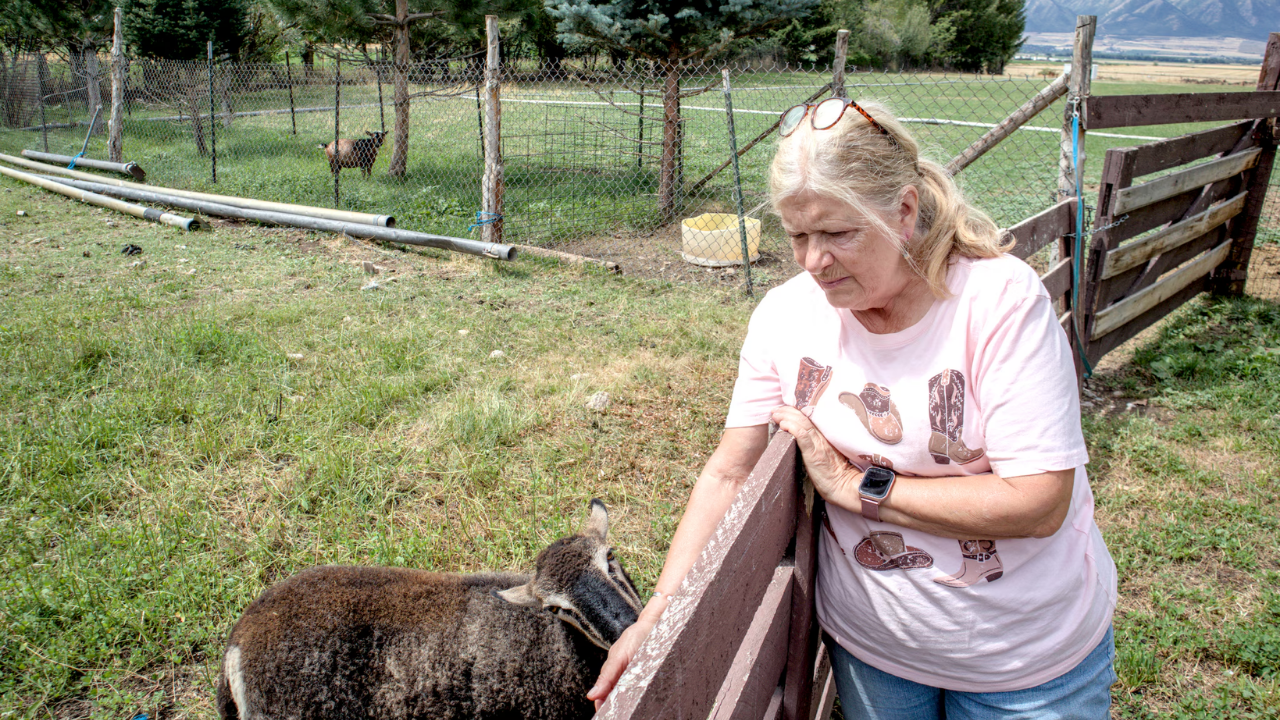
Every local news outlet recently wept tears of joy over a Utah couple spending fourteen grueling years to protect twenty-five acres from turning into a subdivision. The headline practically writes itself: plucky landowners stare down asphalt empires and win. Millions of readers nodded in quiet approval, comforted by the warm, sentimental myth that clinging to rural land against the tide of progress is noble, wise, and economically sound.
It is none of those things. It is a masterclass in emotional hoarding disguised as conservation, and it is actively crushing the very people it claims to protect. For a more detailed analysis into similar topics, we suggest: this related article.
I have spent two decades advising municipal planners and real estate developers across the Intermountain West. I have seen families exhaust generational wealth, sacrifice their health, and destroy their liquidity because they fell in love with a romanticized version of land use that died with the twentieth century.
Let us dismantle the lazy consensus. For broader context on this development, comprehensive analysis can also be found at Financial Times.
The Sentimentality Trap
The core premise of the conventional narrative is that preserving open space of any kind, anywhere, under any circumstance is an absolute good. This is economic illiteracy.
Twenty-five and a half acres in a high-growth corridor near the Wasatch Front is not a pristine wilderness reserve. It is an underutilized, highly inefficient asset. When a couple spends fourteen years fighting density, they are not preserving nature; they are restricting supply in a market choking on a historic housing shortage. They are locking up productive land in amber to satisfy a nostalgic aesthetic, forcing younger generations to drive two hours further east or pay twice as much for a starter home.
We romanticize the tractor while ignoring the math. Agriculture on a micro-scale of twenty-five acres is rarely commercially viable without massive subsidies, hobbyist capital, or aggressive tax write-offs. It survives not on economic merit, but on sentiment.
Imagine a scenario where every property owner along that corridor decided to follow this Utah couple's blueprint. The result would not be a pastoral paradise. It would be a catastrophic acceleration of urban sprawl, forcing cities to expand further outward into actual ecologically sensitive zones and fragile watersheds because the close-in infill parcels were tied up in vanity agricultural projects.
The True Cost of Micro-Conservation
Urban economics teaches us a brutal truth: density is efficient, sprawl is expensive, and artificial scarcity kills communities.
When land near existing infrastructure remains stagnant, municipalities are forced to extend water mains, sewer lines, and electrical grids past empty parcels to reach new subdivisions further out. That inefficiency costs local taxpayers millions in deferred maintenance and infrastructure overhead.
The public cheers for the couple saving their twenty-five acres, but those same citizens bitch about their property taxes doubling to pay for municipal road expansions. You cannot have it both ways. You cannot demand low-density nostalgia while expecting high-density civic efficiency.
Let us look at the financial mechanics. Holding residential-adjacent land for farming typically yields meager returns per acre compared to its highest and best use under zoning laws that permit thoughtful infill. If that land had been developed into a well-designed townhome community or a mixed-use cluster, it could have housed hundreds of families close to existing transit corridors. Instead, it grows alfalfa or serves as a paddock for three horses that cost more to feed than they generate in revenue.
That is not stewardship. That is an expensive hobby subsidized by the housing crisis.
The Anti-Growth Fallacy
People love to villainize developers as soulless concrete barons. I get it. Greed makes for a clean, easy antagonist. But the villain in housing is rarely the developer; it is the zoning code and the cultural addiction to stasis.
When communities block growth, prices skyrocket. Economists call this exclusionary zoning, though the media prefers to call it neighborhood character preservation. It amounts to the exact same mechanism: pulling the ladder up after you got yours.
The Utah couple did not save their land from becoming a subdivision; they protected their view at the direct expense of affordability for teachers, nurses, and firefighters trying to buy a home in their own county. Every acre withheld from the housing market adds friction to an already broken supply chain.
I have watched neighborhoods fight proposed townhomes with signs reading "Protect Our Rural Heritage," only to turn around and complain that their twenty-something children cannot afford to move out of the basement. The cognitive dissonance is staggering.
Unconventional Playbook for Land and Legacy
If you own land in a high-growth zone, stop listening to the emotional echo chamber telling you that concrete is evil and open dirt is holy. If you want to honor your family's heritage, do something that actually works.
First, embrace density clustering. You do not have to pave every inch of your land to win financially. Sell seventy percent of the parcel to a forward-thinking builder who agrees to cluster high-density housing on a small footprint, and legally covenant the remaining thirty percent into a permanent, working urban farm or community park. You capture the equity, fund your retirement, and provide housing while keeping green space intact.
Second, stop treating zoning as an immutable moral law. Zoning codes are political compromises written fifty years ago for an entirely different demographic reality. If your land can support multi-family infill, advocate for a zoning change that maximizes value while minimizing footprint.
Third, recognize the difference between preservation and petrification. Real conservation means managing resources dynamically to support human flourishing and natural ecosystems simultaneously. Petrification means freezing a moment in time because you are terrified of change.
The romantic era of the sprawling family farm operating profitably on the edge of a booming metropolitan statistical area is dead. Refusing to accept that reality does not make you a hero. It makes you a casualty of economic gravity.
Tear down the fences, build smarter, and stop apologizing for progress.