The Empty Skies Over Poole Harbour
For nearly two centuries, the apex predator of Britain's freshwater fisheries was entirely absent from the southern English coastline.
Extinction is permanent. When the last breeding pairs of ospreys vanished from English skies in the mid-1800s, victims of relentless persecution by egg collectors and landowners protecting commercial fisheries, they left an ecological void. The birds did not merely leave a gap in the food web. They left a silence. For generations, the shallow waters of Poole Harbour and the vast pine forests of Dorset saw no sign of the massive raptor diving feet-first into the surface tension to snatch trout and mullet.
Then came a radical proposition. Conservationists decided to reverse a two-hundred-year-old local extinction by importing chicks from the rugged highlands of Scotland.
This project, known formally as the Birds of Poole Harbour translocation initiative, was never going to be a simple exercise in opening a crate and watching nature take its course. Reintroducing a migratory raptor to a landscape it abandoned during the Victorian era requires industrial-scale patience, meticulous biology, and a stubborn refusal to accept that human interference has permanently broken every ecosystem we touch.
You cannot simply drop a Scottish bird into southern England and hope for the best. Ospreys are hardwired with a biological navigation system that tells them precisely where they were born, and more importantly, where they need to return after spending two or three winters hunting fish in West Africa.
Why Scotland Had to Pay the Price for Dorset's Revival
Population biology is unforgiving. You cannot rebuild a decimated southern population without raiding a healthy northern stronghold, and that reality immediately creates friction.
Scotland holds the UK's only surviving native osprey populations. Following their own natural recolonization from Scandinavia in the mid-20th century, Scottish conservation areas slowly filled back up. By the early 2000s, the population north of the border was stable enough to sustain a managed harvest of chicks.
The mechanics of the operation were stark. Teams of licensed ornithologists scaled tall Scots pines in remote Highland glens. They took third chicks from nests where sibling rivalry and natural food shortages meant the youngest bird was unlikely to survive anyway. These chicks were packed into customized crates, loaded onto vehicles or aircraft, and transported hundreds of miles south to specialized release pens hidden deep within the Dorset woodlands.
Critics questioned the ethics of uprooting wild birds from thriving nests. But conservation biology is triage. If you wait for a species to naturally expand its range across hundreds of miles of heavily industrialized agricultural land and busy shipping lanes, you might wait another thousand years. Natural dispersal is slow. Human intervention is fast, brutal, and sometimes the only option left on the table.
+-------------------------------------------------------------+
|               The Translocation Pipeline                    |
+-------------------------------------------------------------+
| 1. Highland Extraction: Taking surplus chicks from nests    |
| 2. Southern Transport: Moving juveniles to Dorset pens      |
| 3. Hacking Process: Weeks of captive feeding and imprinting |
| 4. Maiden Flight: The critical first migration south        |
| 5. The Return: Waiting years for survivors to fly back      |
+-------------------------------------------------------------+
The Danger of the Hack Box
Releasing a bird of prey into a new environment is an exercise in managed anxiety.
In Dorset, project organizers utilized a technique known as hacking. Young ospreys were placed inside large wooden towers built in the marshlands of Poole Harbour. For weeks, the birds lived behind bars, peering out over the mudflats and saltmarshes while human handlers fed them locally sourced fish through chutes designed to prevent the birds from associating food with people.
This anonymity is non-negotiable. An osprey that views humans as a food source is a doomed bird.
When the time came to open the cage doors, the real test began. Young ospreys do not automatically know how to catch fish on demand. Their first weeks out of the hack box involved clumsy, failed dives, erratic flights over public beaches crowded with sunbathers, and agonizing hours spent sitting in trees looking confused.
The local ecosystem watched back. White-tailed eagles, another recent and massive reintroduction success in the UK, patrolled the same airspace. Peregrine falcons viewed the young northern visitors as unwelcome trespassers. Weather systems off the English Channel tested their immature flight feathers.
Yet, the primary threat was never the local predators. It was the vast expanse of human infrastructure stretching between Dorset and the edge of the Sahara Desert.
Surviving the Long Flight to West Africa
Ospreys are frequent flyers across geopolitical boundaries. A bird hatched in a Scottish nest, moved to Dorset, and released into Poole Harbour does not recognize British immigration laws or French hunting seasons.
Once these translocated juveniles launched themselves south on their first autumn migration, they vanished into a continental gauntlet. Satellite tracking tags bolted to their tail feathers painted a grim picture of modern avian mortality.
- Power lines: Uninsulated medium-voltage electrical poles remain a primary killer of young raptors across rural Europe.
- Illegal shooting: Despite strict EU protections, migratory raptors are routinely shot out of the sky as they cross the Mediterranean basin and parts of North Africa.
- Drowning in aquaculture: Fish farms in southern Europe present an easy meal, often accompanied by protective nets that trap diving birds underwater.
The mortality rate for first-year ospreys typically hovers around fifty percent. When you add the logistical trauma of translocation, the margins for error shrink to almost nothing. Every signal lost from a satellite tag in a remote corner of Spain or a mangrove swamp in Senegal felt like a personal defeat for the field researchers sitting back in the Dorset mud.
The Turning Point in the Harbour
Years passed before the investment began to yield visible dividends.
Ospreys spend their first two or three years entirely in Africa. They do not return to Europe until they reach sexual maturity. For the project team in Dorset, this meant enduring years of quiet monitoring, maintaining the hack pens, and answering endless questions from local birdwatchers demanding to know if the expensive experiment had failed.
Then, the ringed birds started coming back.
They flew low over the yacht clubs of Poole Harbour, scanning the water for flounder and mullet with the specific, heavy-winged flight pattern of adults. They bypassed Scotland entirely, homing in on the exact coordinate of the wooden hacking towers where they had eaten their first dead trout years earlier.
The behavioral imprinting had worked. The artificial migration loop was closed.
The Battle for Real Estate
Bringing the birds back created a new, entirely unexpected administrative headache.
Ospreys are fiercely territorial and deeply traditional about their nesting sites. Once they realized Dorset was home, they expected high-end, predator-free real estate waiting for them. Natural trees in the harbor area rarely offered the combination of structural strength and panoramic visibility that a breeding pair demands.
Conservationists had to construct massive artificial platform nests high atop wooden poles driven deep into the harbor saltmarshes. These platforms look like giant wooden cartwheels perched on stilts.
This is where the intervention philosophy hits its peak. We broke the ecosystem centuries ago by clearing the forests and shooting the raptors. Now, we are reduced to building high-tech nesting furniture and placing it in protected wetlands just to give nature a fighting chance to repair itself.
It is artificial, expensive, and entirely necessary.
Measuring Success Beyond the Headlines
The ultimate metric for any reintroduction program is not whether the original transported animals survive. It is whether those animals can produce young that go on to breed successfully themselves.
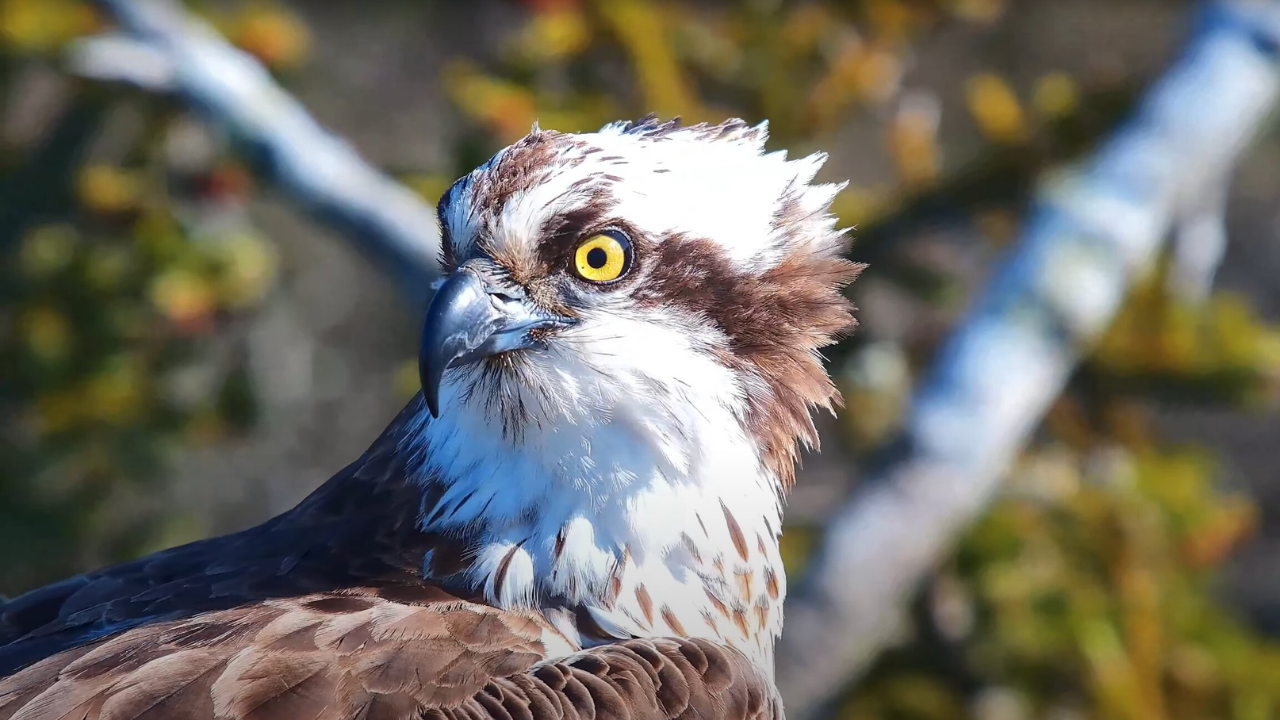
That milestone arrived when pairs finally settled down on the artificial platforms, mated, and laid eggs that hatched under the watchful lenses of 24-hour trail cameras. The chicks born in Dorset had never seen Scotland. They were true southerners, carrying the genetic lineage of the north into a landscape that had forgotten what their calls sounded like.
The public reaction has been polarizing in micro-communities. Local fishermen worried about commercial stocks expressed quiet skepticism when the first large raptors began pulling heavy fish out of local rivers. Real estate developers chafed against strict wildlife protection zones expanding around the harbor edges to prevent human disturbance near active nesting sites.
These are the quiet trade-offs of ecological restoration. You cannot bring back a top-tier predator without altering the human landscape around it. Space must be ceded. Noise must be managed. Quiet zones on the water must be respected, even if it means a paddleboarder has to take a slightly wider berth around a mudflat.
The project in Poole Harbour proved that historical wrongs against wildlife can be partially corrected, provided you have millions of pounds, decades of patience, and a willingness to interfere directly with the natural order until the machine starts running on its own power.
The osprey is back on the south coast, diving into the same water it abandoned when Queen Victoria was still on the throne, screaming its high-pitched alarm notes across the saltmarshes as the tide rolls out toward the English Channel.