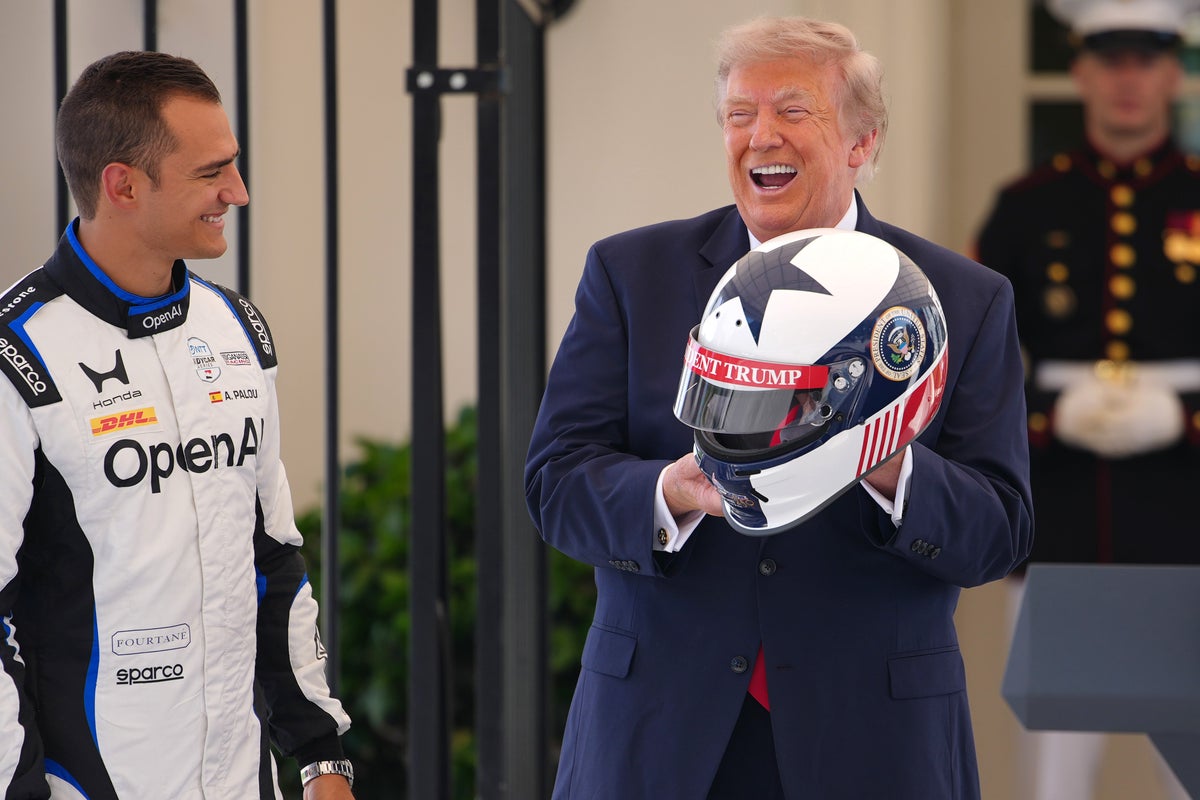
The marble of the National Archives has stood in absolute, monastic silence for nearly two centuries, holding the faded ink of the Declaration of Independence. But come August, that silence will be shattered by a pitch-perfect, 12,000-RPM scream.
In the Oval Office, five days is an eternity. Yet, that is precisely how long it took from the moment an audacious idea was pitched to the moment a heavy black ink signature dried on an executive order. President Donald J. Trump wanted a celebration for America’s 250th birthday, and he did not want another parade of marching bands and slow-moving floats. He wanted speed. He wanted raw, unfiltered noise.
The result is the Freedom 250 Grand Prix of Washington, D.C., scheduled for August 22 to 23, 2026. For the first time in history, open-wheel IndyCar racers will turn the National Mall—the sacred, grassy spine of American democracy—into a temporary, high-speed battleground.
To understand what this means, you have to look past the logistics and the politics. Consider the physical reality of a modern racing machine. An IndyCar is not just a car; it is an aerospace projectile designed to run upside down if it goes fast enough. When twenty-seven of these machines rocket down Pennsylvania Avenue, they will be traveling at 185 miles per hour. That is nearly three times the legal speed limit, unfolding mere feet from the quiet galleries of the National Gallery of Art.
The proposed track is a 1.7-mile, seven-turn gauntlet. The starting grid will sit on Pennsylvania Avenue, with the iconic dome of the U.S. Capitol rising in the background like a giant, silent spectator. Drivers will accelerate down a sweeping 0.4-mile front stretch, tires fighting for grip on asphalt usually reserved for motorcades and tourists. They will dive past the Smithsonian National Air and Space Museum, heavy on the carbon-fiber brakes, before sweeping past the National Archives.
It is a layout that makes safety engineers sweat and historians blink in disbelief.
"I think they are literally building the car as they drive it," says D.C. Councilmember Charles Allen. His ward sits right along the edge of the proposed circuit. He is not wrong. Traditional street races take years to plan. This one is being willed into existence in months, backed by a federal mandate to bypass the usual glacial pace of municipal bureaucracy. The executive order explicitly commanded all federal agencies to expedite permits. In Washington, that is the equivalent of a magic wand.
But the real magic of this event is not the speed; it is the accessibility. Street races are notoriously exclusive, walled off behind expensive grandstands and corporate chalets. The Freedom 250 is taking a different route. General admission is entirely free. Organizer projections suggest a staggering crowd of over one million people could flood the Mall over the two-day weekend.
Picture that. A million faces pressed against temporary concrete barriers, feeling the physical punch of displaced air as a car streaks past. The smell of hot rubber and burning ethanol mixing with the summer heat of the Potomac.
For the drivers, the stakes are terrifyingly high. A temporary street circuit has no room for error. There are no wide, grassy run-off areas like you find at a modern European racetrack. There are only concrete walls. Hit the barrier at 180 miles per hour, and your weekend—and your car—is over.
But the allure of winning the first-ever race in the shadow of the Washington Monument is a siren song no racer can resist. They are trading the safety of purpose-built tracks for the bumpy, unpredictable reality of city streets. Every seam in the pavement, every manhole cover, becomes a potential landmine when your chassis is riding just two inches off the ground.
Critics worry about the disruption, the noise, and the sheer audacity of running a motorsports event in a space designed for solemn reflection. But perhaps that is the point. America's story has never been quiet. It has been loud, disruptive, and fast.
Come August, the heart of the nation will not just beat. It will rev.