The salt here gets into everything. It clings to the windowpanes, coats the rusted hinges of the caravan doors, and leaves a permanent, metallic taste on the back of the tongue.
Stand on the concrete breakwater of Jaywick on a Tuesday morning in November, and you will understand why people are afraid. The North Sea rolls in heavy and gray, chewing away at the crumbling cliffs of the Essex coast. Behind the sea wall sits a labyrinth of former holiday chalets thrown up in the 1930s—hasty timber-and-asbestos boxes meant for cheap weekend getaways from London. Decades later, the holidays never came back. The chalets stayed. People moved in, looking for cheap rent, sanctuary, or simply a place to hide from the high-speed centrifuge of modern Britain.
Now, they feel forgotten.
And when a community feels forgotten, it looks for someone to blame for the draft coming under the door.
To walk these wind-scoured streets is to understand a very specific kind of quiet desperation. For years, the national press has dropped in like migratory birds to photograph the peeling paint, the boarded-up windows, and the dismal rankings on deprivation indexes. Jaywick is routinely labeled one of the most economically deprived areas in the country. The local GP surgery is overstretched. The high street is a string of shuttered shutters and charity shops. Jobs are scarce, precarious, and low-paying.
Then, the news flashes across the television screen in the corner of the local pub. A rubber dinghy on the English Channel. A crowded hotel housing asylum seekers miles away. A political debate in Westminster about borders, sovereignty, and control.
Locals look at the screen. Then they look at their crumbling street.
The leap is not logical. It is emotional.
When your world is shrinking—when the local post office closes, when the bus service is cut to twice a week, when your grandson cannot afford a home within fifty miles of where he was born—abstract macroeconomics offer zero comfort. You do not feel GDP growth. You feel the cold.
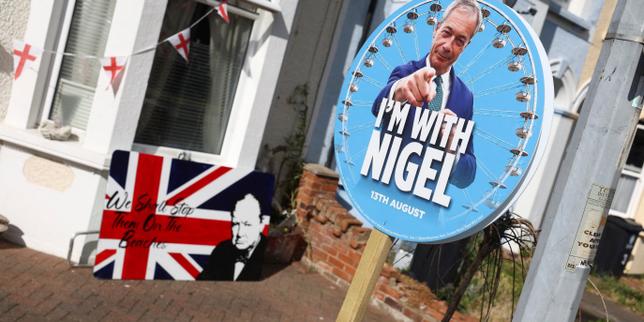
Enter Nigel Farage.
Reform UK does not win here because political science textbooks dictate it. They win because they speak the language of grievance with an effortless swagger. They walk into the neglected corners of post-industrial and coastal Britain and point a finger at the horizon. Look over there, the message goes. That is why your life is hard.
It is a powerful narcotic. It provides a villain for a complex, faceless structural failure.
To unpack this phenomenon, we have to look past the caricature of the angry voter. The narrative painted by distant commentators often reduces towns like Jaywick to punchlines or hotbeds of prejudice. That is lazy. It misses the human engine driving the ballot box.
Consider a hypothetical resident we will call Arthur, seventy-two, retired from the construction trades down in the estuary. Arthur’s knees ache every time a northeasterly blows off the North Sea. He paid his taxes for fifty years. He raised three kids. Now, he watches his town hollow out, his council services dwindle, and the cost of a loaf of bread climb past reason.
When Arthur votes, he is not necessarily engaging in a cold calculus of international trade policy or immigration quotas. He is striking out. He is pulling a lever marked with a single, desperate hope: Make someone notice that I am still standing here.
The populist appeal thrives precisely where institutions fail. When the state retreats from a town, something else rushes in to fill the vacuum. In Jaywick, that vacuum is filled by anxiety, suspicion, and a potent sense of displacement.
The irony, of course, is stark. The economic stagnation plaguing places like Jaywick has roots that stretch back decades—deindustrialization, underfunded education, a chronic lack of regional investment, and a housing market designed for speculation rather than shelter. None of these things arrived on a small boat. None of them can be solved by closing a port.
Yet try explaining structural deflation to a man staring at a leaking roof he cannot afford to fix.
Economics is supposed to be about numbers, but lived experience is about narrative. People do not live inside spreadsheets. They live inside stories. And right now, the most compelling story available to the forgotten coast is that their decline is the fault of the stranger arriving on the shore.
This is where the political machinery pivots. It takes a genuine, legitimate pain—the erosion of working-class security—and directs it toward a target that cannot talk back. It is a brilliant, tragic sleight of hand.
Walk down Brookmans Road in Jaywick. The wind rattles the corrugated iron. A stray cat picks its way through a pile of discarded lumber. A Union Jack flutters limply from a porch railing, faded by the relentless Essex sun.
Here, the vote for Reform is an act of political self-defense by people who feel defenseless. They know the establishment in Westminster has looked down on them with pity or contempt for generations. They know the metropolitan elites consider their concerns crude or uninformed.
So they embrace the politician who treats the elites with equal contempt.
It is tribal. It is visceral. It is a cry from the basement of a sinking house.
To dismiss this as mere xenophobia is to misdiagnose the disease. Xenophobia is real, certainly, but in places like this, it is often a symptom of a deeper, more systemic rot. It is the friction of a society that has stopped believing in the future. When you believe tomorrow will be worse than today, you clutch tightly to whatever identity you have left. You draw a circle around your tribe and eye the outsider with suspicion.
The political challenge facing Britain today is not merely about borders or ballots. It is about repair.
You cannot lecture people out of their fears. You cannot data-sheet away a deep-seated feeling of irrelevance. Until the state proves that it can build a hospital that works, provide a job that sustains, and restore a sense of dignity to places that the modern economy left behind, the ballot boxes in coastal hamlets will remain loaded weapons.
The tide comes in twice a day here. It laps against the concrete, relentless and indifferent. It does not care about manifestos, or immigration caps, or shifting political alignments. It just rises.
And on the shore, the people wait, watching the horizon, wondering who will finally throw them a line.


