Saltwater does not care about your schedule. It does not care that you spent forty minutes untangling a bird's nest of monofilament on the tailgate of a rusted Ford, or that the predawn air smells like asphalt and stale coffee. When you step onto the Santa Monica pier, or when the aluminum hull of a sixteen-foot skiff slaps against the swells off Palos Verdes, you enter a ledger that has been balancing itself for millions of years.
For decades, the ledger looked predictable. You went out for mackerel. You caught mackerel. Maybe, if the moon phase aligned and the baitfish ran dense through the kelp beds, you hauled up a respectable calico bass. It was a familiar rhythm. A working-class rhythm of lead sinkers, live sardines, and frozen anchovies bought from bait barges that have bobbed in the Pacific chop since our parents were kids. You might also find this related story interesting: The Night the Old Giants Learned to Bleed.
Then the ocean started talking back.
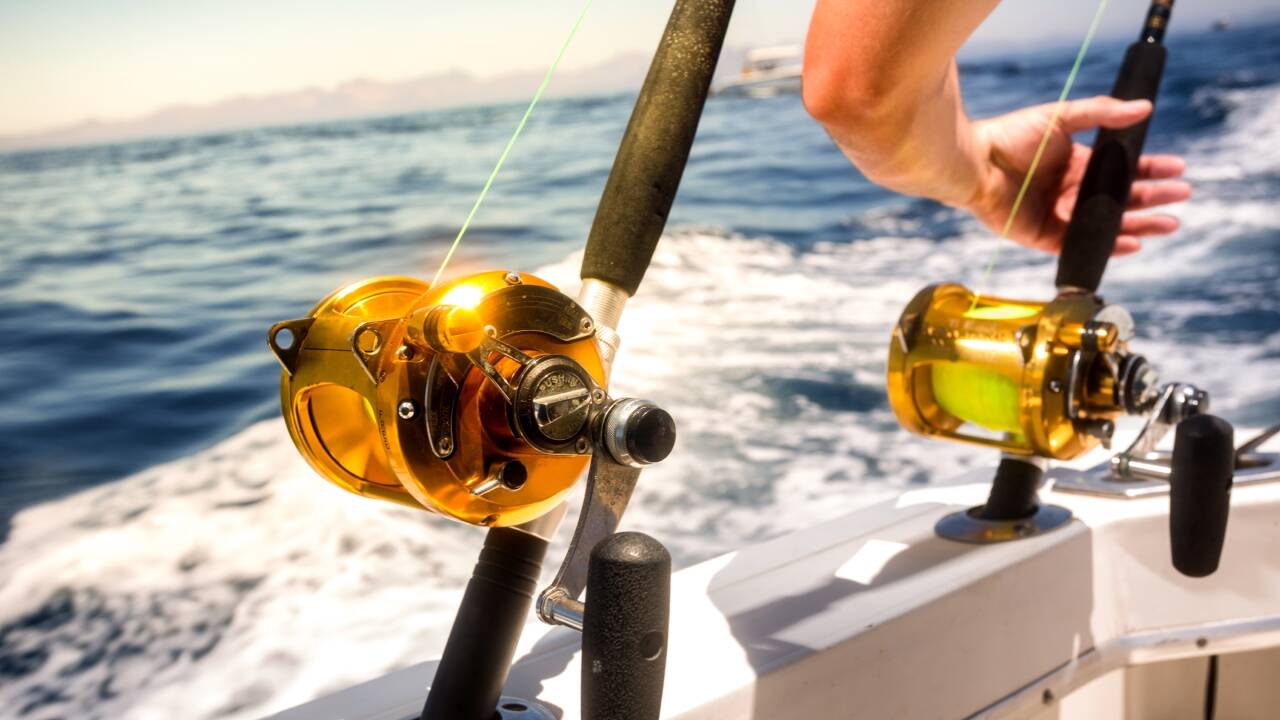
Take Marcus, a commercial charter skipper who has spent twenty-eight years watching the water change color from a bruised slate to a bright, deceptive turquoise. Last Tuesday, twenty miles off the coast, his depth finder painted a signature that shouldn't have been there. It wasn't the dense, freckled cloud of rockfish. It was a single, massive arc suspended in the mid-column water, heavy and deliberate. When the line screamed off his Penn International reel—that specific, high-pitched violence that makes your chest tighten—he expected a bluefin tuna. That is the baseline assumption now. If something big hits, you pray for sushi. As discussed in detailed reports by Yahoo Sports, the implications are notable.
Instead, what broke the surface twenty minutes later looked like a visitor from an entirely different latitude. It was a species that belongs in the warm, coral-strangled shallows of the Cortez Sea, or drifting lazily along the coast of Baja, thousands of miles south of where the water temperature dictates it should survive. It was broad, iridescent, and entirely out of place.
And Marcus is not alone. Along the entire sweep of Southern California, from the rocky shelves of San Diego up to the foggy breaks of Ventura, anglers are pulling up ghosts.
The Warm Water Shroud
To understand why a fisherman is suddenly staring down at tropical predators in temperate waters, you have to look beneath the whitecaps. You have to look at the invisible architecture of heat.
The ocean off our coast operates on a delicate, ancient conveyor belt. Upwelling brings cold, nutrient-rich water from the abyssal plains straight up to the sunlit surface, feeding everything from microscopic phytoplankton to the giant kelp forests that sway like cathedrals beneath the waves. This cold soup is what built the legendary fisheries of the Golden State. It is why our waters historically favored species that prefer a chill in the air and the brine.
(Note: When scientists talk about marine heatwaves, they are describing anomalies where vast wedges of the Pacific refuse to cool down, creating localized thermal domes that act as invisible walls.)
Imagine a sprawling, air-conditioned house where someone has left the front door wide open during a July heatwave. The cool air leaks out. Drafts shift. Suddenly, the rooms that were once crisp and predictable become humid and sweltering. The pests and plants that thrive in the heat move inward, crowding out the old tenants.
That is what has happened to the Pacific. Marine heatwaves—colloquially dubbed "the blob" during their recurring cycles—have baked the upper layers of the water column. The thermocline, that invisible boundary where warm surface water meets the deep chill, has shifted deeper. The kelp, fragile and heat-sensitive, begins to wither. And in rush the nomads.
Anglers are reporting catches of fish that belong in travel brochures, not local tackle reports. Roosterfish, normally flashing their signature combs off tropical Central American beaches, are being spotted or hooked further north than marine biologists ever anticipated. Warmer-water pelagics are lingering months past their historical departure dates. Even the bottom dwellers are shifting, as rockfish populations move deeper into the darker, colder canyons to escape the surface fever, altering the entire ecosystem from the seafloor up.
The Weight on the Line
There is a strange psychological toll that comes with catching a fish that doesn't belong.
Ask Sarah, a weekend angler who hooks into these waters out of a battered seventeen-foot cuddy cabin named The Minnow. She remembers when catching a fish was an exercise in local tradition. Her grandfather taught her how to read the grease on the water, how to spot the nervous twitch of baitfish fleeing a bonito, how to time the tides against the pilings of the Belmont Pier.
When she hauled up a bizarre, brightly banded creature last month—a fish she had to photograph and text to three different marine biology departments just to get a tentative identification—she didn't feel the familiar surge of a successful hunt. She felt a cold prickle of unease.
It felt like finding a polar bear wandering through a suburban backyard in Palm Springs. Sure, it is magnificent. Sure, it is big. But its very presence is an indictment. It means the thermostat is broken.
The statistics back up her unease. According to ongoing monitoring by marine research institutions along the coast, average sea surface temperatures in Southern California have ticked steadily upward over the past three decades, with dramatic spikes occurring in clustering years. Every fraction of a degree Celsius is a displacement order for thousands of aquatic organisms. The big fish—the unusually large specimens making headlines on fishing forums and local news segments—are often survivors of accelerated growth rates driven by warmer metabolisms, or they are pioneers pushing past historical barriers because their old homes have become unlivable ovens.
We look at a twenty-pound specimen of a species that shouldn't even be in our zip code and we call it a trophy. We pose for the photograph, holding the fish up by the lip, smiling into the salt spray. But the photograph is misleading. That fish isn't a trophy. It is a refugee.
Reading the Tides of Change
The old-timers at the bait shops will tell you that the ocean is cyclical. They will talk about El Niño and La Niña as if they were just pendulum swings, predictable swings of a cosmic clock that always winds back to zero.
They want to believe that. We all want to believe that. It is comforting to think that tomorrow will look like yesterday, just with a different wind direction.
But the data whispering up through the fishing lines tells a sharper story. The baseline has shifted. The cycles are no longer returning to their old starting points. Instead, they are climbing a staircase of heat, step by relentless step. When an angler hooks a rare, oversized warm-water predator off the coast of Santa Barbara, they are holding living proof of a rearrangement of the natural world.
Consider what happens next: As the thermal barriers dissolve completely, the local species—the ones tuned to the exact frequency of the California current—are forced to either adapt at breakneck speed, retreat further north where the water still holds its breath, or quietly vanish from the logs entirely.
The sport of fishing, which has always been about patience, observation, and a quiet communion with the wild, is turning into an archive of loss. Every unusual catch is a telegram from the deep.
So the next time you stand at the edge of the continent, looking out past the breaking surf where the oil rigs punch holes in the horizon, remember what is swimming down there in the dark. The sea is changing its skin. The lines are screaming with strangers. And the fish are trying to tell us something we have spent too long refusing to hear.