The coffee in the mug did not spill. It jumped.
It was a Tuesday morning like any other in the coastal province. The air carried the familiar, heavy scent of salt water and roasting barako coffee beans. Fishermen were already hauling their first catch onto the docks, their laughter cutting through the humid dawn. Then, the ground groaned. It was not a sound heard with the ears, but felt through the soles of the feet—a deep, subsonic rumble that vibrated through the marrow of every bone.
Within seconds, the concrete beneath the market stalls began to roll like the waves of the Pacific Ocean. A 7.8-magnitude earthquake does not merely shake a landscape. It rewrites it.
When the earth shifts with that level of violence, the world splits into two distinct eras: before and after. For those who live along the volatile seams of our planet, tectonic plates are not abstract concepts found in school geography textbooks. They are sleeping giants. On this particular morning, the giant woke up, reminded everyone of its absolute power, and left a nation scrambling to piece its reality back together.
The Anatomy of Forty Seconds
To understand a disaster of this scale, one must look past the sterile statistics of the seismograph. A 7.8 rating on the Richter scale is a mathematical abstraction. The reality is the violent deceleration of a school bus, the sound of a century-old church bell tower snapping like a dry twig, and the sudden, terrifying realization that the most stable thing in your life—the ground—has become liquid.
Consider a hypothetical family living in a typical concrete-block home near the epicenter. We will call the mother Elena. When the primary wave hit, her first instinct was not to run, but to freeze. The sheer noise of the earth tearing open is deafening. It sounds like a freight train barreling directly through your living room.
In the first five seconds, the power grid failed. The fans sputtered to a halt, leaving only the raw, unfiltered sounds of destruction. By second fifteen, the walls cracked. Tiny webs of dust snaked down the plaster before the structures gave way entirely. Elena managed to grab her youngest child and dive under a heavy wooden dining table just as the roof tiles began to rain down.
Forty seconds. That is all it took. In less time than it takes to read a single page of a book, lives built over generations were reduced to piles of gray rubble and twisted rebar.
When the Dust Settles
The immediate aftermath of a massive earthquake is defined by a strange, suffocating silence. The dust rises first. A thick, chalky fog hangs over the streets, coating everything in a uniform shade of gray. It stings the eyes and chokes the throat, turning the midday sun into a dim, ghostly copper disc.
Then come the voices.
Neighbors call out to neighbors. Hands, bare and bleeding, begin to dig through the debris. In the first hours of a disaster, there are no emergency response teams, no high-tech rescue gear, and no government aid packages. There is only the person standing next to you.
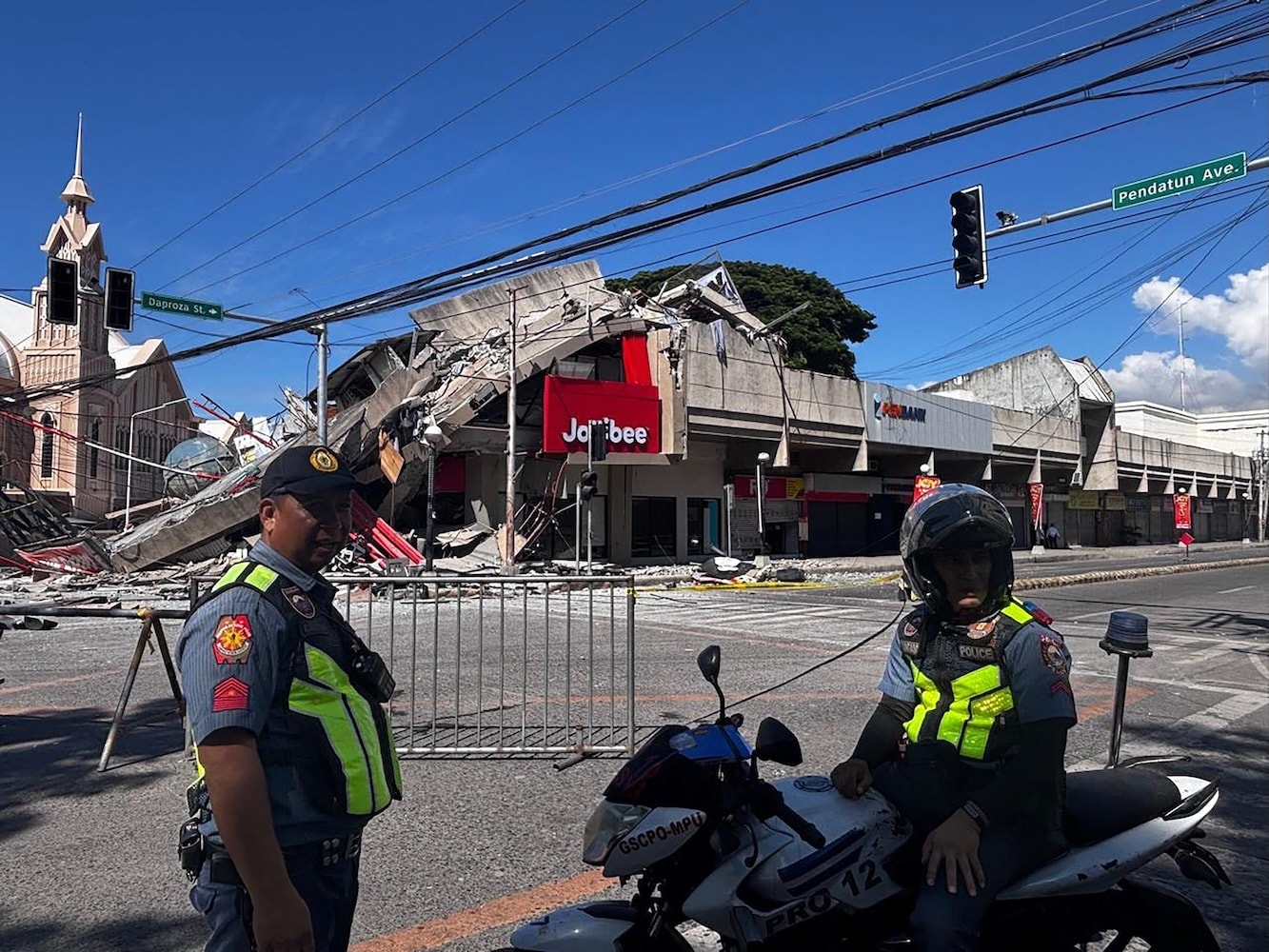
The initial images emerging from the impact zone tell a story of profound loss, but they also reveal a stark truth about human architecture. Modern high-rises, built with flexible steel joints designed to sway with the earth, often stand tall amid the chaos. A few blocks away, the older, poorer neighborhoods lie completely flattened. The disparity is cruel. The poorest citizens, living in homes built from unreinforced masonry, always pay the highest price when the faults slip.
Roads that once connected rural villages to major medical centers now look like crumpled pieces of paper. Fissures, some wide enough to swallow a car, cut across the main highways. Bridges have dropped from their concrete moorings, leaving entire communities isolated from help. For those trapped beneath the remnants of their homes, the ticking clock is the ultimate enemy.
The Invisible Threat in the Water
While the immediate focus of any rescue operation is pulling survivors from the wreckage, a secondary, more insidious crisis begins to take shape within hours of the main shock.
The infrastructure we take for granted vanishes instantly. Water mains rupture beneath the buckling streets, mixing clean drinking water with raw sewage. The electricity required to pump water from deep wells is gone. Within a day, thirst becomes as dangerous as falling debris.
When a major quake hits a coastal region, the threat of a tsunami looms over every rescue effort. Even if the waves do not materialize, the fear keeps people fleeing toward higher ground, abandoning their ruined belongings to the elements. They gather in makeshift camps on hillsides, using blue plastic tarps and bamboo poles to shield themselves from the blistering tropical sun.
Hospital courtyards turn into open-air triage centers. Doctors and nurses, many of whom have lost their own homes, work under the glow of smartphones and flashlights. They treat lacerations, crush injuries, and profound shock, operating on pure adrenaline as the ground continues to tremble beneath their feet with terrifying aftershocks.
The Rhythm of the Aftershocks
An earthquake of this magnitude is never a single event. It is a prolonged trauma.
Every few hours, the earth shudders again. These aftershocks, some registering as high as a 6.0 magnitude on their own, are psychological warfare. Just as a family gathers the courage to step back inside a partially damaged structure to retrieve medicine or a family photo, the rumbling starts anew. The adrenaline never quite leaves the system. Sleep becomes impossible. Every creak of a roof joint or rumble of a passing truck sends a jolt of panic through the crowd.
The psychological toll is a hidden casualty. Children refuse to go indoors, crying at the slightest vibration. Adults sit in silence, staring at the spaces where their shops, schools, and sanctuaries stood just hours before. The physical debris can eventually be cleared away by bulldozers, but the internal landscape of fear takes decades to rebuild.
The international community responds with promises of aid, cargo planes filled with blankets, and search dogs trained to sniff out life beneath the concrete. This support is vital. Yet, as the news cycle moves on to the next global event, the people of the province are left with a long, lonely road ahead.
A grandmother sits on a plastic crate on the side of a broken road, holding a single intact porcelain teacup she salvaged from the ruins of her kitchen. Behind her, a crew of young men uses crowbars to lift a slab of concrete off a crushed motorcycle. The work is slow. It is painful. But it continues, one heavy stone at a time, under the quiet glare of the afternoon sun.