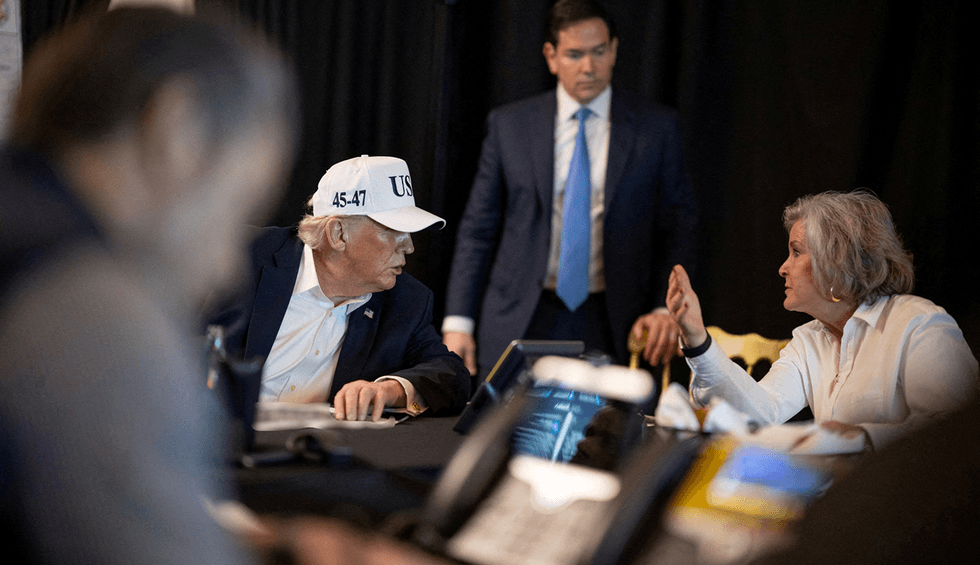
The machinery of American governance relies on a fragile web of trust between a president and the Cabinet. That web snapped when a small group of outside advisors and junior aides bypassed the traditional National Security Council channels to present Donald Trump with a "highly classified" policy shift regarding troop deployments and intelligence sharing. By the time the heads of Defense and State realized what was happening, the plan was already sitting on the Resolute Desk. This wasn't just a breakdown in communication. It was a deliberate side-stepping of the Senate-confirmed officials responsible for the nation’s safety, creating a shadow command structure that left the actual experts in the dark.
The Architecture of the End Run
In the high-stakes environment of the West Wing, information is the only currency that matters. To control the flow of information is to control the president’s ultimate decision. The recent revelation that top Cabinet members were excluded from a major strategic pitch highlights a growing trend in modern politics: the rise of the "kitchen cabinet" over the actual Cabinet. Also making news in this space: Tehran Challenges the Legality of American Firepower in the Middle East.
For decades, the process for a major policy pitch was rigid. A proposal would originate within a department, face vetting by the National Security Council (NSC), undergo a legal review, and finally reach the Oval Office. This process is slow. It is often frustrating for a president who wants fast results. However, that friction is the point. It serves as a filter for bad ideas, legal liabilities, and logistical nightmares.
When a small faction decides to bypass this, they aren't just saving time. They are removing the guardrails. In this specific instance, the pitch involved a radical restructuring of overseas commitments—a move that would have required months of coordination with allies. By keeping the Secretary of State and the Secretary of Defense out of the room, the architects of this plan ensured their ideas wouldn't be challenged by the very people who would have to implement them. Further insights into this topic are explored by NBC News.
Why the Cabinet was Silenced
The motivation for this secrecy rarely stems from a fear of leaks. That is the common excuse, but the reality is more cynical. It is about avoiding the "No."
Experienced Cabinet secretaries, often referred to as the "Adults in the Room" by the media, tend to prioritize institutional stability. They understand that a sudden shift in policy can trigger a market crash, a diplomatic rift, or a military escalation. Outside advisors, unburdened by the responsibility of running a multi-billion dollar department, do not have those concerns. They see the Cabinet as a hurdle to be jumped.
The Mechanism of Exclusion
How do you keep the most powerful people in Washington from finding out about a meeting happening fifty feet away? You use the "Need to Know" loophole. By marking a proposal as "Highly Classified" or "Sensitive Compartmented Information," the originators can strictly limit who sees the paperwork.
- Information Siloing: The proposal is kept on a standalone system, preventing it from being caught in the digital dragnet of agency-wide reviews.
- The "Pocket" Pitch: Instead of scheduling a formal briefing, the advisors wait for a moment of "informal" time—a flight on Air Force One or a weekend at Mar-a-Lago—to present the document.
- Verbal Priming: Before the document is ever shown, the president is told that the Cabinet is "slow-rolling" his agenda or "part of the deep state," pre-emptively discrediting any criticism they might eventually offer.
[Image of the White House West Wing floor plan]
The Consequences of Shadow Policy
Operating in a vacuum feels efficient until the bill comes due. History shows that when a president acts on information that hasn't been vetted by the relevant agencies, the results are almost always messy.
Take, for example, the hypothetical scenario of a sudden withdrawal of intelligence assets from a volatile region. If the CIA Director and the Secretary of Defense aren't consulted, they can’t move their people out of harm’s way before the news breaks. They can’t warn the president that a specific asset provides 80% of the data on a rival's nuclear program. The president makes a move based on a "bold vision," but the ground-level reality is a disaster.
This specific pitch to Trump reportedly involved significant shifts in how the U.S. treats certain international treaties. These aren't just pieces of paper. They are the foundation of global trade and security. To alter them without the Treasury or State Department involved is like trying to rewire a house while the power is still on. You might get lucky, or you might burn the whole thing down.
The Professional Price of Being Sidelined
For a Cabinet member, finding out about a major policy shift from a news alert or a social media post is the ultimate professional insult. It signals to the entire world—and more importantly, to foreign adversaries—that the Secretary does not speak for the President.
This creates a vacuum of authority. Foreign ministers stop calling the Secretary of State and start trying to find the phone numbers of the junior aides who have the President’s ear. Domestic staff at the agencies lose morale. Why work sixteen-hour days on a policy white paper if the boss is just going to sign a memo written by a cable news pundit on a napkin?
The tension this creates is not sustainable. It leads to the inevitable "Friday night massacre" of resignations and firings. When the Cabinet feels they are being treated as mere figureheads, they either leave or they start to fight back through the only means they have left: the press.
The Long Road Back to Order
Fixing this isn't about changing the people; it's about changing the culture of the office. The presidency is too large for one person to manage through a handful of loyalists. The Cabinet exists for a reason. They are the shock absorbers of the executive branch.
To restore order, a leader must demand that no document reaches their desk without a "concurrence" or "non-concurrence" stamp from the relevant department heads. It requires a Chief of Staff who acts as a ruthless gatekeeper, not a facilitator for their favorite factions. It requires an understanding that a "Yes" that hasn't been tested is far more dangerous than a "No" that has.
The "highly classified" pitch wasn't a masterstroke of strategy. It was a failure of the system. It exposed a White House that was more interested in the appearance of action than the reality of governance. When the inner circle becomes a fortress designed to keep the experts out, the only people who win are the ones who want to see the system fail.
The true test of a policy isn't whether it can be sold to a president in a private room. The test is whether it can survive the scrutiny of the people who actually have to make it work. Every time a shortcut is taken, the integrity of the office is eroded. The next time a "secret pitch" makes its way to the top, the question shouldn't be what it says, but why the people responsible for the nation's security were the last to see it.
Power used in secret is power that fears the light. Over time, that secrecy doesn't just hide the plan; it hides the consequences until it's too late to fix them.


