The Hong Kong government is fundamentally reshaping its communications strategy by appointing John Tse Chun-chung, a career police officer and former face of the force, to a senior role within the Information Services Department (ISD). This move signals a permanent shift away from traditional civil service neutrality and toward a high-pressure, security-focused messaging model. By bringing a veteran of the 2019 protest briefings into the heart of the government’s PR machine, the administration is prioritizing crisis management and narrative control over the soft-power diplomacy that once defined the city’s international image.
Tse is expected to take on the role of Director of Government Communications, a position designed to streamline how the executive branch speaks to both local residents and a skeptical global audience. This is not merely a personnel change. It is an institutional overhaul. For decades, the ISD functioned as a bridge between the bureaucracy and the press, staffed largely by career information officers who viewed their roles through the lens of public service and media facilitation. That era has ended. Meanwhile, you can find related developments here: The Echoes We Cannot Afford to Lose.
A Police Doctrine in Civil Clothing
The selection of Tse reflects a broader trend within the current administration, where individuals with backgrounds in the security apparatus are increasingly occupying top-tier civilian posts. Chief Executive John Lee and Chief Secretary Eric Chan both rose through the ranks of the police and immigration services respectively. Tse’s appointment completes this trifecta at the messaging level.
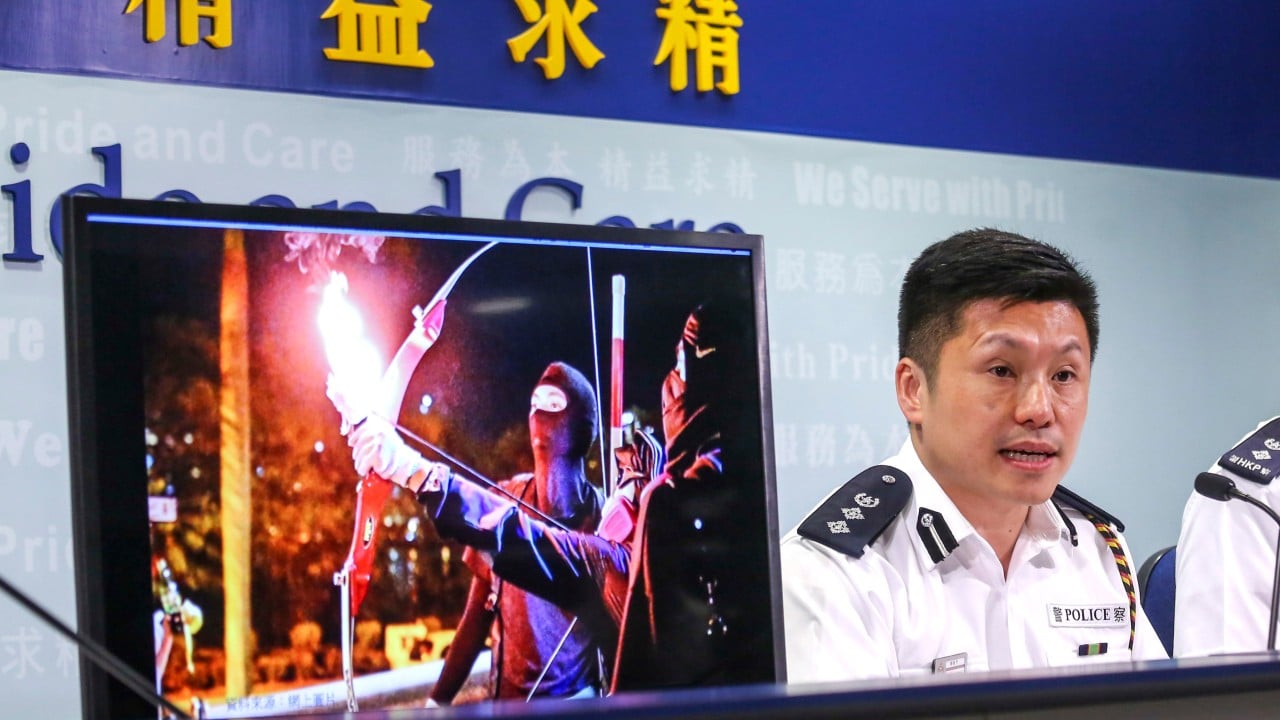
During the 2019 unrest, Tse became a household name. As the head of the Police Public Relations Branch (PPRB), he conducted daily televised briefings that were often combative. He didn’t just provide information; he defended an institution under siege. This "wartime" mentality is exactly what the current cabinet wants to inject into the broader government. They are no longer looking for spokespeople who can explain policy. They want operators who can manage a narrative in a hostile environment. To see the full picture, check out the excellent article by Reuters.
The Death of the Traditional Press Release
The traditional government press release is a dying format in Hong Kong. Under the new regime, expect a more aggressive use of social media and direct-to-consumer video content, bypassing traditional news outlets that the government views as biased or adversarial. Tse’s experience in the PPRB involved a massive expansion of the police force’s Facebook and YouTube presence, turning a law enforcement agency into a self-contained media house.
We are seeing the "PPRB-ization" of the entire government. This means a focus on rapid rebuttal. In the past, the government might take 24 hours to respond to a critical report from an international NGO or a foreign consulate. Now, the goal is to counter-punch within the same news cycle. Tse is the architect of this high-tempo response strategy.
Institutional Friction and the Civil Service Purge
This appointment is likely to create significant internal tension within the ISD. Career information officers, who have spent twenty years climbing the ladder, now find the ceiling lowered by a uniformed outsider. This mirrors the frustration seen in other departments where "discipline gear" has replaced the "administrative officer" (AO) track as the fast lane to power.
The AO class was once the "gold standard" of Hong Kong’s governance. They were generalists, trained to be pragmatic and politically neutral. But the current leadership views that neutrality as a liability. They see it as a lack of loyalty or a failure to understand the new political reality. By placing Tse in a leadership position, the administration is sending a clear message to the rank-and-file civil service: the old ways of cautious, balanced communication are obsolete.
The Global Image Problem
The most significant challenge Tse faces isn't internal. It’s international. Hong Kong’s reputation as a global financial hub relies on the perception of the rule of law and the free flow of information. When the person in charge of government communications is a former police spokesman associated with the most controversial period in the city’s modern history, it complicates the "Hello Hong Kong" charm offensive.
Western capitals and international businesses look at these appointments as data points. They see a government that is doubling down on a security-first identity. Tse might be excellent at rallying the local pro-establishment base, but his presence may inadvertently validate the claims of critics who argue that Hong Kong has become a "police state" in all but name. No amount of glossy tourism videos can easily offset the optics of a career cop running the press office.
Efficiency versus Credibility
There is an undeniable efficiency to the security-led approach. Information is centralized. Messaging is consistent. There are no leaks. For a leadership that values stability above all else, this is a success. They have replaced a messy, often contradictory bureaucratic voice with a single, disciplined drumbeat.
However, efficiency is not the same as credibility. In the world of high finance and international diplomacy, credibility is earned through transparency and the willingness to engage with difficult questions. Tse’s previous performances were characterized by a refusal to concede even minor points and a tendency to categorize all criticism as "fake news." While that works in a tactical police briefing, it is less effective when trying to convince a multinational bank to keep its regional headquarters in the city.
The New Media Hierarchy
Under this new leadership, the hierarchy of media access is being rewritten. We are seeing a tiered system:
- State-Owned Media: Provided with exclusive interviews and early access to policy details.
- Pro-Establishment Outlets: Given a seat at the table in exchange for "constructive" coverage.
- Foreign Press: Managed with cautious formality and frequent "letters to the editor" correcting their reporting.
- Independent/Digital Media: Often ignored or marginalized during official functions.
Tse is an expert at navigating this hierarchy. He understands that in the current climate, the government doesn't need to win over everyone; it only needs to dominate the space so thoroughly that alternative voices are drowned out.
The Cost of the Security Pivot
The government is betting that economic performance will eventually mask the political hardening of the city. They believe that as long as the markets are stable, the world will stop caring about who runs the ISD. This is a gamble. Hong Kong’s unique value proposition was always that it was "China-plus"—part of the mainland but with a distinct, Western-style administrative culture.
As the government replaces its civilian experts with security veterans, that "plus" factor diminishes. The administration is becoming indistinguishable from a mainland provincial government in its rhetorical style and its sensitivity to criticism. Tse’s promotion is the clearest evidence yet that this transformation is nearly complete.
The focus has shifted from "selling" Hong Kong to "defending" it. The problem with a defensive crouch is that it makes it very difficult to move forward. If every piece of communication is treated as a battle to be won, the government loses the ability to have a genuine conversation with its people or the world.
Watch the tone of the upcoming policy addresses and the government’s response to the next round of international sanctions or trade reports. If the language is sharp, uncompromising, and heavy on "refutation," you are seeing the Tse doctrine in action. It is a strategy designed for a fortress, not a gateway. The walls are getting higher, and the men on the battlements are now in charge of the welcome mat.